Around five to seven months, before her first heat cycle. But with this breed the timing is genuinely the easy part of the conversation — what most Frenchie owners actually want to talk about is the anaesthesia, so let's deal with that properly.
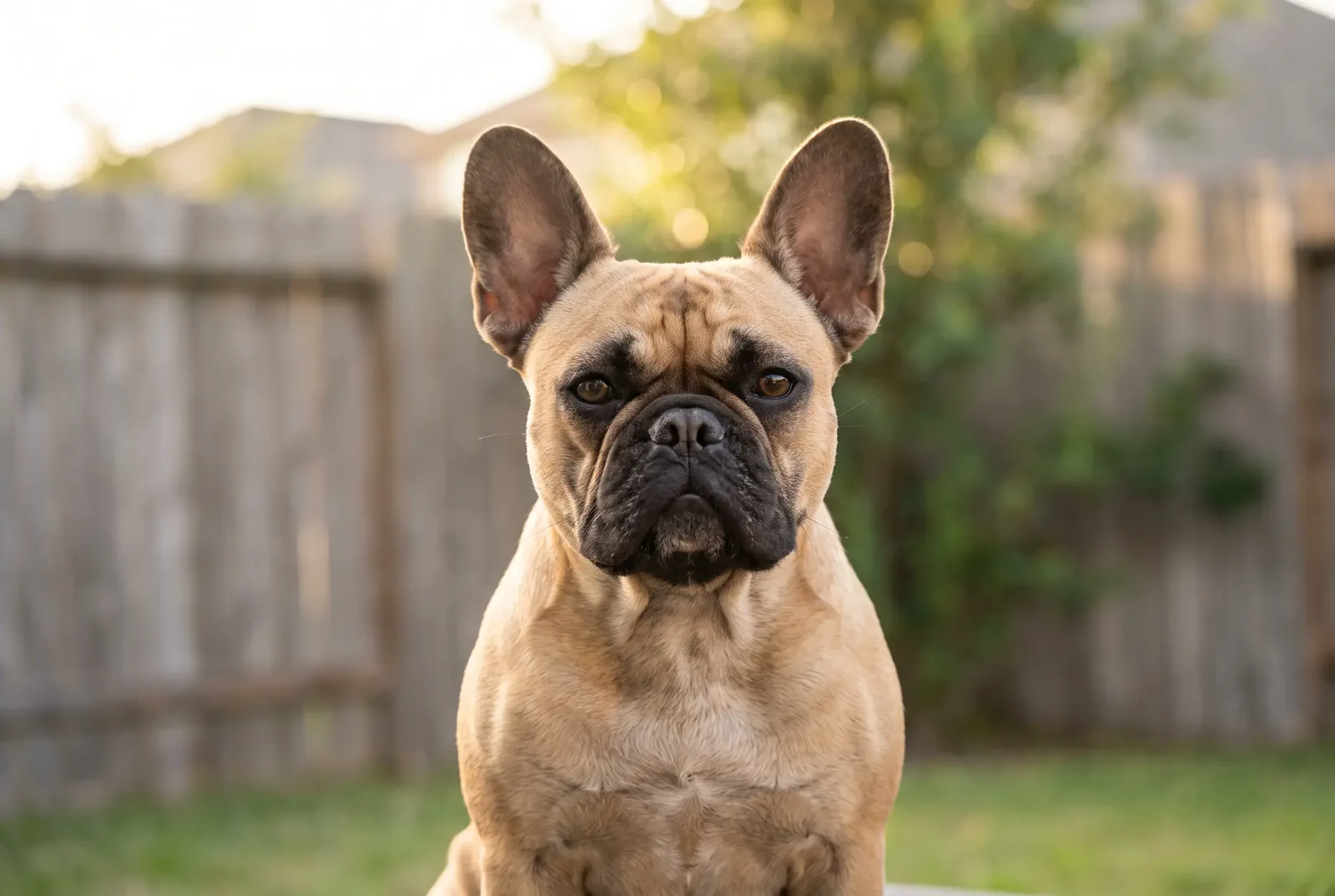
Almost every French Bulldog owner who sits down in my exam room to talk about spaying arrives with the same worry, and it is rarely about the date on the calendar.
It is: is she going to be all right under anaesthesia?
I understand why. If you own a Frenchie you have read the forum posts. You have seen the stories. Somebody has told you flat-faced dogs die on the table, and now you are weighing a routine surgery against a fear you cannot quite size.
So rather than reassure you vaguely, I would rather show you what the actual research found — including one result that genuinely surprised me and should make you feel better, not worse.
— Dr. P
The conversation that actually matters
In 2018 a study compared 223 brachycephalic dogs with 223 matched non-brachycephalic dogs, all anaesthetised in the same year, and tracked what went wrong and when. The result was not what the folklore predicts.
During the anaesthesia itself, the two groups were essentially identical. Complications occurred in about fifty percent of the flat-faced dogs and about forty-eight percent of the normal-nosed ones — mostly minor, transient things such as a drop in blood pressure. Being brachycephalic made almost no difference while the dog was actually under.
The difference showed up in recovery: roughly fourteen percent of the brachycephalic dogs had a post-anaesthetic complication, against about four percent of the others. That is a real and meaningful gap, and I am not going to soften it.
But look at what it tells you. The danger is not some mystery that strikes mid-surgery. It is concentrated in the window when she is waking up, her airway is still relaxed, and her breathing tube has come out. That is a specific, predictable, manageable problem — and it is entirely about how carefully she is watched during recovery rather than about luck.
For general context, the largest study of anaesthetic deaths in dogs — nearly a hundred thousand procedures — found an overall risk of about one in six hundred, and roughly one in 1,849 among healthy dogs. That study was not specific to flat-faced breeds, so I will not pretend it measures your dog's risk. It is the backdrop: anaesthesia in a healthy young dog is, in general, a low-risk event.
What I do differently for a Frenchie follows straight from the finding. She is pre-oxygenated before induction, intubated promptly, and kept intubated longer than a normal-nosed dog — the tube comes out late rather than early. Then she recovers sitting up rather than lying flat, watched continuously until she is holding her own airway comfortably. None of that is exotic. It is simply putting the attention where the data says the risk actually lives.
What the research shows on timing
The large UC Davis paper that underpins most modern spay-timing advice covers 35 breeds. The French Bulldog is not one of them.
This is worth stating clearly, because the list is a trap. It does include the English Bulldog, the Boston Terrier and the Pug — three breeds a reader could easily assume stand in for a Frenchie. They do not. If you find a page quoting French Bulldog joint or cancer percentages from that study, those numbers do not exist.
So I reason from size class instead, and I will tell you that is what I am doing. The companion study that grouped dogs by adult weight rather than breed found that the joint-disorder risk driving delayed-spay advice appeared only in dogs above roughly forty-four pounds. In the two smallest weight categories, there was no increased joint risk from spaying early — at any age. A French Bulldog, at sixteen to twenty-eight pounds, sits comfortably in that reassuring range.
Meanwhile the benefit of spaying before the first heat is well established and applies to her as much as to any dog: the strongest reduction in mammary tumour risk comes from spaying before that first cycle, and the protection erodes with each cycle she goes through.
Put those together and the timing answer is straightforward. She gets the mammary benefit and pays no orthopaedic price, so there is no good reason to wait.
What I recommend
For most French Bulldogs I aim for somewhere between five and seven months, before the first cycle. That captures the mammary protection, eliminates any future risk of pyometra, and — importantly for this breed — means the anaesthesia happens on a calm, scheduled morning in a healthy young dog rather than as an emergency in a sick one later.
Why I sometimes run slightly later than I would with a Maltese or a Yorkie. Some Frenchies are still quite immature at five months, and if a puppy is at all compromised in her breathing I would rather she carry a little more physical maturity into the procedure. That is a judgement I make dog by dog at her exam, not a rule.
Where I deviate. If she has significant airway signs — heavy snoring, snorting, exercise intolerance, badly pinched nostrils — I will want to talk about assessing and possibly addressing that airway, ideally in the same anaesthesia rather than a second one. And if she is overweight, losing a little first genuinely lowers her anaesthetic risk; weight sits on a flat-faced dog's breathing harder than on any other kind.
The one thing I would not do is postpone indefinitely out of fear. An unspayed Frenchie who develops pyometra at seven needs emergency anaesthesia while septic — which is a far riskier proposition than the planned procedure you are currently worrying about.
How I do the surgery
The laparoscopic spay is worth considering here for a reason that is specific to her breed. On any dog it means smaller incisions and less pain, with the ovaries removed through two or three keyhole openings of about a centimetre and a half under camera guidance. But for a French Bulldog the part that matters most is the smoother, quicker recovery — because recovery is precisely where her added anaesthetic risk sits. A dog who is comfortable, upright and breathing easily sooner is a dog spending less time in the window where flat-faced dogs get into trouble.
What the day looks like
She comes in that morning having skipped breakfast, has an IV catheter placed, plus pre-anaesthetic bloodwork if you've chosen it (I recommend it, and it's priced separately), and is monitored continuously while she is under. I do the surgery myself — I have been a solo veterinarian since 1998, so the person who examined her airway and the person holding the instruments are the same person. She goes home the same day with pain medication, closed with absorbable suture and surgical glue.
With a Frenchie I keep her a little longer into the afternoon than I would a Labrador, simply so her recovery happens here where she is being watched rather than in the car. More detail on the day itself is on what to expect from your pet's surgery.
French Bulldog spay questions
It is a reasonable thing to ask about, and I would rather you ask than quietly worry. The best study of brachycephalic dogs under anaesthesia found something people rarely mention: during the procedure itself, flat-faced dogs had complications at essentially the same rate as normal-nosed dogs — about fifty percent in both groups, mostly minor things like a dip in blood pressure. The difference showed up afterward, in recovery, at about fourteen percent versus four percent. That tells us where to concentrate, and recovery is the part we control most directly.
Several things, and they are mostly about the airway. I examine her nostrils and palate beforehand so I know what I am working with. She is pre-oxygenated before induction, intubated promptly, and kept intubated longer than a normal-nosed dog would be — the tube comes out late rather than early. Then she is watched closely and continuously through recovery, sitting up rather than flat, until she is holding her own airway comfortably. Most of the added risk in this breed lives in that recovery window, so that is where the attention goes.
Worth discussing, genuinely. If she snores heavily, snorts when excited, tires quickly in the heat, or has visibly pinched nostrils, she may have some degree of brachycephalic airway syndrome. Narrowed nostrils in particular can be widened in a short procedure, and doing it during an anaesthesia she is already having spares her a second one. In Houston heat, a Frenchie who can move more air is a meaningfully more comfortable dog.
There is no French Bulldog data to answer that directly, so I will reason from size rather than pretend. The joint findings that drive delayed-spay advice appeared in dogs above roughly forty-four pounds; in the smaller weight groups researchers found no increased joint risk at any age. A Frenchie sits well under that line. She has her own orthopaedic issues — this is a screw-tailed breed with a real incidence of spinal malformation — but those are congenital and not influenced by when she is spayed.
Yes, and there is a specific reason it suits this breed. A laparoscopic spay generally means a shorter, smoother recovery with less pain, and for a dog whose main anaesthetic risk sits in the recovery period, getting her comfortable and upright sooner is worth having. The incisions are small on any dog, but the benefit here is less about the incision and more about how quickly she is back to breathing easily and normally.
Then nothing important has been lost. Spaying is still very much worth doing — it removes the risk of pyometra entirely, and pyometra in a brachycephalic dog means emergency anaesthesia in a sick patient, which is a far riskier proposition than a planned procedure in a healthy one. If anything, that is the strongest argument for getting her spayed on a calm scheduled morning rather than waiting.
Keep reading
Every breed grows on its own schedule. If one of these is closer to your dog, start there.
Your French Bulldog, the other half of the question:
Similar-size breeds:
The whole picture: read the veterinarian's breed-by-breed spay and neuter guide, or see how the laparoscopic spay works.
I'd rather spend fifteen minutes walking you through exactly how we handle a flat-faced dog than have you put it off out of worry.
Request an Appointment Or text (281) 859-9244