Labs are the most popular dog in America for a reason — and they're tough, sturdy, good-natured animals. But "tough" doesn't mean their spay timing doesn't matter. It does. Just not in quite the way you might expect.

For most of my career the advice was automatic: spay her at four to six months, before the first heat, and don't overthink it. That's what I was taught and that's what I told families for years.
The research has nudged me off that position — though for Labs, I'll be straight with you, the story is a little less dramatic than it is for some other big breeds.
When the UC Davis studies came out, the Golden Retriever findings were alarming. Everyone braced for the Labrador numbers to look just as bad — same size, same build, the obvious assumption.
They didn't. Labs were clearly affected by early spaying, but nowhere near as severely as Goldens. That surprised the researchers, and it taught me something I carry into every exam room now: "large breed" is not one diagnosis. Your Lab deserves advice built around her breed — not a rule borrowed from the dog next door.
— Dr. P
Here's what that actually means for timing.
What the research actually shows
A multi-year UC Davis study tracked thousands of dogs and looked specifically at what happens when you remove a dog's reproductive hormones before the growth plates finish closing. In Labradors, spaying before six months roughly doubled the rate of joint disorders — hip dysplasia, elbow dysplasia, and cruciate ligament tears.
That's the honest, useful distinction. The joint argument for waiting applies to your Lab — those cruciate tears are common, expensive, and genuinely preventable in part by giving the skeleton time to mature. But the dramatic cancer signal that made the Golden findings so unsettling largely didn't show up in Labradors.
So the recommendation isn't built on fear. It's built on a simple, practical goal: let her frame finish growing before we change her hormones, and give those big athletic joints their best shot.
The old way vs. the way I think about it now
No honest vet can give you an exact date without meeting your dog. What I can give you is a real conversation — weighing her joints, her heat cycles, and your life at home — and a plan we land on together.
Why waiting and laparoscopic go together
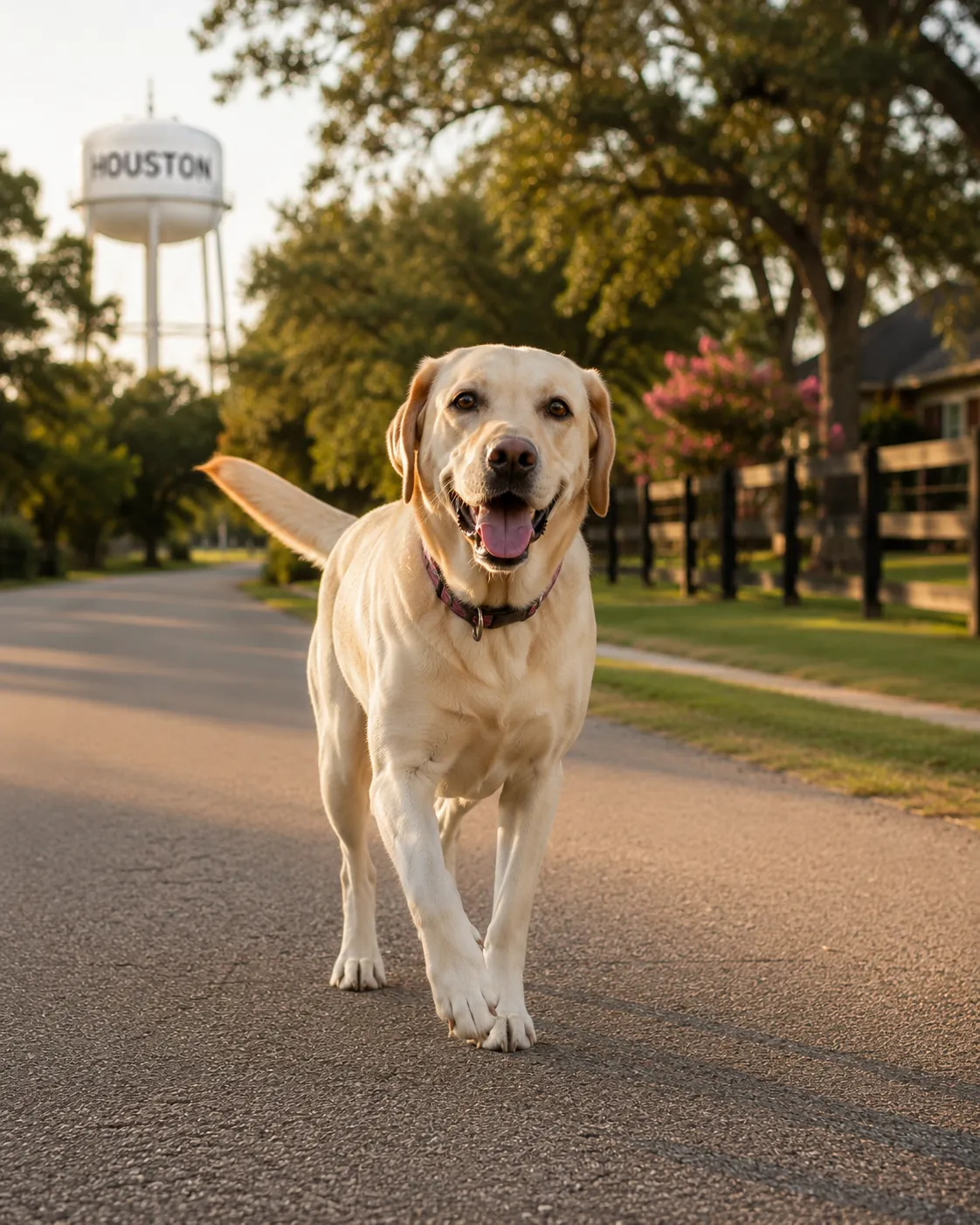
A year-old Lab is a big, solid dog — often 60 to 80 pounds of muscle. With a traditional open spay, that size means a longer incision and a tougher recovery. Our laparoscopic spay changes the math: the incisions stay tiny no matter how grown-up she is.
About 1.5–2 cm each, versus a 3–4 inch open incision — even on a strong adult Lab.
The ovaries are sealed under camera guidance instead of torn from the body wall.
Most dogs are bright and moving within 2–3 days — a real advantage for a high-energy Lab who hates being still.
Labrador spay questions
No — and that's an important distinction I want you to have. Both breeds see roughly doubled joint-disorder risk with very early spay, so the "wait for the joints" logic applies to your Lab. But the steep cancer increase that showed up in Goldens largely did not appear in Labradors. So the case for waiting with a Lab is real, but it's a joint-health case more than a cancer one.
It's a manageable couple of weeks — messy, requiring some diligence on your part, but not the medical crisis early-spay advice once implied. For a large athletic breed, the orthopedic payoff of waiting generally outweighs the inconvenience. We'll talk through how to manage a heat and the ideal window to schedule afterward.
This is the genuine trade-off. Spaying before the first heat does lower mammary-tumor risk. For Labs, you're weighing that against the joint benefit of waiting — and because the other-cancer signal is low in this breed, the decision often comes down to your dog's individual situation. I'll give you the honest numbers rather than a slogan.
Not at all. That was the standard recommendation for decades, mine included, and the overwhelming majority of early-spayed Labs live long, happy, active lives. The research just lets us tilt the odds a bit further in our favor from here. It's not a judgment on a sound decision made with the information available at the time.
For a full-grown Lab, very much so. They're big enough that a traditional incision gets long and sore, and they're active dogs who do not tolerate two weeks of crate rest gracefully. A laparoscopic spay means tiny incisions and a fast return to normal — which matters a lot when your dog's whole personality is "let's go."
Whether she's a roly-poly puppy or nearly grown, I'm glad to talk it through with you — and spay her the gentlest way when the time is right.
Start the Conversation Or call or text (281) 859-9244More breed guides
Every breed grows differently, and males run on a different clock than females. If you have one of these, we have a guide for that too.
