Her size and growth matter when choosing the timing and surgical approach. We'll talk through the options for your dog, including any questions about bloat risk.
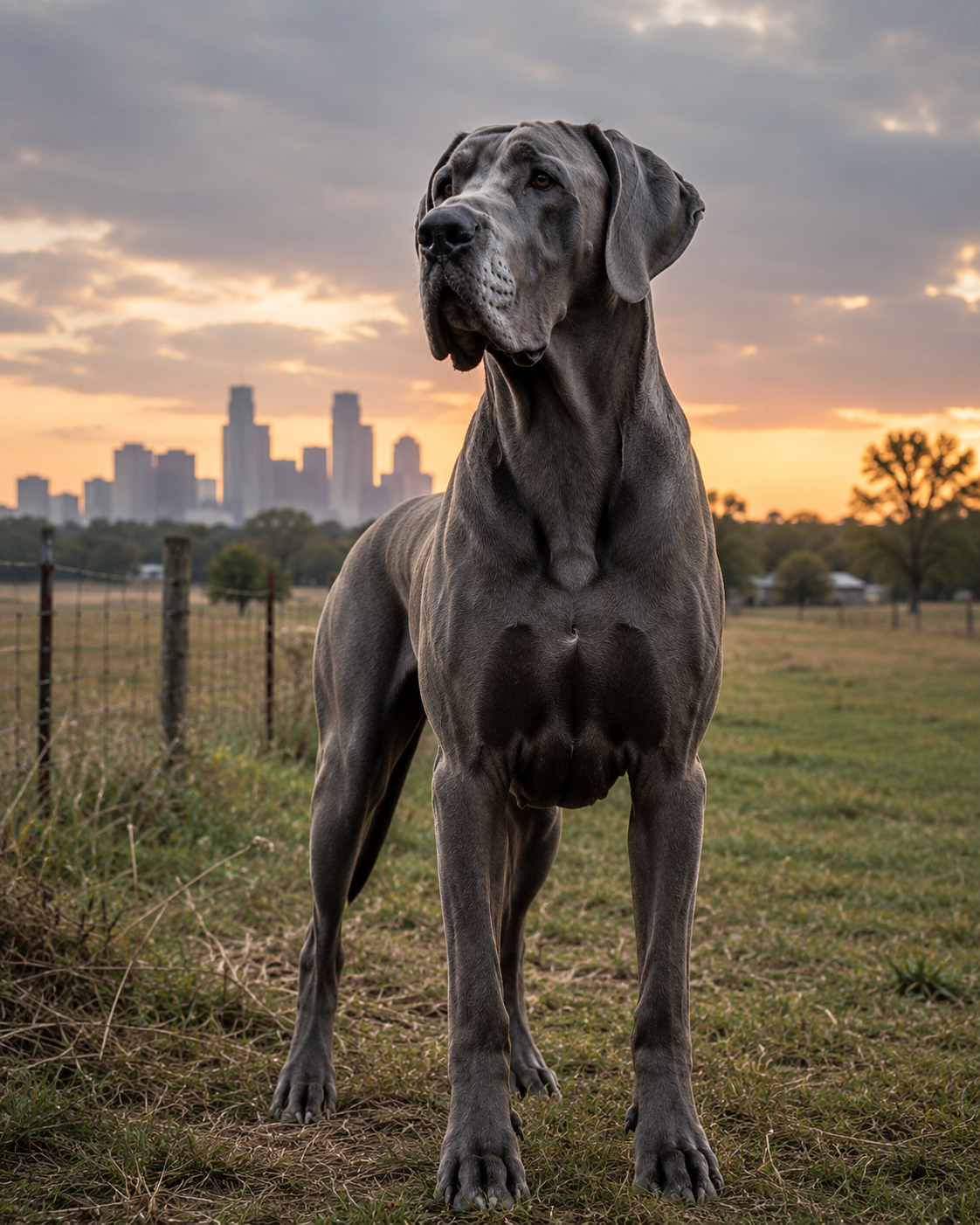
Most people come to me asking the same question they'd ask about any dog: when should I spay her? It's a fair question, and we'll get to it. But with a Great Dane, I always steer the conversation somewhere more urgent first — because there's something far more dangerous to a Dane than the timing of her spay.
It's called GDV — bloat. The stomach fills with gas and then twists on itself, cutting off its own blood supply. In a deep-chested giant breed like a Great Dane, it is one of the most common ways to lose the dog — often within hours, often with no warning, frequently in the middle of the night.
Great Danes carry one of the highest lifetime bloat risks of any breed on earth. By some estimates, a substantial share of Danes will experience it in their lifetime if nothing is done to prevent it.
I've had to tell families their otherwise-healthy young Dane was gone because of bloat. It is a terrible conversation, and the hardest part is knowing it's largely preventable.
Here's the part that matters
A gastropexy (stomach tacking) can reduce the risk of a dangerous stomach twist, but it does not prevent bloating. If you're concerned, ask about your dog's risk and whether this procedure is appropriate.
Her spay visit is a chance to discuss her risk, alongside the spay itself. Any additional surgery deserves its own conversation and plan.
I'll explain what bloat is, what signs need emergency care, and which preventive options may make sense for your dog. You don't have to decide on an add-on just because she's here for a spay.
— Dr. P
The laparoscopic spay
A traditional open spay on a Great Dane can mean a longer incision and a harder recovery. The laparoscopic approach uses smaller incisions. Ask Dr. Pelton if it is right for her.
Ovaries removed under magnified guidance through 2–3 incisions about 1.5–2 cm each.
We'll review her weight, health, and surgical needs before giving you an estimate.
No tearing, no long incision. Most dogs are up and comfortable within a few days.
And yes — timing still matters too
Giant breeds are their own category — they grow longer and bigger than any retriever, so the "let the frame finish" logic is even stronger. We'll make the decision based on her individual growth and health.
Great Dane spay and bloat questions
Bloat (GDV) is when the stomach fills with gas and rotates, cutting off blood flow — a true emergency that can take a dog's life in hours. Great Danes are consistently ranked among the very highest-risk breeds for it, largely because of their deep, narrow chest. It's not a rare freak event for this breed; it's one of the leading causes of death. That's why I treat prevention as a core part of the spay conversation, not an afterthought.
A gastropexy (stomach tacking) can reduce the risk of the stomach twisting, but it does not prevent bloating. Ask your veterinarian whether it is appropriate for your dog.
If you're considering stomach tacking, ask Dr. Pelton whether it is appropriate for your dog and what the surgical options involve.
Laparoscopic spay uses two or three small incisions. Discuss any additional procedure separately with Dr. Pelton.
Stomach tacking can be discussed separately from a spay. Ask your veterinarian what options are appropriate.
Submit the laparoscopic spay inquiry form or call or text the clinic. We'll talk through her age, weight, health, and spay timing, and build a plan together.
If you've got a Great Dane, let's talk through her growth, her health, and the options for surgery. I'd be glad to walk you through it.
Start the Conversation Or call or text (281) 859-9244More breed guides
Every breed grows differently, and males run on a different clock than females. If you have one of these, we have a guide for that too.
