Before her first heat cycle, usually around five to six months. I can give you that answer with more confidence than almost any other page on this site — because the Chihuahua has one of the largest samples in the whole neutering literature, and it found nothing to worry about at all.
On several pages of this site I take a study that found nothing and tell you not to be too reassured by it. A null result from a small group of dogs is weak evidence, and I would rather say so than let it do more work than it can bear.
This page is where I say the opposite, and I want to explain why that is not me being inconsistent.
The Chihuahua section of that study covers 1,037 dogs — a larger sample than most breeds in it, including several I have written far more cautious pages about. Nearly three hundred of them are spayed females.
And across all of it: essentially no joint disorders in any group, cancers under five percent everywhere with no increase from spaying, and not one single case of urinary incontinence in any spayed female.
— Dr. P
A group that size would have found a meaningful effect if there were one. That is what makes this null different from the others, and it is why the answer at the top of this page is short.
What the research actually shows
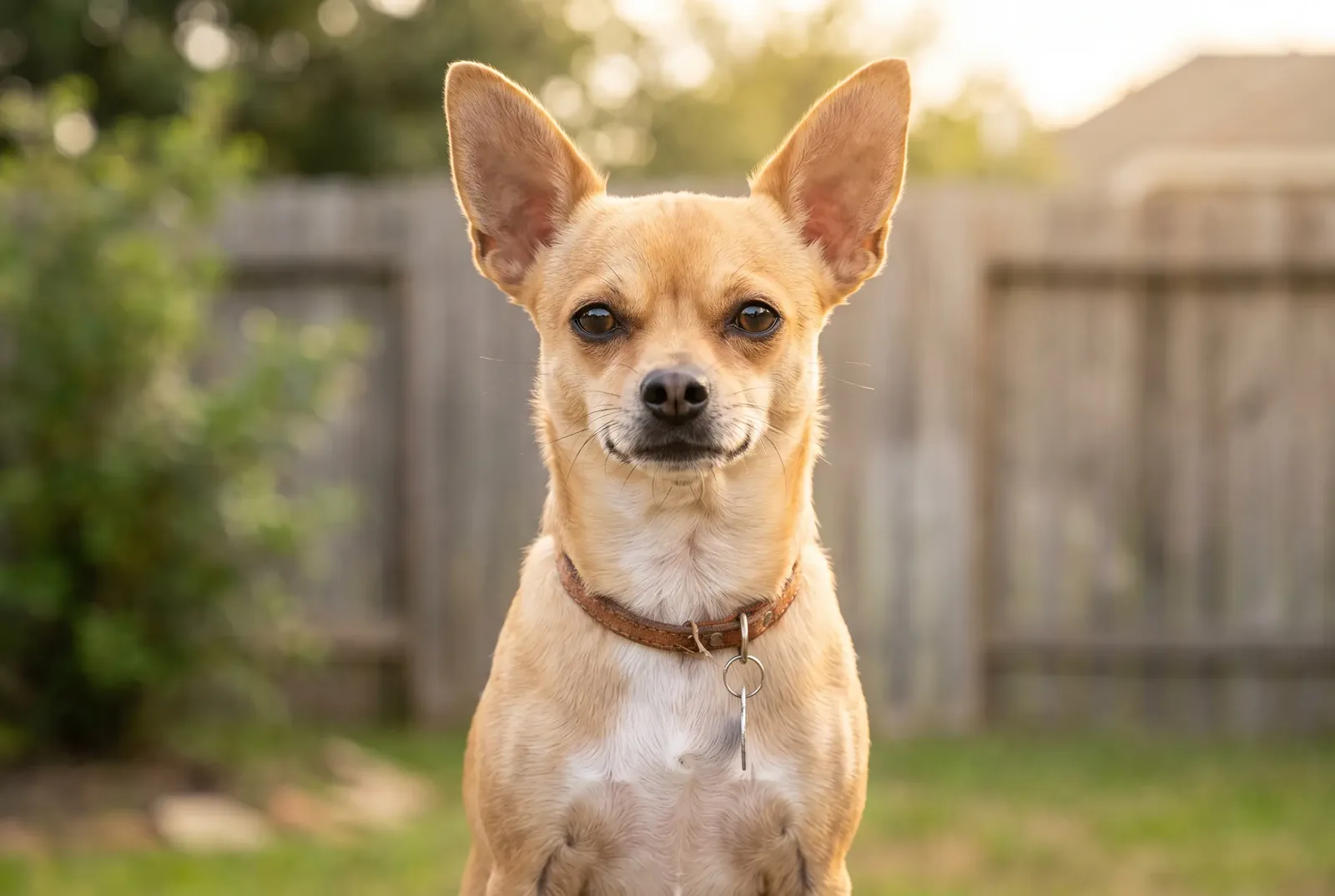
The Chihuahua is one of the 35 breeds in the UC Davis neutering study, and one of the best represented — 298 intact and 289 spayed females, within a total of 1,037 dogs. For context, that is a larger sample than the Golden Retriever, the Boxer or the Standard Poodle.
The findings are as quiet as any in the paper. Joint disorders showed no noteworthy occurrence in either intact or spayed females at any age. Cancers ran under 5% across every group, with no evident increase associated with spaying at any age. And urinary incontinence, which is a genuine problem in some breeds, was not diagnosed in a single spayed female. The study's guidance is simply that those wishing to neuter should decide on the appropriate age.
On the Standard Poodle page I look at a clean null result and still recommend waiting, because it rests on 87 spayed females split across four age bands — around twenty dogs each. With groups that small, a real risk of several percent can easily produce zero cases purely by chance, so the null is weak evidence of safety.
Here there are 289 spayed females. That is a different object entirely. The same rule — how much can a sample this size actually rule out? — gives a confident answer here and a cautious one there.
So for once I do not have to hedge. The orthopaedic side of the scale is genuinely empty in this breed, which means the decision rests entirely on the benefits that were never in question.
So what does decide it?
Mammary tumours. The long-standing research is consistent in direction: spaying before the first heat is associated with substantially lower mammary tumour risk than spaying after one or two cycles, and the protection erodes with each cycle. Mammary tumours are among the more common cancers in intact female dogs and a meaningful share are malignant. This is the single largest health argument for going early, and in this breed nothing stands against it.
Pyometra. An infection of the uterus that affects intact females, usually in middle age and often in the weeks after a heat. It makes them dangerously ill, and treating it means emergency surgery on a sick older dog rather than a planned procedure on a healthy young one. In a five-pound patient that is a situation I would very much rather avoid altogether. Spaying removes the possibility.
Put those together and the recommendation writes itself: before the first heat, which in most Chihuahuas falls around five to six months. I will confirm the timing when I examine her, because the small breeds vary and I would rather look at her than work from a calendar.
What I recommend
Where I deviate. If she is genuinely tiny or still immature at five months, a few more weeks is fine — there is no prize for an exact date and I would rather operate on a puppy who is thriving. If she has already come into her first heat, we wait until it has finished and the blood supply to the uterus has settled, usually two to three months, rather than operating during it. And if I hear a heart murmur or find a luxating kneecap on her exam, we work out what it means before scheduling rather than after.
No honest veterinarian can hand you an exact date without meeting your dog. Bring her in and we will settle it together.
How I do the surgery
I will be straight about this at her size: the laparoscopic advantage is smallest in the smallest dogs. The case for it is strongest in big breeds, where a traditional spay means a long abdominal incision and the keyhole approach spares a great deal of that. On a five-pound Chihuahua the conventional incision is already very small and the recovery already quick, so the gap between the approaches narrows a long way. It remains a gentler operation with less tissue disturbed, and some families choose it for that reason — but I would not tell you it changes her outcome the way it changes a seventy-pound dog's, and I would rather you heard that from me first.
What the day looks like
She comes in that morning having skipped breakfast, has an IV catheter placed, plus pre-anaesthetic bloodwork if you've chosen it (I recommend it, and it's priced separately), and is monitored continuously while she is under, on a warming system throughout — a dog this small has almost no thermal reserve and that matters more in her than in a big dog. I do the surgery myself; I have been a solo veterinarian since 1998, so the person who examined her and the person holding the instruments are the same person. She goes home the same day with pain medication, closed with absorbable suture and surgical glue, so there is nothing to remove later.
While she is asleep I will also look at her mouth, because Chihuahuas carry a full set of teeth in a very small jaw and retained baby teeth are common — dealing with them now saves a second anaesthetic later. I will always speak to you before doing anything beyond what we agreed. More detail on the day itself is on what to expect from your pet's surgery.
Chihuahua spay questions
Because the size of the group changes what a null result means, and that is the whole difference. On the Standard Poodle page I am looking at 87 spayed females split across four age bands — roughly twenty dogs each, where a genuine risk of several percent could easily produce zero cases by chance. Here there are 289 spayed Chihuahuas, in one of the largest breed samples in the entire paper. A group that size would have picked up a meaningful effect if one existed. So the same rule gives opposite answers: a null from twenty dogs is weak evidence of safety, and a null from nearly three hundred is reasonably strong.
It does not, and following it would actively cost her something. That advice comes from research on large breeds, where removing hormones before the growth plates close lets the long bones grow slightly longer and changes the angles the joints work at. In a seventy-pound retriever those altered angles carry a heavy frame for a decade. In a five-pound Chihuahua there is very little load and very little leverage, and the researchers looked for the effect in this breed, in a large sample, and did not find it. Applying large-breed caution here is not extra safety. It trades away real mammary protection for a benefit that was never there.
The two things that were never in dispute. Spaying before the first heat is associated with substantially lower mammary tumour risk than spaying after one or two cycles, and that protection falls away with each cycle she goes through. And it removes any possibility of pyometra, an infection of the uterus that tends to strike middle-aged intact females and turns a healthy dog into an emergency overnight — which in a five-pound patient is a genuinely frightening situation. With the orthopaedic side of the scale empty, both of those stand unopposed, and the answer becomes straightforward.
It is about right, and being small changes how carefully everything is managed rather than whether it should happen. What I care about in a patient this size is her temperature, because she has almost no thermal reserve and loses heat quickly, so she is on a warming system throughout. Her blood glucose is worth watching in the smallest and youngest patients. And her drug doses are calculated precisely rather than scaled by eye, because the margin at four pounds is far narrower than at forty. An IV catheter and continuous monitoring are standard here regardless of size, and I recommend pre-anaesthetic bloodwork too (priced separately).
I will, and in this breed it is worth doing properly. Chihuahuas have the same number of teeth as a Labrador packed into a fraction of the jaw, so crowding and retained baby teeth are common — and where an adult tooth is coming in alongside a deciduous one that should have gone, food and plaque pack into the gap and dental disease starts young. If I find retained baby teeth, taking them out while she is already asleep saves her a second anaesthetic later. I will always speak to you before doing anything beyond what we agreed.
Not in any way that should worry you. The mammary protection is strongest before the first heat and declines with each subsequent cycle, but it declines gradually rather than switching off, and a dog spayed after one cycle is still considerably better off than one left intact for years. The pyometra risk ends entirely on the day she is spayed, regardless of how many cycles she has had. I would simply book her now rather than waiting for another one, because the only thing that changes the arithmetic from here is time passing.
Keep reading
Every breed grows on its own schedule. If one of these is closer to your dog, start there.
Your Chihuahua, the other half of the question:
Similar-size breeds:
The whole picture: read the veterinarian's breed-by-breed spay and neuter guide, or see how the laparoscopic spay works.
Bring her in around four or five months and we'll check her over, confirm the timing, and get her on the schedule before her first heat.
Request an Appointment Or text (281) 859-9244