Before her first heat cycle, usually around five to six months. The timing question is genuinely easy in this breed — the research found close to nothing. What I would rather talk about is the thing I actually check before I anaesthetise a Yorkie.
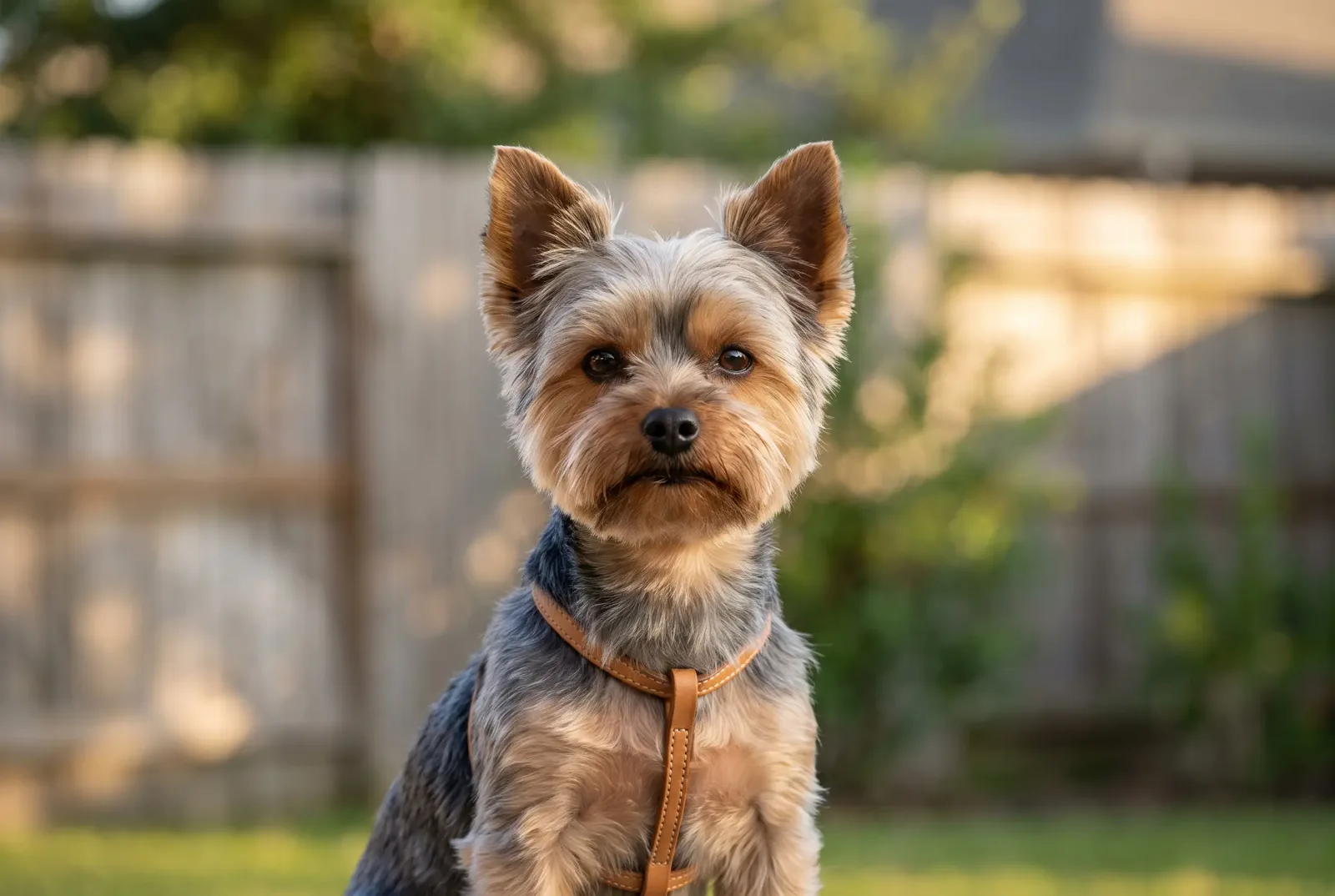
The Yorkshire Terrier comes out of the big neutering study looking almost boringly healthy. No joint disorders worth noting in any group. Cancers at about one percent. Not one case of urinary incontinence in any female, spayed or intact. The paper's advice on timing amounts to: choose whatever age suits you.
So I could stop there. I would rather not, because there is something about this breed that matters far more on the day of her surgery than the date on the calendar.
Yorkshire Terriers are one of the breeds most commonly born with a liver shunt — a blood vessel that should close after birth and does not, so some of her blood bypasses the liver instead of being filtered by it.
The liver is what breaks down anaesthetic drugs. A dog whose blood is partly skipping it can take a very long time to wake up, or wake up badly. And a fair number of these dogs look completely normal until the day you anaesthetise them.
— Dr. P
That is why the pre-anaesthetic bloodwork on a Yorkie is doing real work rather than ticking a box, and it is worth understanding what I am looking for. It's priced separately from the spay.
What the research actually shows
The Yorkshire Terrier is one of the 35 breeds in the UC Davis neutering study, with 144 intact and 229 spayed females inside a total of 685 dogs — a reasonable sample, and the findings are close to the lowest disease burden of any breed in it.
Joint disorders: none at all in intact males, about 1% in intact females, and no noteworthy occurrence in spayed females at any age. Cancers: about 1% in intact dogs of both sexes, with nothing noteworthy in neutered dogs. Urinary incontinence: not reported in a single female, intact or spayed. The guidance for both sexes is that those wishing to neuter should decide on the appropriate age.
That is a genuine result rather than an absence of information, and it means the large-breed argument — wait for the growth plates, protect the joint angles — has nothing to stand on in a six-pound dog. Following it here would cost her real mammary protection to buy a benefit that was never there.
So the decision rests on the two things that were never in dispute: mammary tumours, where protection is strongest before the first heat and erodes with every cycle, and pyometra, a uterine infection of intact females that ends as a possibility the day she is spayed. Both point the same way, which is why the answer at the top of this page is short.
What I check before I anaesthetise a Yorkie
A congenital portosystemic shunt is a vessel that lets blood bypass the liver. In a healthy dog, blood coming from the gut passes through the liver first and is cleaned up on the way. In a shunt dog, some of it takes a short cut straight into the general circulation — so toxins that should have been filtered are not, and the liver itself stays underdeveloped because it never gets its normal blood supply.
Why it matters for surgery specifically: most anaesthetic drugs are broken down by the liver. A dog with a shunt processes them slowly and unpredictably. The classic presentation is a small dog who goes under normally and then takes hours longer than she should to come round.
What the signs look like, when there are any: a puppy who is noticeably smaller than her littermates and slow to grow, who seems dull, wobbly, disoriented or head-pressing after meals, who drinks and urinates more than expected, or who has had episodes of vomiting or seizures with no other explanation. Many affected dogs show some of these. Some show none.
Her pre-anaesthetic bloodwork is not a box-ticking exercise in this breed. I look particularly at her protein, her urea and her liver values — a small Yorkie who is not thriving, with a low protein and a low urea, is the pattern that makes me want a bile acid test before we go any further.
That is a specific test for shunting, done on blood taken before and after a meal. In the large majority of Yorkies everything is normal and we carry on as planned. The point of testing is the small number where it is not, because those are the dogs for whom a routine spay would otherwise become a very bad afternoon.
If she does turn out to have a shunt, that is a whole separate conversation about management and referral — and her spay waits until we have had it.
What I recommend
Where I deviate. If she is very small or still immature at five months, a few more weeks is fine — there is no prize for an exact date. If anything on her bloodwork or her growth curve makes me want a bile acid test, we do that before we schedule rather than after. And if she has already had a heat, we wait until it has finished and things have settled, usually two to three months, rather than operating during it.
No honest veterinarian can hand you an exact date without meeting your dog. Bring her in and we will settle it together.
How I do the surgery
At her size this is the least important decision on the page, and I would rather say so than sell you something. The laparoscopic advantage is largest in big dogs, where a conventional spay means a long abdominal incision. On a six-pound Yorkshire Terrier the traditional incision is already tiny and the recovery already quick, so the gap between approaches is narrow. It is still a gentler operation with less tissue disturbed and some families choose it for that reason. But what genuinely affects how her day goes is the anaesthetic planning, not the instruments.
What the day looks like
She comes in that morning after a shorter fast than you may have been told to expect, has an IV catheter placed, plus pre-anaesthetic bloodwork if you've chosen it (I recommend it, and it's priced separately), and is monitored continuously while she is under, on a warming system throughout. A dog this small has almost no thermal reserve, her glucose is watched, and her drug doses are calculated precisely rather than scaled by eye. I do the surgery myself; I have been a solo veterinarian since 1998, so the person who examined her and the person holding the instruments are the same person.
She goes home the same day with pain medication, closed with absorbable suture and surgical glue, so there is nothing to remove later. While she is asleep I will also check her mouth for retained baby teeth, which the toy breeds keep more often than not. More detail on the day itself is on what to expect from your pet's surgery.
Yorkshire Terrier spay questions
It is a blood vessel that should have closed shortly after birth and did not, so some of her blood bypasses the liver instead of being filtered through it. Yorkshire Terriers are one of the breeds most commonly affected. It matters enormously before an anaesthetic because the liver is what breaks down most anaesthetic drugs — a dog whose blood is partly skipping the liver will process those drugs slowly and can take a very long time to wake up, or wake up badly. Signs can be subtle: a puppy who is smaller than her littermates, dull or wobbly after meals, drinks a lot, or has had unexplained vomiting. Sometimes there are no signs at all, which is precisely why I screen rather than rely on how she looks.
The general panel looks at her red and white cells, her kidney values, her protein and her blood sugar. In a Yorkshire Terrier I pay particular attention to the liver-related values and to her protein and urea, because a low protein, a low urea and a small dog who is not thriving is the classic pattern that makes me want a bile acid test before we go anywhere near an anaesthetic. That is an extra blood test, done before and after a meal, and it is the specific test for shunting. In most Yorkies everything comes back normal and we proceed as planned — but the point of the test is the small number where it does not.
Reasonably, yes — this is a decent-sized sample, 685 dogs including 229 spayed females, and it found no joint disorders worth noting, cancers at about one percent, and not a single case of urinary incontinence in any female, spayed or intact. That is close to the lowest disease burden of any breed in the paper. It genuinely means the spay-timing debate that dominates large-breed advice has nothing to stand on here. It does not mean Yorkshire Terriers are trouble-free, only that their troubles are elsewhere.
Because with nothing on the waiting side of the scale, the benefits of going early stand unopposed. Spaying before the first heat is associated with substantially lower mammary tumour risk than spaying after one or two cycles, and that protection erodes with each cycle. It also removes the possibility of pyometra, a uterine infection that tends to strike middle-aged intact females and turns a healthy dog into an emergency — and emergency abdominal surgery on a sick six-pound dog is a situation I would much rather prevent than manage.
It is something I actively manage rather than something to worry about. Very small dogs, particularly young ones, have limited reserves and can drop their blood glucose if they go too long without food. That is why I am careful about how long she fasts before surgery — the modern approach is a shorter fast than people were once told, not an all-night one — and why her glucose is watched while she is under and as she wakes. If she is on the small side even for a Yorkie, tell me, and I will plan her day around it.
Honestly, it is where the benefit is smallest. The strongest case for the laparoscopic approach is in large dogs, where a traditional spay means a long abdominal incision and keyhole access spares much of it. On a six-pound Yorkshire Terrier the conventional incision is already tiny and the recovery already quick. It remains a gentler operation with less tissue disturbed, and some families choose it for that reason, but I am not going to tell you it transforms her outcome at this size. What matters far more for her is that the anaesthetic is planned properly.
Keep reading
Every breed grows on its own schedule. If one of these is closer to your dog, start there.
Your Yorkshire Terrier, the other half of the question:
Similar-size breeds:
The whole picture: read the veterinarian's breed-by-breed spay and neuter guide, or see how the laparoscopic spay works.
Bring her in around four or five months. We'll run her bloodwork properly, confirm the timing, and get her on the schedule before her first heat.
Request an Appointment Or text (281) 859-9244