Around twelve months, though the research is more relaxed than I am and I will show you where we differ. But if you read only one section of this page, make it the one about a gene test — because that is the thing most likely to actually matter to her.
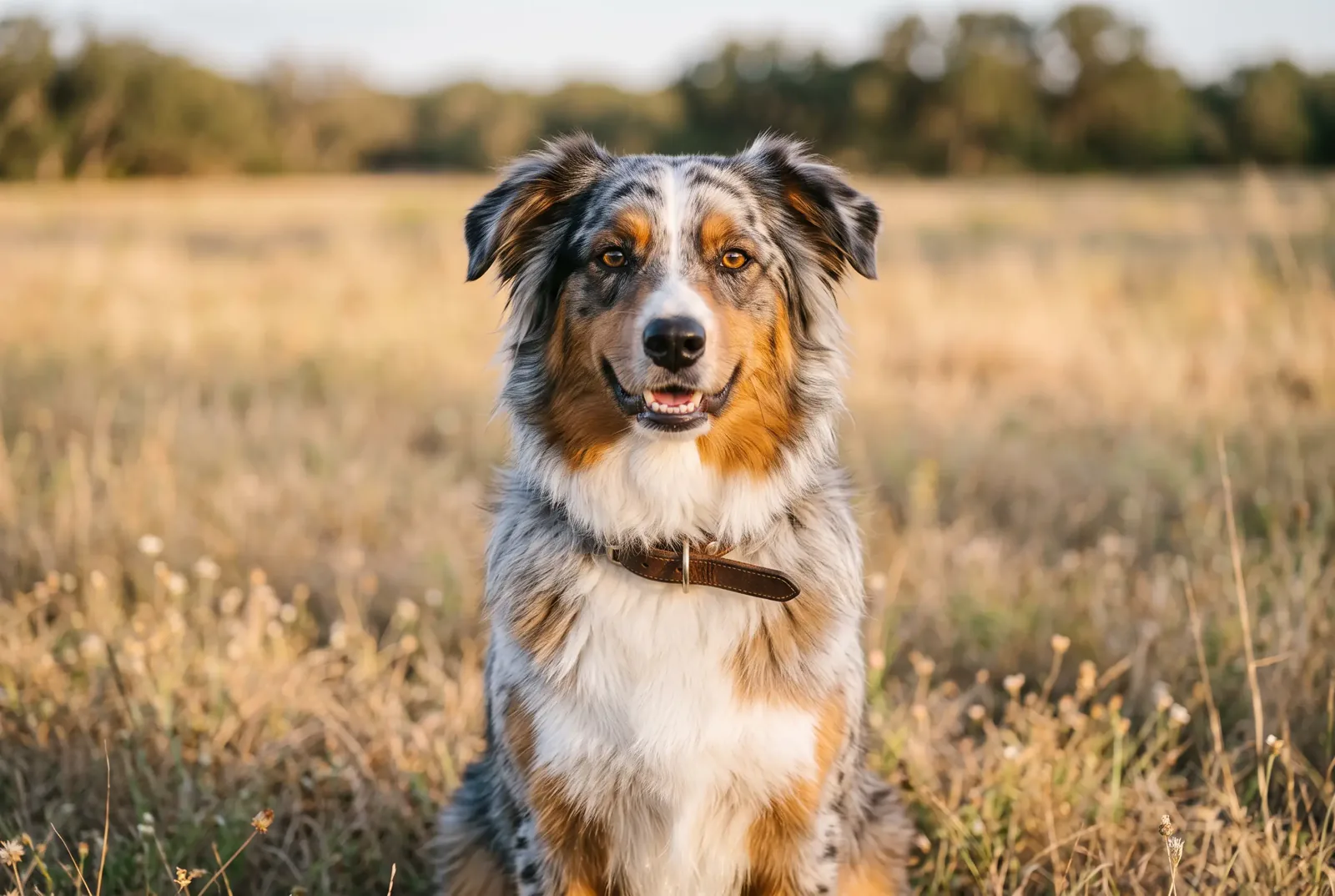
The timing question here has a short answer. The Australian Shepherd came out of the big neutering study looking robust — no meaningful joint effects at any spay age, a cancer signal in spayed females that did not reach significance, and a guideline that amounts to choosing whatever age suits you.
So I want to spend this page on something else entirely, because it is the most consequential breed-specific fact on any page of this website.
Dogs from herding lines can carry a mutation in a gene called MDR1. In an affected dog, certain ordinary drugs — given at completely normal doses — can cross into the brain and accumulate instead of being pumped back out.
Several of those drugs turn up around surgery. And the test that tells you is a cheek swab you do once in her life.
— Dr. P
Nothing else I write about in this series is both this serious and this easily solved.
The part I most want you to read
There is a barrier between the bloodstream and the brain that keeps most drugs out of the nervous system. Part of how it works is a protein that actively pumps certain molecules back into the blood before they can build up. The MDR1 gene — you will also see it written as ABCB1 — is what produces that pump.
Herding breeds can carry a mutation that stops it being made properly. A dog with one copy is a carrier and may show some sensitivity. A dog with two copies is affected, and drugs that are entirely safe in other dogs at standard doses can reach concentrations in her brain that cause severe neurological signs.
Which drugs? Several families, and the reason it matters here is that some of them are routine around a surgical visit — certain sedatives and pre-anaesthetic medications, certain anti-diarrhoeal drugs, and the ivermectin-class parasite treatments. There are others. This is deliberately a description rather than a list for you to police, because the point is not that these drugs are forbidden.
Being affected does not mean she cannot be anaesthetised, and I would not want the internet to convince you otherwise. It means her drugs are chosen deliberately rather than by default, and several of them remain perfectly usable at adjusted doses with proper monitoring.
What causes harm is a standard dose given to a dog whose status nobody ever checked. The test removes that possibility permanently, for the price of one cheek swab, and the answer is good for her whole life.
And it is not only Australian Shepherds. The mutation runs through the herding group because those breeds share ancestry — collies of various kinds, Shetland Sheepdogs, Old English Sheepdogs, Border Collies, the various Australian Shepherd sizes, and mixes with any of them in the background. If your dog looks like she has collie in her, test her, whatever her paperwork says.
What the research actually shows
The Australian Shepherd is one of the 35 breeds in the UC Davis neutering study, with 76 intact and 136 spayed females. Joint disorders affected about 4% of intact females, with no evident increase from spaying at any age — which, for a dog of this size and athleticism, is a genuinely reassuring result. Cancers ran at about 1% in intact females; some spayed groups reached 7 to 8%, but those increases did not reach statistical significance. About 1% of early-spayed females developed urinary incontinence.
The study's guidance is that those wishing to spay should decide on the appropriate age, while maintaining vigilance for the cancers in females. That second clause is doing quiet work: the researchers found something they could not confirm and chose to flag it rather than discard it.
Where I differ from the paper. It asks nothing of you on timing; I suggest around twelve months. That gap is mine, and I would rather label it than let it pass as evidence. My reasoning is unremarkable: she is a forty-to-sixty-five-pound dog whose growth plates finish closing around a year, the unconfirmed cancer signal is not nothing even though it did not clear the bar, and waiting costs relatively little. If your circumstances point to doing it earlier, the evidence is genuinely on your side. I make the same kind of disclosure on the Labrador page.
What I recommend
What waiting costs her. Mammary protection, mostly. Spaying before the first heat gives the strongest protection against mammary tumours and it erodes with each cycle. There is also pyometra, which ends as a possibility the day she is spayed. Those are real costs, which is exactly why I hold the twelve months loosely rather than insisting on it.
Where I deviate. If she is a working or serious sport dog, I lean to the later end. If her heat cycles are unmanageable in your household, earlier is fine and I will not make you justify it. And whatever we decide about the date, run the MDR1 swab — it is the one thing on this page I would not skip.
No honest veterinarian can hand you an exact date without meeting your dog. Bring her in and we will settle it together.
How I do the surgery
If you do wait until around twelve months, she is a fully grown forty-to-sixty-five-pound athlete on the day of surgery, and that is where the approach starts to matter. A traditional open spay at that size needs a considerably longer abdominal incision than the same operation on a six-month-old puppy, with a correspondingly sorer recovery. The laparoscopic spay I perform takes the ovaries through two or three keyhole incisions of about a centimetre and a half under camera guidance, so the incision does not scale up with the dog. Most are comfortable and moving normally within two or three days — which matters a great deal for a breed that regards a fortnight of enforced rest as a problem to be solved rather than an instruction to follow.
What the day looks like
She comes in that morning having skipped breakfast, has an IV catheter placed, plus pre-anaesthetic bloodwork if you've chosen it (I recommend it, and it's priced separately), and is monitored continuously while she is under. If her MDR1 status is known, her drug plan is built around it; if it is not, tell me she is a herding breed and I will plan conservatively. I do the surgery myself — I have been a solo veterinarian since 1998, so the person who examined her and the person holding the instruments are the same person.
She goes home the same day with pain medication, closed with absorbable suture and surgical glue, so there is nothing to remove later. As with any herding breed, the fortnight afterward needs a plan built around her brain rather than her legs — scentwork and puzzle feeding do far more than a short lead walk. More detail is on what to expect from your pet's surgery.
Australian Shepherd spay questions
It is a gene — also called ABCB1 — that produces a protein acting as a gatekeeper at the barrier between the bloodstream and the brain. Its job is to pump certain drugs back out before they can accumulate in the nervous system. Dogs from herding lines can carry a mutation that stops it working. In a dog with two copies, drugs that are perfectly safe in other dogs at normal doses can build up in the brain and cause severe neurological effects. Several of the drug families involved turn up around surgery — some sedatives and pre-anaesthetic medications, some anti-diarrhoeals, and the ivermectin-class parasite treatments. That is why I would rather know her status before an anaesthetic than find out during one.
A cheek swab. It is a simple genetic test, it is not expensive, and it is done once in her life — the result never changes. She comes back as clear, as a carrier of one copy, or as affected with two copies. Carriers can show some sensitivity at higher doses and affected dogs are the ones who need real care. If you are already booking her spay, that is the natural moment to do it, because the result is genuinely useful information for every drug decision she will ever have.
Not at all, and I want to be clear about that because the internet can make this sound like a life sentence. It means her drug choices are made deliberately rather than by default. There are plenty of anaesthetic protocols that work perfectly well in affected dogs, and many of the drugs in question are usable at adjusted doses with proper monitoring. What causes harm is giving a standard dose to a dog whose status nobody checked. Knowing changes the plan; it does not cancel it.
No — it runs through the herding breeds generally, because they share ancestry. Collies of various sorts, Shetland Sheepdogs, Old English Sheepdogs, Border Collies and the various Australian Shepherd sizes can all carry it, as can mixes with herding breeds in them. If your dog looks like she has some collie in her, the test is worth doing even if her paperwork says something else. I mention it on the Border Collie pages too for the same reason.
Very little, which is the easy part. Across 212 females it found joint disorders at about 4% in intact dogs with no evident increase from spaying at any age, and cancers at about 1% in intact females, with some spayed groups reaching 7 to 8% but not reaching statistical significance. About 1% of early-spayed females developed urinary incontinence. The study's guidance is that those wishing to spay should decide on the appropriate age, while remaining vigilant for the cancers in females.
Because I am taking a free option, and I would rather show you that than pretend it came out of the paper. The study asks nothing of you here. My twelve months is me reasoning that she is a forty-to-sixty-five-pound dog whose growth plates finish closing around then, that the non-significant cancer signal in spayed females is not nothing even though it did not clear the bar, and that waiting is cheap. If your household needs her done at seven months, the evidence is on your side rather than mine, and I will not argue with you about it.
Keep reading
Every breed grows on its own schedule. If one of these is closer to your dog, start there.
Your Australian Shepherd, the other half of the question:
Similar-size breeds:
The whole picture: read the veterinarian's breed-by-breed spay and neuter guide, or see how the laparoscopic spay works.
The timing is genuinely flexible in this breed. The MDR1 test is the part I'd rather you didn't leave until the day something goes wrong.
Request an Appointment Or text (281) 859-9244