Past a year, the same as for a female — the study gives one guideline covering both sexes, which it rarely does. There is also a detail buried in his numbers that is worth understanding, because it is the single most misread thing in this whole field.
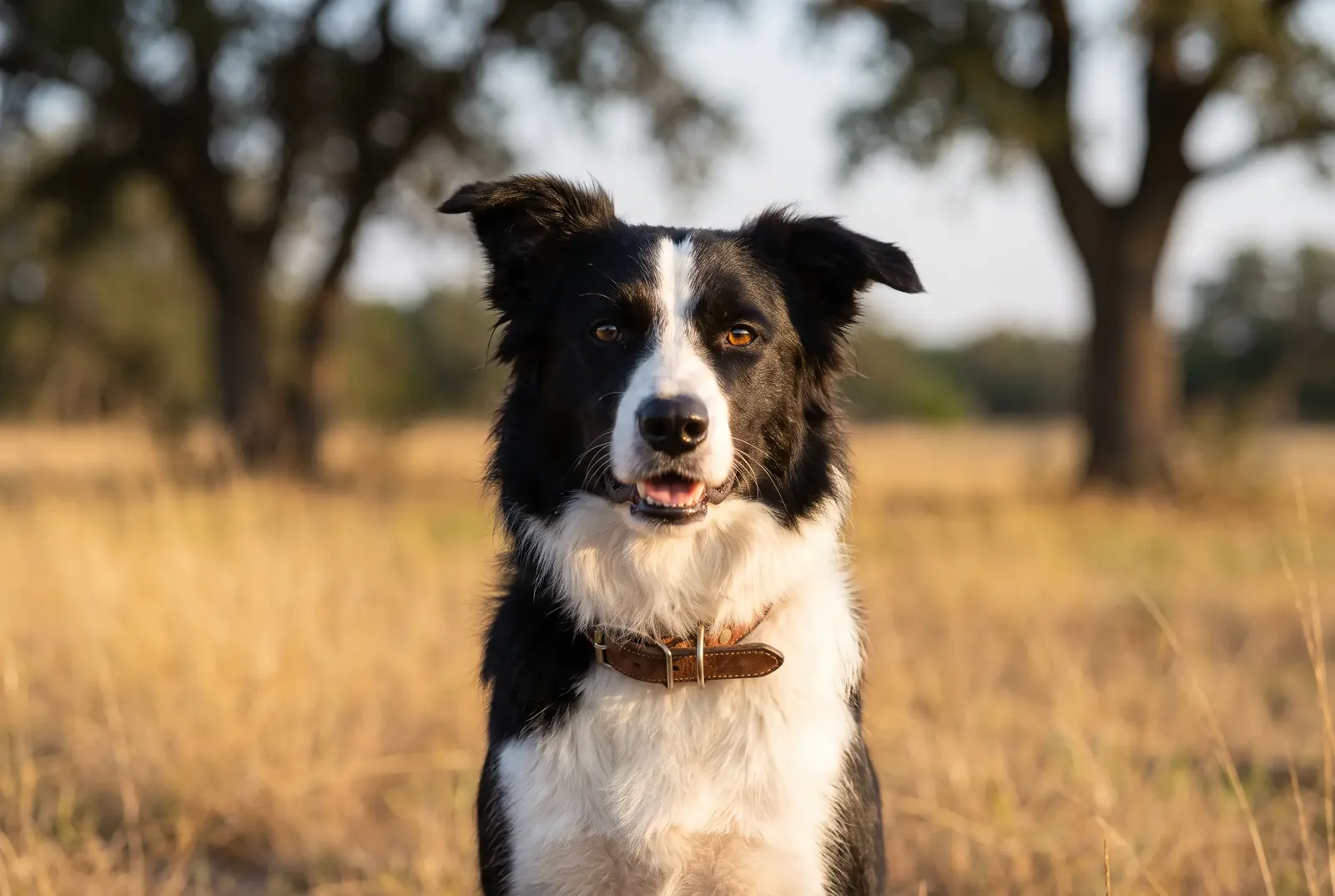
The recommendation is straightforward and I will not stretch it out: wait until he is past a year. The study's guideline for this breed covers both sexes together and says exactly that, on the strength of a cancer signal in the six-to-eleven-month band. I explain why I find that finding credible on the female page, and every word of it applies to him.
What I want to use this page for is a detail sitting in plain sight in his data that almost everybody reads backwards — including, in my experience, most people writing about this research online.
Males in this study went from about 2% to 13%. Females went from 0% to 11%. The male jump looks bigger, so you would assume the male finding is the more solid one.
It is the other way round. The female result carries the stronger statistical support. And once you see why, you will read every number on this website — and everywhere else — more carefully.
— Dr. P
The thing worth learning here
Here are the two results side by side, exactly as the paper reports them.
The male rise is eleven points. The female rise is also eleven points. But the male one looks larger at a glance, because it climbs off a visible baseline instead of a zero — and 2 to 13 reads as "more than six times" while 0 to 11 has no multiple to quote at all.
Meanwhile the p-values run the other way. The female result is significant at p<0.01; the male at p<0.05. In plain terms, the researchers were more confident the female effect was real.
It answers one question only: how likely is it that we would see a difference this large if there were really no effect at all? A small p-value means the finding is unlikely to be an accident.
It says nothing about how big the risk is, and nothing about whether it matters for your dog. A tiny, clinically irrelevant difference can be highly significant if you measure enough animals. A large, important difference can fail significance if you measure too few — which is exactly what happened with the Husky cruciate finding, where the researchers acted on a result that never cleared the bar.
I labour this because "statistically significant" gets used online as though it means "big" or "proven", and it means neither. Once you separate the two questions, a great deal of frightening pet-health content becomes much easier to read calmly — including the pages on this site.
What I recommend
Waiting costs him nothing, which makes this an easy recommendation to give. He faces no pyometra risk and there is no mammary-tumour clock running down — those belong to the female side, which is why her page has a genuine trade-off to discuss and his does not. What you are managing in the meantime is behavioural, plus keeping him away from intact females.
Where behaviour overrides it. If he starts marking indoors, mounting persistently, escaping the yard to find a female, or showing hormonally driven tension with other males, bring him in and we will move sooner. What neutering will not touch is the herding, the staring, the shadow-chasing or the inability to switch off — that is the breed, not the hormones, and surgery is the wrong tool for it. And if a testicle has not descended by six months, that changes the plan entirely and it should come out on its own timetable.
The part that actually needs planning
The surgery is short. The fortnight afterward is the genuine challenge with this breed, and an under-stimulated Border Collie is a far bigger post-operative risk than the incision. Plan it before the day rather than improvising on the Saturday.
If you have a plan for those two weeks, this is an easy recovery. If you do not, he will invent his own entertainment, and it will involve exactly the movements I asked you to avoid.
What the day looks like
A neuter is the shorter and simpler of the two surgeries — the testicles are external rather than deep in the abdomen, so it is one small incision just in front of the scrotum. That is also why I do not offer a laparoscopic version, unlike a laparoscopic spay where the alternative is a long abdominal incision.
He skips breakfast that morning, has an IV catheter placed, plus pre-anaesthetic bloodwork if you've chosen it (I recommend it, and it's priced separately), and is monitored continuously while he is under. I do the surgery myself; I have been a solo veterinarian since 1998, so the person who examined him and the person holding the instruments are the same person. He goes home the same day with pain medication and will be bright by the next morning, which is precisely the problem described above. More on the day itself is on what to expect from your pet's surgery.
Border Collie neuter questions
Because those are two different questions, and it is one of the most commonly confused things in medicine. The size of an effect and the confidence that it is real are separate measurements. Males went from about 2% to 13% and that reached significance at p<0.05. Females went from 0% to 11% and reached p<0.01, which is the stronger result. The male rise looks more dramatic because it comes off a visible baseline rather than a zero. But the statistics say we can be more confident about the female finding. Neither number tells you how big the risk is for your individual dog — that is the part a p-value never answers.
Past a year, the same as for a female. The study's guideline covers both sexes together, which is unusual — most breeds get separate advice — and it says to hold off neutering until beyond a year of age because of the cancer risk. Twelve months is where I already was, so I am not adding anything of my own. If you want the fuller argument for why I find this particular finding credible when I am sceptical of similar-looking ones elsewhere, it is on the female page.
Not really, and it surprises people expecting the standard big-dog argument. The study found joint disorders in only about 2 to 3% of intact Border Collies of either sex, with no evident increase from neutering at any age. So the growth-plate reasoning I use for a German Shepherd or a Golden Retriever is not what is happening here. My twelve-month recommendation rests entirely on the cancer finding, and I would rather you knew which argument you are acting on than assume it is the usual one.
Not very. Thirteen percent means that among the males in that band, roughly one in eight developed one of the cancers followed over a lifetime — which also means around seven in eight did not. It is a real finding and worth avoiding when you have the choice, but it is not a sentence, and there is nothing to undo. What actually helps him from here is unglamorous: keep him lean, keep him properly exercised and mentally worked, and let me examine him properly once a year so anything new gets found early rather than late.
By tiring his brain instead of his body, and by planning it before the day rather than improvising on the Saturday. Scentwork is the single most useful thing — hiding food around a room and letting him find it is genuinely tiring and requires no running. Puzzle feeders and slow-release toys for meals. Short, calm lead walks rather than free running, and no ball, no frisbee, no stairs and no jumping on or off furniture. Trick training that involves no movement, like chin rests or nose targets, works well. An under-stimulated Border Collie is the real post-operative risk in this breed, far more than the incision itself.
No, and with this breed in particular I would rather say so bluntly. Neutering reduces roaming to find a female, urine marking, persistent mounting, and some male-to-male tension. It does nothing whatever for a dog who is herding the children, staring at shadows, chasing the lawnmower or unable to switch off. That is not hormones — that is several hundred years of selective breeding for exactly those traits, and the answer to it is work, structure and rest, not surgery. If what you want is a calmer dog, the neuter will disappoint you and I would rather help you with the actual problem.
Keep reading
Every breed grows on its own schedule. If one of these is closer to your dog, start there.
Your Border Collie, the other half of the question:
Similar-size breeds:
The whole picture: read the veterinarian's breed-by-breed spay and neuter guide, or see how the laparoscopic spay works.
The timing takes a minute. Working out how to keep a Border Collie quiet for two weeks is the conversation worth having.
Request an Appointment Or text (281) 859-9244