
Back-to-School Separation Anxiety in Dogs: A Cypress Vet's Guide
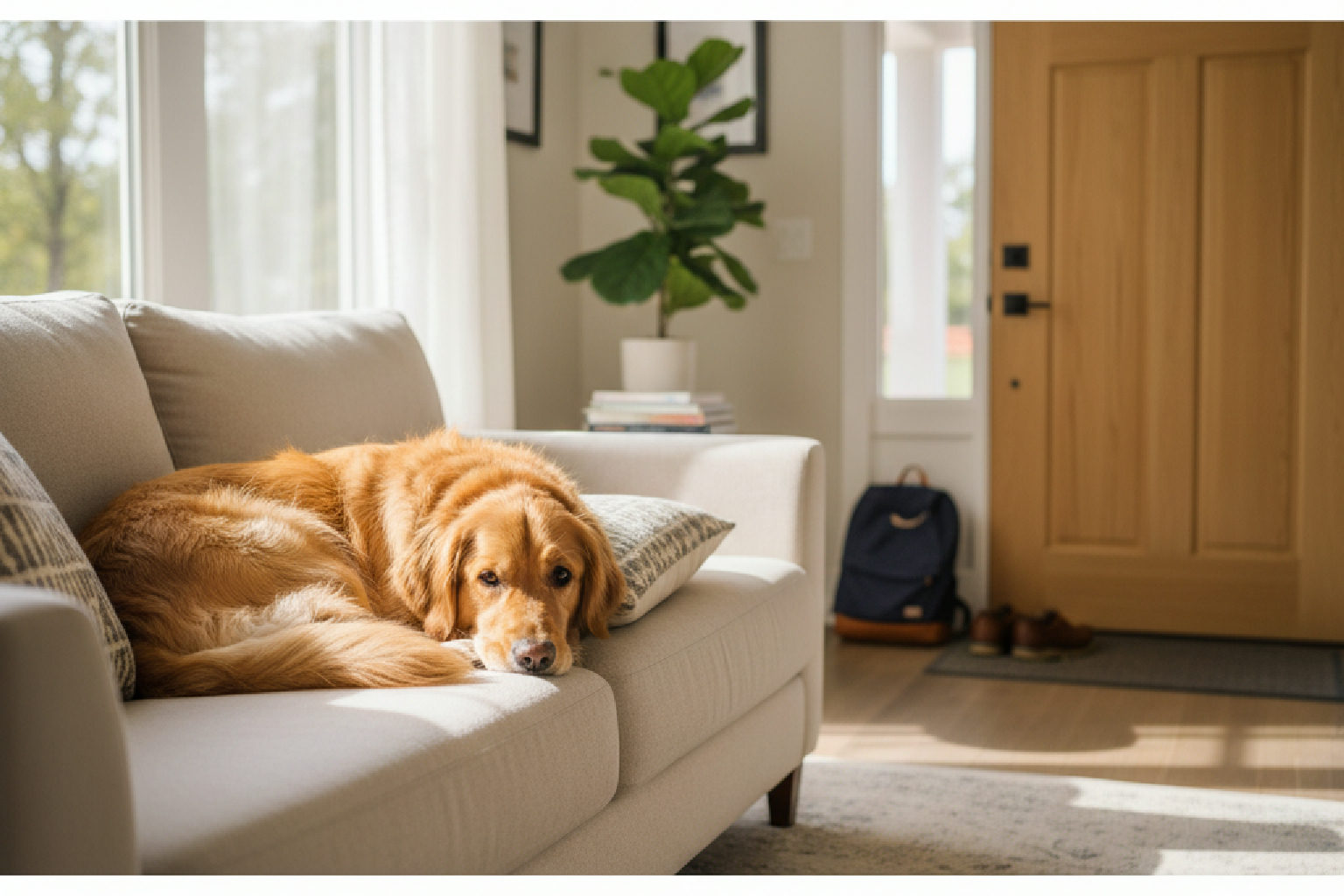
Every August, I start seeing the same pattern in my exam rooms here in Cypress, TX. A family comes in with a dog who has suddenly started destroying things, barking excessively, or having accidents in the house. The common thread: the kids just went back to school. After a summer of constant companionship, the dog is now alone for hours, and he is not handling it well.
If you are bracing for this transition, or already living it, here is what I tell my clients at Hearthstone Animal Clinic about recognizing and managing separation anxiety in dogs.
What is separation anxiety, and why does back-to-school trigger it?
Separation anxiety is exactly what it sounds like: distress that occurs when a dog is separated from their attachment figure, usually their owner or family. It is not misbehavior, spite, or a lack of training. It is a genuine panic response.
The back-to-school season creates a perfect storm. Your dog just spent 10 to 12 weeks with near-constant human contact. Kids home all day, family trips, late nights with everyone in the living room. Then, almost overnight, the house goes quiet for 8 hours. From your dog's perspective, his entire social world vanished without warning.
Dogs most at risk
- Puppies adopted during summer: They have never known a quiet house
- Rescue dogs: Previous abandonment can make them hyper-attached
- Senior dogs: Cognitive changes can amplify anxiety
- Dogs with a single strong bond: Usually to one family member
- Breeds prone to anxiety: German Shepherds, Labrador Retrievers, Border Collies, and Vizslas show up frequently, though any dog can develop it
What are the signs of separation anxiety in dogs?
This is the part most owners get wrong, and it is not their fault. Some signs are obvious. Others look like something else entirely.
Signs that happen while you are gone
- Destructive behavior: Chewing door frames, scratching at exits, destroying blinds near windows
- House soiling: Urinating or defecating indoors, often near doors or your scent (your bed, your laundry)
- Excessive vocalization: Barking, howling, or whining that neighbors report
- Escape attempts: Digging at doors, breaking through screens, jumping fences
Signs that happen before you leave or when you return
- Pacing, panting, or drooling as you get ready to leave
- Following you from room to room (sometimes called "shadow behavior")
- Frantic, over-the-top greetings when you return, lasting several minutes
- Refusing to eat while you are gone, even with a Kong full of peanut butter
One way to know: set up a camera and watch the first 30 minutes after you leave. A dog with separation anxiety typically shows distress within 15 to 20 minutes, not hours later.
How do I prepare my dog for back-to-school before it starts?
If you still have a week or two before school starts, you have time to make this transition much smoother. The goal is gradual adjustment, not cold turkey.
Start practice absences now
Leave the house for short periods, even just 10 to 15 minutes. Go get coffee, walk around the block, sit in your car. The point is teaching your dog that you leave and you come back. Slowly extend these absences over the next week or two.
Shift the routine early
If your dog has been sleeping until 9 AM and eating breakfast at 10, start moving toward the school-year schedule now. Wake up earlier, feed at the time you will feed once school starts, and take the morning walk at the new time. Dogs thrive on predictability, and sudden shifts cause stress.
Reduce the drama of departures and arrivals
I know it feels loving to give a big goodbye with kisses and reassurances. But to an anxious dog, that signals something bad is about to happen. Keep departures boring. Pick up your keys, walk out, no fuss. Same with arrivals: wait until your dog is calm before giving attention.
Create a "safe zone"
Some dogs do better with less space to patrol. A single room or a crate (if they are already crate-trained and comfortable) can actually reduce anxiety. Leave something with your scent, like a worn t-shirt, and keep the environment calm with white noise or classical music.
My dog already has separation anxiety. What actually works?
If your dog is already showing signs, here is what I see work in practice.
Environmental enrichment
A tired dog is a calmer dog. Increase exercise before you leave: a 20 to 30 minute walk or play session can help burn off nervous energy. Puzzle feeders, Kongs stuffed with frozen peanut butter, and snuffle mats give your dog something to focus on after you leave.
Desensitization training
This means slowly teaching your dog that departure cues (keys jingling, shoes going on, garage door opening) do not always mean you are leaving. Pick up your keys and sit down. Put on your shoes and watch TV. Over time, these cues lose their power to trigger panic. This takes consistency, often weeks of daily practice.
Calming supplements and pheromones
Products like Adaptil (a synthetic dog-appeasing pheromone) can take the edge off for mild cases. I have seen dogs respond well to calming supplements containing L-theanine or casein. These are not miracle cures, but they can be part of a larger plan.
When medication is appropriate
For moderate to severe separation anxiety, behavior medication is often the most effective tool we have. This is not sedation; it is a daily medication that reduces baseline anxiety so your dog can actually learn to cope.
The most commonly prescribed options include:
- Fluoxetine (Reconcile): An SSRI that takes 4 to 6 weeks to reach full effect
- Clomipramine (Clomicalm): A tricyclic antidepressant, also takes several weeks
- Trazodone: Can be used daily or as-needed for situational anxiety
Medication works best when combined with behavior modification, not as a replacement for it. According to the American Animal Hospital Association's behavior guidelines, combining medication with behavior modification produces better outcomes than either approach alone.
Does crating help or hurt separation anxiety?
This depends entirely on the individual dog. For dogs who are already comfortable in a crate and see it as a safe space, crating can actually reduce anxiety by limiting the territory they feel responsible for guarding.
But for dogs with severe separation anxiety, crating can make things worse. These dogs may injure themselves trying to escape, breaking teeth or nails on the crate. If your dog panics in a crate, do not force it. A dog-proofed room with a baby gate may be a better option.
If you need help determining whether your dog is a good candidate for crate training or other management strategies, our team can help you develop a plan. You can request an appointment to discuss your dog's specific situation.
When should I see a veterinarian about separation anxiety?
Come see us if:
- Your dog is injuring himself during episodes (broken nails, damaged teeth, skin wounds from escape attempts)
- House soiling or destruction is getting worse despite your efforts
- Your dog is losing weight because he refuses to eat while alone
- The anxiety is affecting your ability to leave the house or maintain your job
- You have tried the basics for 2 to 3 weeks with no improvement
Separation anxiety can look like other medical problems. Urinary accidents might be a bladder infection. Pacing and panting can signal pain. I always want to rule out physical causes before labeling something as purely behavioral. Wellness bloodwork and a thorough exam help us make sure we are not missing anything.
What if nothing is working?
Severe separation anxiety sometimes requires referral to a veterinary behaviorist. These are veterinarians with board certification in behavior, and they see the toughest cases. I will tell you honestly: there is a waiting list for most behaviorists in the Houston area, often several months. Starting early matters.
In the meantime, consider whether doggy daycare or a dog walker could bridge the gap. Even 2 to 3 days a week of midday company can make a real difference for dogs who genuinely cannot handle being alone.
The bottom line
Separation anxiety is real, it is common, and it is treatable. The instinct to comfort your anxious dog is right, but the execution matters. Start adjusting routines before school starts, keep departures boring, and do not wait to get help if your dog is struggling.
If your dog is showing signs of separation anxiety, or you want to get ahead of it before the school year starts, schedule a visit at Hearthstone Animal Clinic. We are located right here in Cypress, TX, and you can reach us at (281) 859-9244. Let's figure out a plan that works for your dog and your family.
Have a question about your pet?
Dr. Pelton and the Hearthstone team are here to help, the same day when it counts.
Get Your Pet Seen