
Cat Noise Aversion During Fireworks: Signs and Calming Tips
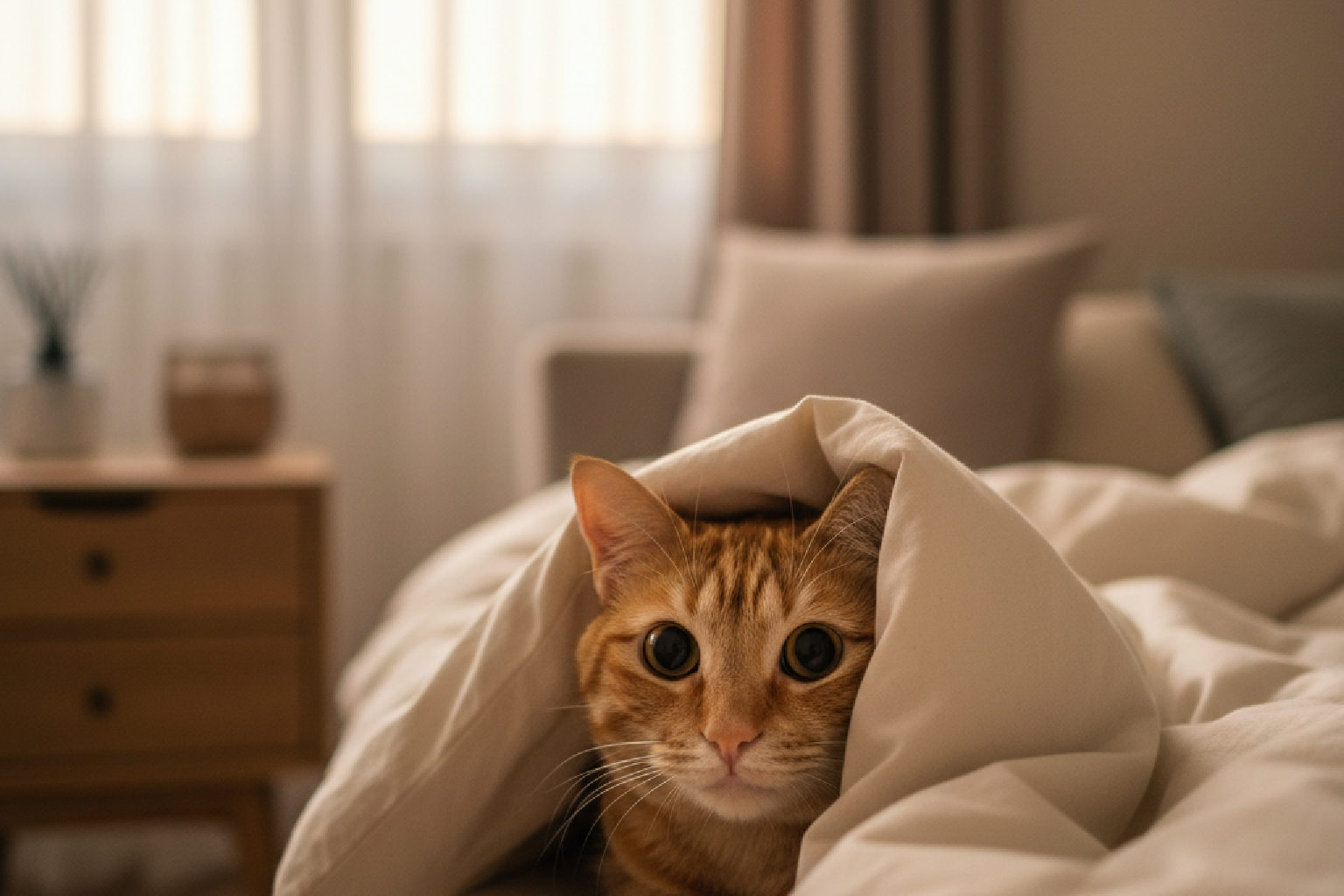
Every year around the Fourth of July, my phone starts ringing with panicked calls from cat owners across Cypress, TX. "My cat hid under the bed for three days." "She won't eat." "He scratched through the window screen trying to escape." Here at Hearthstone Animal Clinic, I see more stress-related issues in cats during fireworks season than almost any other time of year—and the tricky part is that cats are masters at hiding their fear until it becomes a crisis.
Let me walk you through what noise aversion actually looks like in cats, why it's more serious than many owners realize, and the specific strategies I recommend to my clients here in Cypress.
Why Are Cats So Sensitive to Fireworks?
Cats hear frequencies up to 64,000 Hz—nearly two octaves higher than dogs and three times higher than humans. That means the crack and boom of fireworks isn't just loud to them; it's overwhelmingly loud and contains high-pitched components we can't even perceive. Add in the unpredictability (cats hate surprises), the vibrations through the floor, and the smell of smoke, and you've got a perfect storm of sensory overload.
Unlike dogs, who often show obvious distress like panting and pacing, cats tend to internalize their fear. This makes it easy for owners to miss the signs—or worse, assume their cat is "fine" when they're actually suffering in silence.
What Does Noise Aversion Look Like in Cats?
I tell my clients to watch for these signs, which often show up hours before and after fireworks—not just during the noise itself:
Behavioral Signs
- Hiding – under beds, in closets, behind appliances, anywhere dark and enclosed
- Freezing – staying completely motionless, often with dilated pupils
- Escape attempts – scratching at doors or windows, bolting when doors open
- Refusal to eat or drink – even favorite treats go untouched
- Increased vocalization – excessive meowing, growling, or hissing
- Aggression – cats may scratch or bite when touched, even by trusted family members
Physical Signs
- Dilated pupils – even in normal lighting
- Flattened ears – pressed back against the head
- Low body posture – crouching, tail tucked
- Rapid breathing – watch the sides of the chest
- Inappropriate elimination – urinating or defecating outside the litter box
- Excessive grooming – sometimes to the point of creating bald patches
Here's what I want you to understand: these aren't just "quirky cat behaviors." They indicate genuine distress, and repeated exposure to this level of fear can lead to chronic anxiety, behavioral problems, and even physical health issues like stress-related skin conditions or inflammatory bowel disease.
How Can I Calm My Cat During Fireworks?
I've tested just about every calming strategy out there over my 25+ years in practice. Here's what actually works:
Create a Safe Room
Before the fireworks start, set up a "sanctuary" in an interior room with no windows (a walk-in closet or bathroom works great). Include:
- Fresh litter box
- Food and water
- Familiar bedding that smells like home
- A cardboard box or cat carrier with the door removed (cats feel safer in enclosed spaces)
Close the door and let your cat settle in before the noise begins. Don't force them to stay, but make it the most appealing option.
Sound Masking
Play continuous white noise, classical music, or "cat-specific" calming music at moderate volume. This won't completely block the fireworks, but it blunts the sharp edges of the sound. I've had good results with cat-specific audio recommendations from International Cat Care, which is a trusted resource for feline behavior.
Pheromone Products
Feliway diffusers release synthetic feline facial pheromones that can reduce stress behaviors. I recommend plugging one in the safe room at least 48 hours before July 4th—these take time to saturate the space. Are they magic? No. But I see about 60-70% of cats show some improvement, and there are zero side effects.
Calming Supplements
Over-the-counter options like Zylkene (a milk protein derivative) or Solliquin work best when started 3-5 days before the stressful event. They're not sedatives—they won't knock your cat out—but they can take the edge off moderate anxiety. For cats with mild noise sensitivity, these are often enough.
Does My Cat Need Prescription Medication for Fireworks?
Sometimes, yes. And there's no shame in that.
For cats with severe noise aversion—the ones who stop eating, injure themselves trying to escape, or remain terrified for days afterward—over-the-counter options usually aren't enough. In these cases, I prescribe medications like:
- Gabapentin – My go-to for most cats. It's a mild sedative and anti-anxiety medication that's safe, affordable, and can be given 2-3 hours before the fireworks start. Most cats become relaxed but not completely zonked.
- Trazodone – Another option, sometimes used in combination with gabapentin for severely anxious cats.
- Alprazolam (Xanax) – Reserved for extreme cases and requires careful dosing.
The key is getting the medication before you need it. If you're reading this on July 3rd, you're already behind. I recommend scheduling an appointment at least a week before any anticipated fireworks so we can discuss options and do a trial run if needed.
What About CBD for Cats?
I get asked about CBD constantly. Here's my honest take: the research in cats is extremely limited, dosing is inconsistent across products, and quality control in the CBD industry is all over the map. I'm not saying it doesn't work for some cats, but I can't recommend it when I have proven, predictable medications available. If you want to try CBD, at least talk to your vet first—some products contain ingredients that are toxic to cats.
What Should I Avoid Doing During Fireworks?
A few well-intentioned mistakes I see every year:
- Don't force your cat out of hiding. If they've found a spot that feels safe, leave them there. Dragging them out increases stress.
- Don't punish fear behaviors. Hissing, scratching, or accidents are symptoms, not misbehavior.
- Don't use essential oils or diffusers not specifically formulated for cats. Many essential oils (tea tree, eucalyptus, citrus) are toxic to cats.
- Don't assume they'll "get used to it." Noise aversion typically gets worse with repeated exposure, not better.
When Should I Call My Veterinarian About Fireworks Anxiety?
Contact your Cypress veterinarian if:
- Your cat hasn't eaten or used the litter box for more than 24 hours after fireworks end
- You notice any injuries from escape attempts
- Fear behaviors persist for more than 2-3 days
- Your cat has a pre-existing heart condition (severe stress can be dangerous)
- You want to discuss prescription medication before the next fireworks event
For cats with chronic anxiety that extends beyond fireworks, we may recommend bloodwork and a full workup to rule out underlying health issues and discuss longer-term management options.
Keep Your Cat Safe This Fourth of July
If your cat panics every time the fireworks start—or if you've noticed any of the signs I mentioned above—let's talk about a plan before July 4th arrives. The calming strategies that work best require some preparation, and prescription medications need to be tested ahead of time. Schedule a visit at Hearthstone Animal Clinic or give us a call at (281) 859-9244. We're right here in Cypress, TX, and we'd rather help you prevent a crisis than treat one.
Have a question about your pet?
Dr. Pelton and the Hearthstone team are here to help, the same day when it counts.
Get Your Pet Seen