
Ear Infections in Cats: Signs, Causes, and Treatment in Cypress
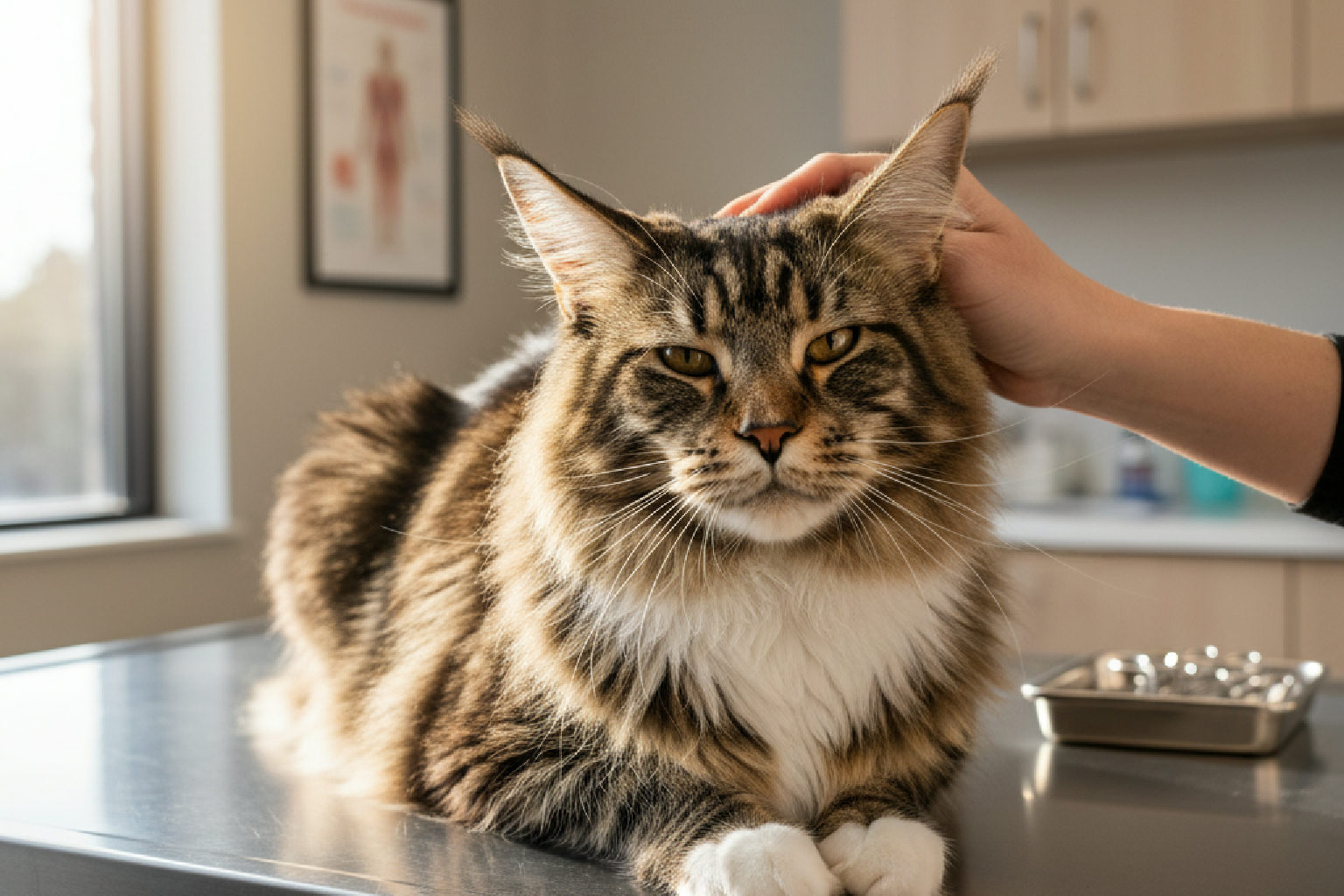
If your cat has been shaking her head, scratching at one ear, or you've noticed a smell coming from inside the ear canal, you're right to be concerned. Cat ear infections are less common than in dogs, but when they happen, there's almost always an underlying cause that needs to be addressed. Here at Hearthstone Animal Clinic in Cypress, TX, I see these cases regularly, and the sooner we identify what's going on, the faster your cat feels better.
The tricky part with cats is that they hide discomfort. By the time you're noticing obvious signs, the infection has often been brewing for a while. Let me walk you through what to watch for, what causes these infections, and what treatment actually looks like.
What does a cat ear infection look like?
Cats with ear infections don't always make it obvious. Unlike dogs who will dig at their ears until they bleed, many cats just become a little quieter, a little more withdrawn. But there are signs if you know where to look.
Common signs of ear infections in cats
- Head shaking or tilting to one side
- Scratching at the ear or the side of the face
- Dark, waxy discharge (often black or brown)
- Redness or swelling inside the ear flap
- Odor coming from the ear canal
- Sensitivity when you touch near the ear
- Loss of balance or walking in circles (this suggests the middle or inner ear is involved)
If your cat is walking with a head tilt or seems unsteady on her feet, that's not a wait-and-see situation. That level of involvement means the infection has moved deeper, and she needs to be seen quickly. You can get your pet seen the same day if you're noticing those signs.
What causes ear infections in cats?
This is where cats differ from dogs. In dogs, ear infections are often driven by allergies or moisture in floppy ears. In cats, there's usually a more specific culprit. Finding that underlying cause is the whole game, because if we just treat the infection without addressing the source, it comes right back.
Ear mites
Ear mites (Otodectes cynotis) are the most common cause of ear infections in kittens and outdoor cats. These tiny parasites live in the ear canal and cause intense itching. The classic sign is a dark, crumbly discharge that looks like coffee grounds. If you've adopted a kitten recently and she's scratching at her ears, mites are at the top of my list. The good news: mites are very treatable with the right medication.
Allergies
Environmental allergies and food allergies can both cause ear inflammation in cats, though this is less common than in dogs. When allergies are the driver, you'll often see other signs too: overgrooming, skin irritation, or recurring issues that clear up with treatment but keep coming back. If your cat has ongoing ear problems and we can't find mites or polyps, allergies become the next suspect.
Polyps and growths
Cats, especially younger cats, can develop inflammatory polyps in the ear canal or middle ear. These benign growths create a warm, moist environment where bacteria and yeast thrive. Polyps require removal, and we can often diagnose them with an otoscope exam or imaging if the polyp is deeper in the ear.
Foreign material
Less common in cats than dogs, but plant material or debris can occasionally work its way into the ear canal and trigger an infection.
Bacterial or yeast overgrowth
Bacteria and yeast are the organisms that actually cause the infection, but they're almost always secondary to one of the causes above. Treating the bacteria without finding out why they're there is like mopping up water without fixing the leaky pipe.
How do you diagnose a cat ear infection?
When I examine a cat's ears, I'm looking at several things. First, I'll use an otoscope to look down the ear canal. This tells me if the eardrum is intact, if there's a polyp or foreign body, and how much inflammation we're dealing with.
Next, I'll take a sample of the discharge and look at it under the microscope. This is called ear cytology, and it's essential. It tells me whether we're dealing with mites, bacteria, yeast, or a combination. The treatment is different for each, so skipping this step means guessing, and guessing often means the wrong medication and a cat who doesn't get better.
In some cases, especially if the infection is severe, keeps recurring, or involves the middle ear, we may recommend additional diagnostics like a CT scan or sedated ear exam. Most straightforward cases don't need that, but it's worth mentioning so you know what to expect if your cat's situation is more complicated.
What is the treatment for cat ear infections?
Treatment depends entirely on what we find. There's no one-size-fits-all ear medication, which is why those over-the-counter ear treatments rarely work well.
For ear mites
We use antiparasitic medications, either topical ear drops or systemic treatments like Revolution, which we carry for cats. Revolution is particularly convenient because it treats mites while also providing heartworm, flea, and intestinal parasite protection. One application on the skin handles multiple problems. According to the Companion Animal Parasite Council, treating all cats in the household is important since mites spread easily between pets.
For bacterial or yeast infections
We'll prescribe an ear medication specific to what's growing in there. These are typically drops or ointments applied directly into the ear canal once or twice daily for 7 to 14 days. Some newer formulations are single-application treatments that your vet applies in the office, which is helpful for cats who fight ear medications at home.
For polyps or growths
Surgical removal is usually necessary. This can sometimes be done by pulling the polyp through the ear canal under sedation, or it may require a more involved procedure if the polyp extends into the middle ear.
For allergies
We'll discuss long-term management, which might include dietary changes or environmental modifications. This is often an ongoing conversation rather than a quick fix. If your cat also has skin issues, take a look at our page on pet allergies in Cypress for more on the allergy workup process.
How much does it cost to treat a cat ear infection?
For a straightforward ear infection, you're looking at the exam fee plus diagnostics (ear cytology runs around $30 to $50) plus medication. Total for a typical case: $100 to $200. If mites are involved and we're using Revolution, that product runs roughly $20 to $25 per dose.
More complicated cases involving imaging, sedated exams, or surgery will cost more. Polyp removal can range from $300 to $800 depending on the approach needed. I always discuss costs upfront so there are no surprises. You can also check our pricing page for general guidance.
Can you prevent ear infections in cats?
Prevention mostly comes down to addressing risk factors:
- Keep cats on parasite prevention (Revolution or Imoxi) to prevent ear mites
- Keep new cats separated initially and have them examined before introducing them to resident pets
- Watch for early signs and don't wait weeks to have them checked
- Don't over-clean healthy ears. Cats usually don't need routine ear cleaning unless there's a problem. Over-cleaning can actually cause irritation.
If your cat has had one ear infection, she's somewhat more likely to have another, especially if the underlying cause wasn't fully addressed. Follow-up exams after treatment are worth doing to make sure things have truly resolved.
When should you bring your cat in?
If you're seeing any of the signs I mentioned above (head shaking, scratching, discharge, odor, or especially any balance problems), don't wait to see if it clears up on its own. Ear infections in cats almost never resolve without treatment, and the longer they go, the harder they are to fix.
If your cat is showing signs of an ear infection, let's take a look and figure out what's causing it. You can schedule a visit at Hearthstone Animal Clinic or reach us at (281) 859-9244. We're here in Cypress, TX, and we see these cases regularly. The sooner we get eyes on those ears, the sooner your cat gets relief.
Have a question about your pet?
Dr. Pelton and the Hearthstone team are here to help, the same day when it counts.
Get Your Pet Seen