
Summer Travel with Pets: Car Safety and Motion Sickness Tips
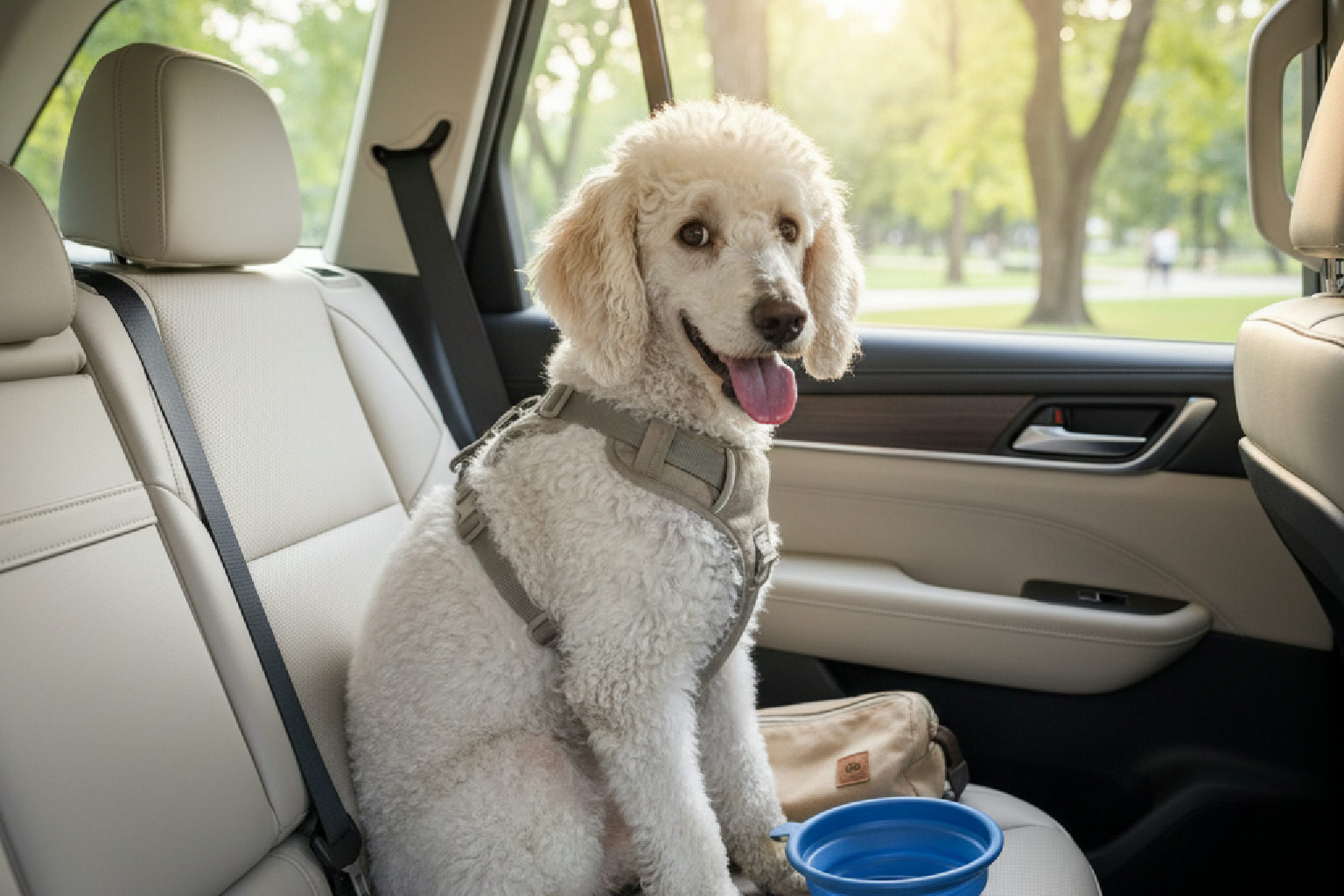
Every summer, I get a wave of questions from clients planning road trips: "Can my dog handle the drive?" "What do I do if she throws up the whole way?" "Is there something safe I can give him?" If you're loading up the car for a Texas-sized adventure (or even just a trip to the lake), these are exactly the right questions to ask.
Here at Hearthstone Animal Clinic in Cypress, TX, I see plenty of pets who travel beautifully and others who need a little pharmaceutical help to survive the ride. Let me walk you through what actually works, what's safe, and how to set your pet up for a stress-free trip.
Why do some pets get carsick?
Motion sickness in pets works much like it does in humans. The inner ear senses movement, but the eyes see a stationary car interior. That mismatch sends conflicting signals to the brain, and the brain responds by triggering nausea and vomiting.
Puppies and kittens are more prone to motion sickness because their inner ear structures are still developing. Many will outgrow it by around one year of age. But some pets never do, and a subset of dogs and cats develop a learned anxiety response: they associate the car with feeling sick, so they start drooling and retching before the car even moves.
Signs to watch for include:
- Excessive drooling or lip-licking
- Whining or restlessness
- Vomiting (obviously)
- Shaking or trembling
- Reluctance to get in the car
If your pet shows any of these, there are real solutions. You don't have to resign yourself to a miserable trip.
Does Cerenia actually work for dog motion sickness?
Cerenia (maropitant citrate) is the only FDA-approved medication for preventing vomiting due to motion sickness in dogs. It works by blocking substance P, a neurotransmitter in the vomiting center of the brain. This is not a sedative. Your dog stays alert and comfortable but doesn't feel nauseous.
In my experience, Cerenia works extremely well for most dogs. The success rate I see in practice is around 90%, which matches what the clinical studies showed. You give it at least two hours before travel (I usually recommend the night before for early departures), and it lasts a full 24 hours.
What about cats?
Cerenia is also approved for cats, but only for preventing vomiting, not specifically for motion sickness. That said, I use it off-label for feline car trips frequently, and it helps most cats. The tablet formulation can be tricky with cats, so we often discuss alternatives or techniques to get the pill in.
Cost and side effects
Cerenia tablets typically run $8 to $15 per dose depending on your pet's weight. Some dogs experience mild drowsiness or decreased appetite, but serious side effects are rare. It's not recommended for puppies under 16 weeks old.
If you want the technical details, the manufacturer's product page has the full prescribing information.
What about Benadryl or other over-the-counter options?
I get asked about Benadryl (diphenhydramine) constantly. Here's the honest answer: it can help with mild motion sickness, but it's really an antihistamine with sedation as a side effect. It doesn't target the vomiting center the way Cerenia does.
For dogs with mild car anxiety who just need to relax, Benadryl at 1 mg per pound of body weight can take the edge off. But for dogs who are actively vomiting, it's usually not enough. And some dogs get paradoxically hyper on Benadryl instead of drowsy.
Never give Benadryl to cats without consulting your vet. Cats metabolize medications differently, and the dosing is not straightforward.
Other options I sometimes recommend:
- Gabapentin: For pets whose car sickness is primarily anxiety-driven, this can work well. It's a mild sedative that reduces fear responses. Many cats do better with gabapentin than Cerenia alone.
- Trazodone: Another anxiety option for dogs, often combined with Cerenia for pets who have both nausea and panic.
- Adaptil or Feliway sprays: Pheromone products sprayed in the carrier or car can help some pets. They're not a cure-all, but they're safe and worth trying.
If your pet has significant travel anxiety, schedule an appointment and we can build a plan. There's no reason to guess at medications or dosing.
How do I keep my pet safe in the car?
This is the part most owners don't think enough about, and I understand why. Your dog loves sticking her head out the window. Your cat seems fine loose in the back seat. But in a collision or sudden stop, an unrestrained pet becomes a projectile. A 60-pound dog in a 35 mph crash hits with roughly 2,700 pounds of force. That's enough to seriously injure or kill both the pet and the humans in the car.
Restraint options that actually work
For dogs:
- Crash-tested harnesses: Look for harnesses that have been tested by the Center for Pet Safety. The Sleepypod Clickit and Kurgo Impact harness are among the few that have passed actual crash testing. Most pet store harnesses are designed for comfort, not crash protection.
- Crates: A secured crate is the safest option for most dogs. The crate should be anchored with straps so it can't fly forward.
- Cargo barriers: For SUVs, a sturdy barrier between the cargo area and the passenger compartment contains the dog but doesn't protect them from impact with the back of the car.
For cats:
- Always use a carrier. Always. A loose cat in a car is a hazard to themselves and the driver. Secure the carrier with a seatbelt through the handle or use a carrier designed to anchor to the seat.
Temperature safety in Texas
I shouldn't have to say this, but every summer I see heat-related emergencies. The temperature inside a parked car in Cypress can reach 120°F in under 10 minutes, even with windows cracked. Dogs can die in 15 minutes at those temperatures. If you can't take your pet inside with you, leave them home.
What should I pack for a road trip with my pet?
A little preparation goes a long way. Here's my checklist:
- Vaccination records and health certificate: If you're crossing state lines or staying at a boarding facility, you'll need proof of rabies vaccination at minimum. Some states require a health certificate issued within 10 days of travel.
- Medications: Bring enough for the trip plus a few extra days. Include any Cerenia or anti-anxiety meds prescribed for the drive.
- Food and water: Bring your pet's regular food. Sudden diet changes plus travel stress equals diarrhea.
- Bowls, leash, collar with ID tags: Microchips are great, but a visible tag with your cell phone number provides faster reunification if your pet slips away at a rest stop.
- Waste bags and paper towels: For the inevitable accident.
- A recent photo: On your phone, in case you need to make a lost pet flyer.
When should I talk to my vet before traveling?
Schedule a pre-travel visit if:
- Your pet has never traveled and you want to do a trial run with medication
- Your pet has a history of severe motion sickness or car anxiety
- You need a health certificate for interstate travel
- Your pet has any chronic medical conditions (heart disease, diabetes, seizures)
- You're traveling somewhere with different parasite risks (the Gulf Coast, mountains, different states)
We can review your pet's preventive care and make sure they're current on flea, tick, and heartworm prevention. If you're heading somewhere like Hill Country or East Texas where ticks are heavier, or anywhere with different heartworm risk, we may adjust your prevention protocol.
Ready to hit the road?
If your dog dreads the car or your cat yowls the entire drive, there's no reason to white-knuckle through it. With the right preparation and, when needed, the right medication, most pets can travel comfortably. If this is your first summer road trip with your pet, or if past trips have been rough, schedule a visit at Hearthstone Animal Clinic and we'll get a plan in place. You can reach us at (281) 859-9244. We see pet owners across Cypress, TX and the surrounding area, and I'd rather help you prepare now than treat a stressed or sick pet after a trip gone wrong.
Have a question about your pet?
Dr. Pelton and the Hearthstone team are here to help, the same day when it counts.
Get Your Pet Seen