
Arthritis in Senior Dogs: Joint Care and Home Comfort Tips
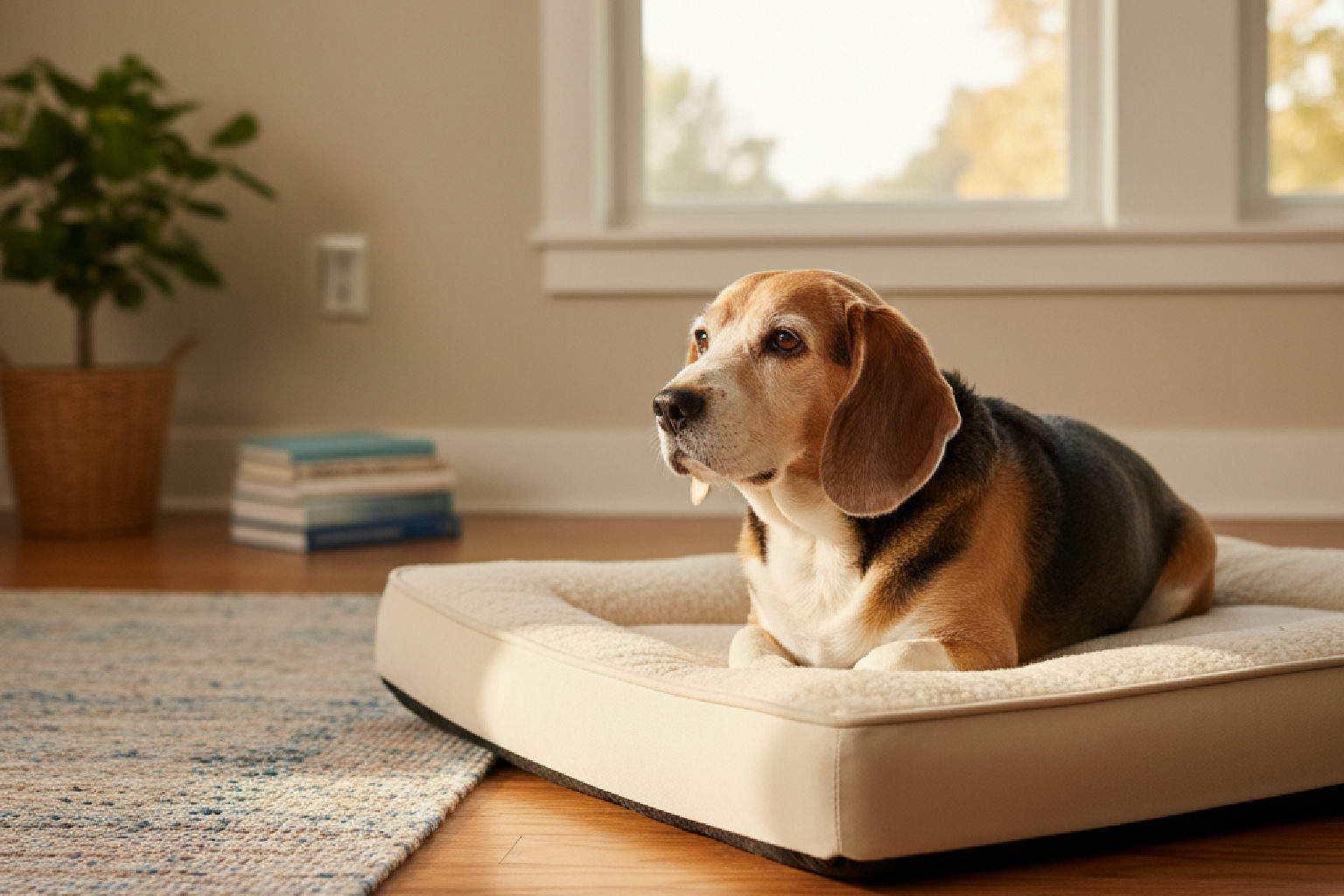
If your older dog is slowing down, hesitating before jumping on the couch, or taking longer to get up in the morning, arthritis is the most likely explanation. This is something I see constantly at Hearthstone Animal Clinic in Cypress, TX, and the good news is that there's a lot we can do to help these dogs stay comfortable and mobile for years.
Osteoarthritis affects roughly 80% of dogs over age 8, according to the American Animal Hospital Association. The condition is progressive, meaning it will get worse over time, but progression can be slowed and quality of life can be excellent with the right combination of medical treatment and home management.
What does arthritis actually look like in dogs?
Most owners expect limping, but that's often a late sign. What I see more commonly is a dog who:
- Hesitates before stairs or getting into the car
- Shifts weight off one leg while standing
- Sleeps more and plays less
- Has trouble getting up after lying down, especially on hard floors
- Seems "stiff" in the morning but loosens up after moving around
- No longer jumps on furniture they used to love
Dogs are stoic. They do not whimper or cry from chronic joint pain the way a human might complain. By the time an owner notices something is off, the arthritis has usually been developing for months or years.
The breeds I see most often
Large breeds like Labrador Retrievers, German Shepherds, and Golden Retrievers are at highest risk due to body weight and genetics. But I also see plenty of arthritis in smaller dogs, especially Dachshunds (spine), Beagles (hips), and any breed with a history of knee problems like luxating patellas.
How do you diagnose arthritis in a dog?
Diagnosis usually starts with a physical exam. I palpate each joint, check range of motion, and watch how your dog walks. In most cases, I can feel crepitus (a grinding sensation) or detect pain on extension or flexion of an arthritic joint.
X-rays confirm the diagnosis and show how advanced the disease is. I recommend radiographs for any dog over 7 showing signs of stiffness, especially before starting long-term pain medication. X-rays also help rule out other causes of lameness like bone tumors or ligament tears. If your senior dog is due for a checkup, our senior pet bloodwork panels include kidney and liver values, which matter when we're choosing medications.
What medications actually work for dog arthritis?
There is no cure for arthritis, but we have effective tools to manage pain and slow progression.
NSAIDs (anti-inflammatory drugs)
Carprofen (Rimadyl), meloxicam, and galliprant are the most common. These reduce inflammation in the joint and provide real pain relief. Most dogs can take them long-term with periodic bloodwork to monitor liver and kidney function. Galliprant is newer and may be gentler on the GI tract, but it costs more (around $60-90/month for a medium-sized dog).
Joint supplements
Glucosamine and chondroitin sulfate have modest evidence supporting their use. They are not a substitute for pain medication, but they may help slow cartilage breakdown. I usually recommend them as part of a multimodal approach, not as standalone treatment. Omega-3 fatty acids (fish oil) have better evidence for reducing joint inflammation. Look for products with at least 1000mg of EPA and DHA combined per day for a 50-pound dog.
Injectable therapies
Adequan is an injectable polysulfated glycosaminoglycan that can help rebuild cartilage. The typical protocol is twice weekly for 4 weeks, then monthly. It works best in early to moderate arthritis. Cost runs around $40-60 per injection.
What about Librela?
Librela (bedinvetmab) is a newer monthly injection that blocks nerve growth factor, a key pain signal. I do not currently carry or recommend it at Hearthstone. The mechanism is promising, but I want to see more long-term safety data before adding it to my toolkit.
What home modifications help an arthritic dog?
This is the part most owners get wrong, and it's not their fault. We tend to focus on medication and underestimate how much the home environment matters. Here in Cypress, where we have a lot of two-story homes with tile and hardwood floors, simple changes can make a real difference.
Flooring
Slick floors are the enemy. An arthritic dog who slips while trying to stand up learns to avoid moving, which makes the muscle loss worse. Solutions that work:
- Yoga mats or rubber-backed runners in the paths your dog uses most
- Area rugs with non-slip backing in front of food bowls and by the bed
- Toe grips or paw wax for extra traction on smooth surfaces
Bedding
A good orthopedic bed is one of the best investments you can make. Look for memory foam at least 4 inches thick. The bed should be large enough for your dog to stretch out fully. Place beds in multiple locations so your dog does not have to walk far to lie down.
Ramps and steps
If your dog still wants to get on the couch or bed, use a ramp or pet stairs instead of letting them jump. For car access, a folding ramp is essential. Jumping down from a vehicle tailgate is one of the worst movements for arthritic hips and knees.
Raised food and water bowls
Elevating bowls to chest height reduces neck strain and makes eating more comfortable, especially for dogs with cervical spine arthritis.
Does exercise help or hurt arthritic dogs?
The right exercise helps. The wrong exercise makes things worse.
Good: Short, frequent walks on flat ground. Swimming or underwater treadmill therapy (excellent for building muscle without stressing joints). Gentle range-of-motion exercises.
Bad: Long hikes, running on concrete, fetch sessions that involve sudden stops and turns, roughhousing with other dogs.
If this was my dog, I would aim for two or three 10-15 minute walks per day rather than one long walk. Consistency matters more than intensity. Muscle mass is protective for joints, so keeping your dog moving (within limits) is better than complete rest.
What about weight management?
This is the single most impactful thing most owners can do. Every extra pound puts additional stress on already damaged joints. A 2006 Purina study showed that dogs kept at ideal body weight lived nearly two years longer and developed arthritis symptoms later than their overweight littermates.
If your dog is overweight, even losing 10% of body weight can produce noticeable improvement in mobility. We can help with a nutrition consultation to find a feeding plan that works.
When should you see your veterinarian about arthritis?
Schedule a visit if you notice:
- Any new lameness or sudden worsening of existing stiffness
- Your dog yelping or snapping when touched in certain areas
- Reluctance to walk, even short distances
- Signs of pain despite current treatment (panting at rest, restlessness at night)
- Your dog is over 7 and has never been evaluated for joint health
Early intervention means more options. By the time a dog is barely walking, we have lost the chance to use some of the best tools.
Making your arthritic dog comfortable in Cypress
Arthritis is not a death sentence. With the right combination of pain control, joint support, weight management, and home modifications, most arthritic dogs can have good quality of life for years. The key is recognizing it early and treating it as a chronic condition that needs ongoing management, not a one-time fix.
If your senior dog is slowing down or showing any of the signs I mentioned, let's take a look and put together a plan. You can schedule a visit at Hearthstone Animal Clinic or reach us at (281) 859-9244. We see dogs with joint problems every week here in Cypress, TX, and there is almost always something more we can do to help.
Have a question about your pet?
Dr. Pelton and the Hearthstone team are here to help, the same day when it counts.
Get Your Pet Seen