
What to do on the way to the vet. Pet first aid, step by step.
Nobody thinks clearly when their dog is choking or their cat is seizing on the kitchen floor. That's normal. This page is built so you don't have to think much: tap what's happening, follow the steps, and get moving toward help.
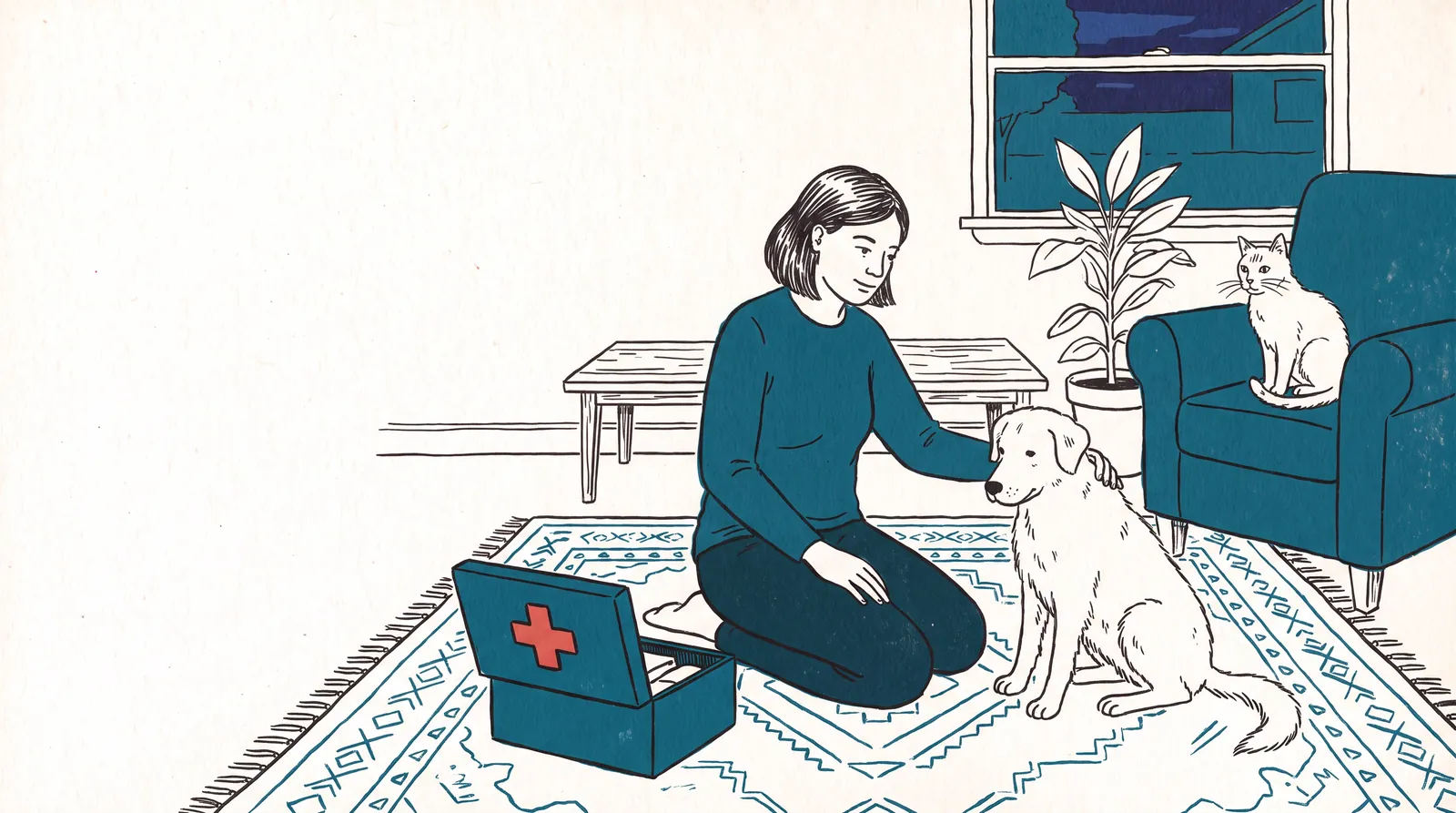
Happening right now? Three things first.
- Protect yourself. A hurting, scared pet can bite, even the sweetest one you own. Don't hug them, keep your face away from their mouth, and get a second person to help lift.
- Phone the ER on the way. They can get ready before you walk in. For poisoning, ASPCA Poison Control is (888) 426-4435 and Pet Poison Helpline is (855) 764-7661 (both charge a consult fee).
- First aid buys time, it doesn't replace the vet. Everything on this page is what you do between here and the hospital.
Tap what's happening
Pick the situation
Before anything else
Keep yourself in one piece
Pain and fear change how an animal acts. I've seen 20-year clients get bitten by the dog that sleeps on their pillow every night, and it's never the dog's fault. They just don't know you're helping. So:
- Don't hug an injured pet, and keep your face away from their mouth.
- Use a muzzle if they snap or growl. A strip of gauze looped around the snout works in a pinch. Never muzzle a pet that's vomiting.
- Wrap a cat in a thick towel, burrito-style, with just the head out.
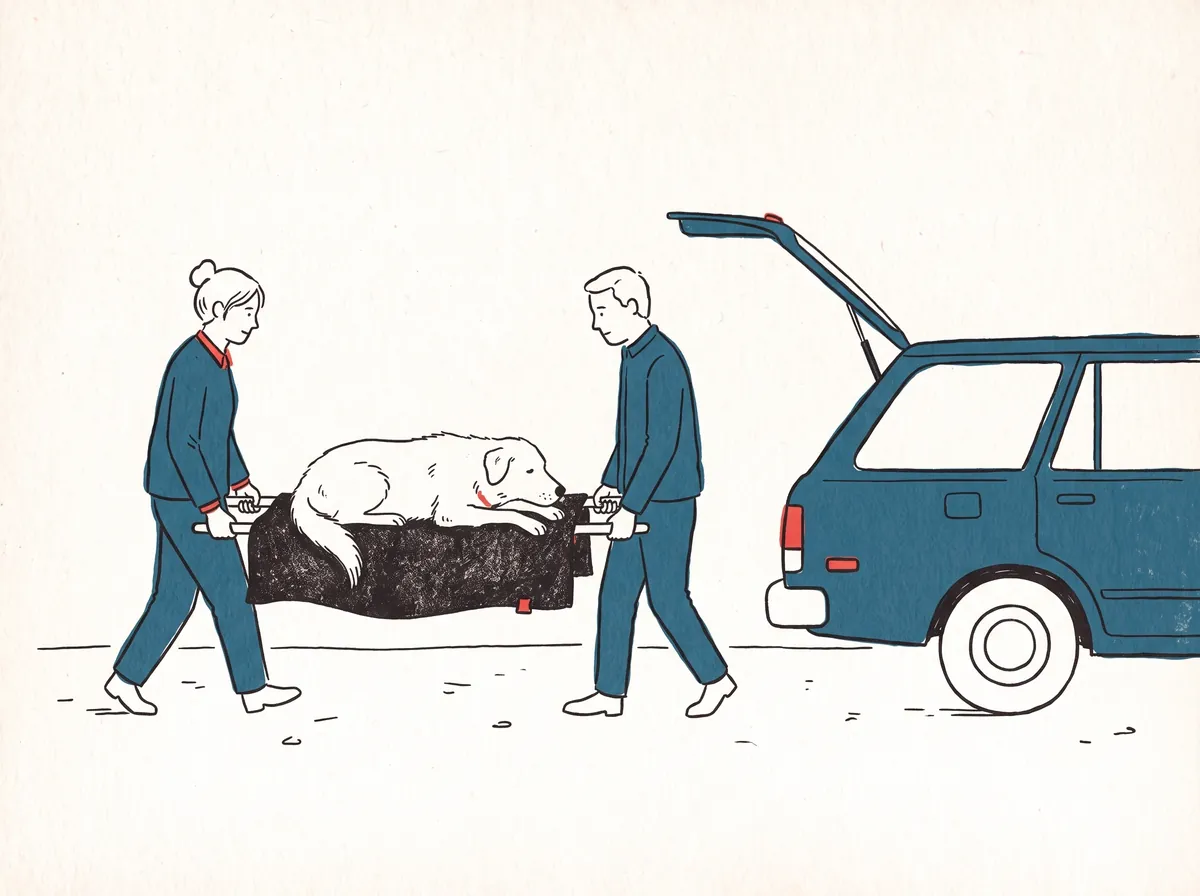
- Get help to move a big dog. A board, a sled, or a blanket held at the corners makes a good stretcher. Small pets ride in a carrier or a box with air holes.
Poisoning
Swallowed or touched something toxic
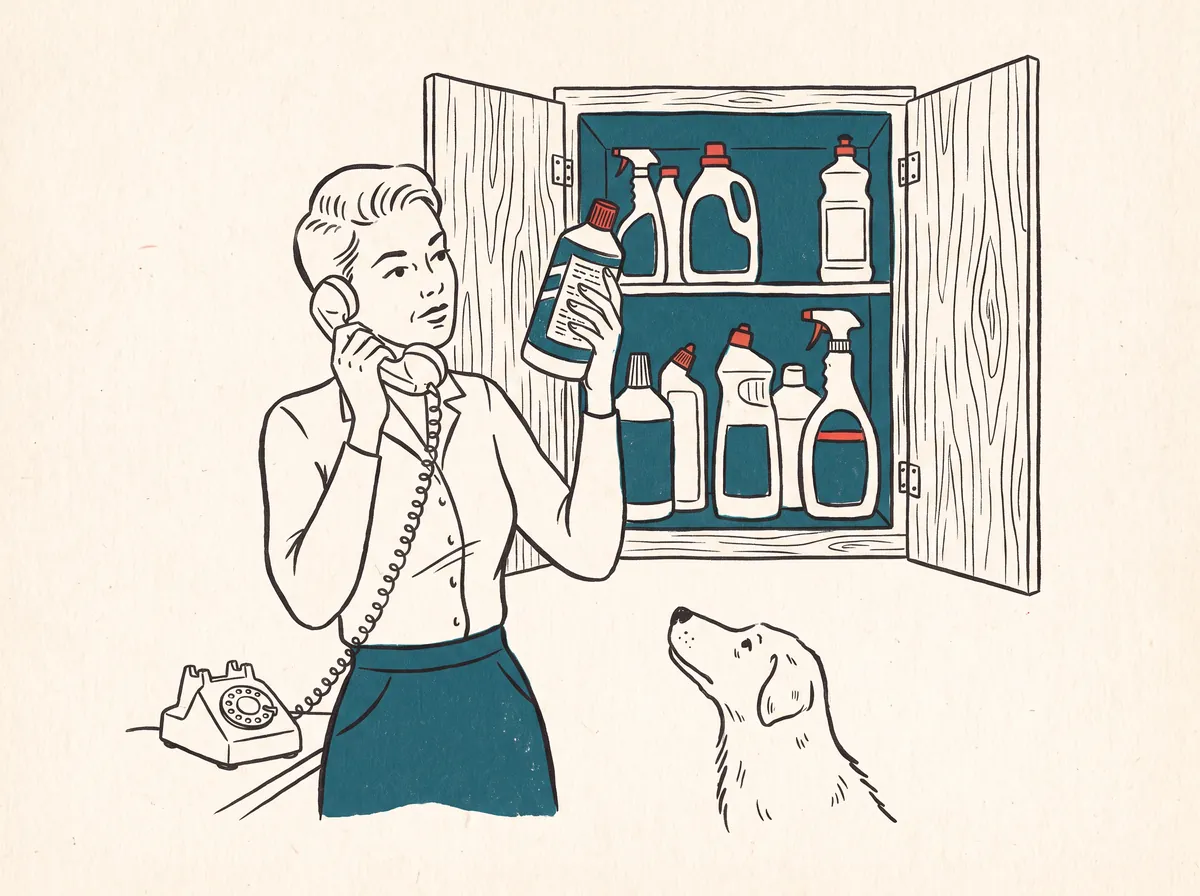
The rough rule is simple: if it would hurt a person, it'll hurt your pet. Cleaners, rat bait, antifreeze, human pills. But plenty of things that are fine for us aren't fine for them, like grapes, xylitol gum, and lilies for cats. If you're not sure whether what they got into is a problem, our My Pet Ate That tool sorts it out in about a minute.
On the skin or in the eyes
- Read the product label for what it tells people to do.
- If it says wash with soap and water, wash your pet's skin with soap and water. Keep it out of the eyes, nose, and mouth.
- If it says flush with water, flush the skin or eyes right away if you can do it safely, and then phone a vet.
Swallowed it
- Phone your vet, the ER, or poison control now. Don't wait for signs.
- Have ready: species, breed, age, sex, weight, how many pets, what they ate, how much, and how long ago.
- Bring the package. Scoop any vomit or chewed pieces into a zip-top bag and bring that too.
Don't
- Don't make them vomit unless a vet or poison control tells you to. If they do, it's 3% hydrogen peroxide, one dose.
- Don't give activated charcoal on your own either.
Go now if: seizures, collapse, unconscious, or trouble breathing. Get in the car and phone on the way.
Back to the list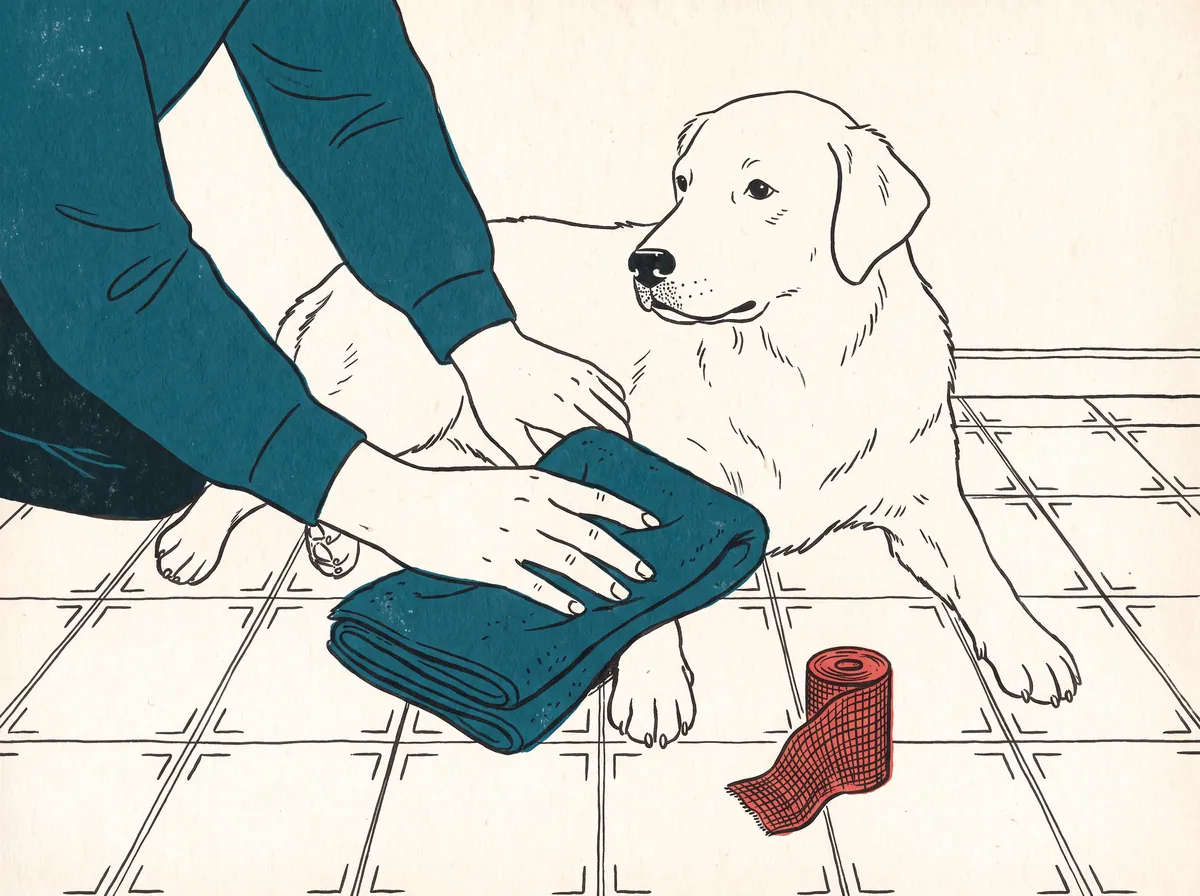
Bleeding & injuries
Wounds, broken bones, burns, eyes, and snakebite
Most of these come down to the same idea: protect the injury, don't make it worse, and drive. A bad bandage or splint can do more harm than none at all, so if you're unsure, skip it and let us do it.
Bleeding wound
- Press a clean cloth or towel firmly right over the bleeding.
- Hold it for at least 3 full minutes before you peek.
- Blood soaking through? Don't pull it off. Stack another towel on top so you don't rip off the clot.
- Heavy bleeding goes straight to the closest hospital.
Possible broken bone
- Lay them gently on something flat and firm.
- Only splint or bandage if you're confident. Otherwise, leave it.
- Keep them confined for the ride: a carrier or box for small pets, a board or blanket stretcher for big dogs.
Internal bleeding
Signs: bleeding from the nose, mouth, or rectum, coughing up blood, bloody urine, pale gums, collapse, a weak fast pulse.
- Keep them warm and quiet.
- Go to the closest hospital now.
Burns
- Flush with room-temperature water. It hurts, so muzzle first if needed.
- Cover with towels soaked in room-temperature water.
- Head to a vet right away.
Eye injury
- See dirt or a grass seed? Flush it gently with saline.
- Don't grab at it with fingers or tweezers.
- Stop them rubbing it on paws, carpet, furniture, or you.
- Get to a vet the same day. Eyes go downhill fast.
Snakebite
- Assume it's venomous. Copperheads are all over Cypress, especially along the bayous and in woodpiles.
- Snap a photo from a safe distance if you can. Don't try to catch or kill it.
- Don't bring the snake in. The photo's enough.
- Keep them calm and go.
Heatstroke & shock
Overheated, or weak and dazed after an injury
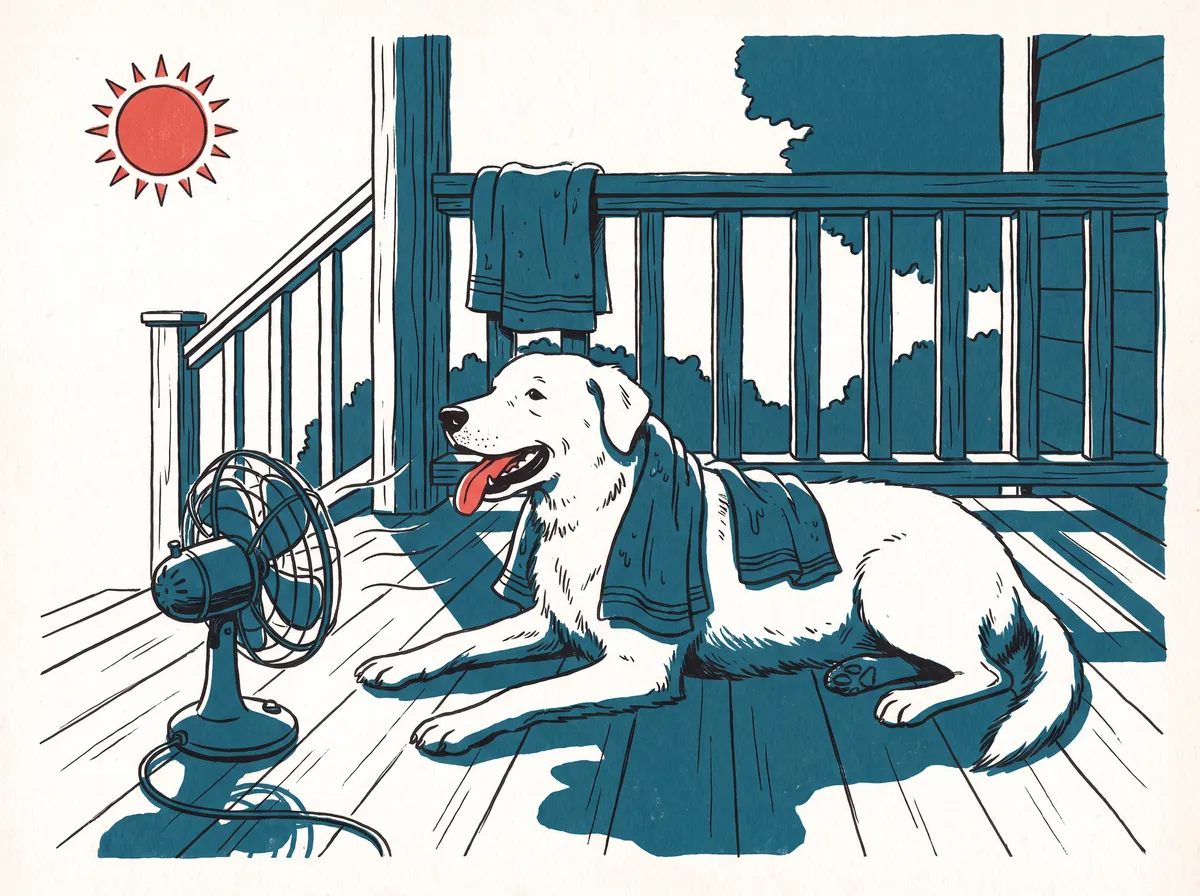
Houston summers are long, and a Texas August afternoon can cook a dog on a 20-minute walk. Flat-faced breeds, heavy coats, and older dogs go first. Heatstroke is one of the few emergencies where what you do in the first ten minutes really matters, so start cooling before you even get in the car.
Heatstroke
Signs: heavy panting, lots of drool, weakness or sleepiness, confusion, vomiting or diarrhea, and gums that look the wrong color or feel dry and sticky.
- Get them into shade or air conditioning.
- Lay towels soaked in room-temperature water on the neck, armpits, and groin. Rewet and swap every few minutes.
- Point a fan right at them.
- Keep cooling on the way to the closest hospital.
Don't
- No ice baths and no tub of cold water. It sounds right, and it can make things worse.
Shock
Signs: weak pulse, shallow breathing, nervousness, glassy dazed eyes. It usually follows a bad injury or a big scare.
- Keep them still, warm, and quiet.
- If they're unconscious, keep the head level with the body.
- Go to the closest hospital now.
Seizure
Shaking, paddling, not responding
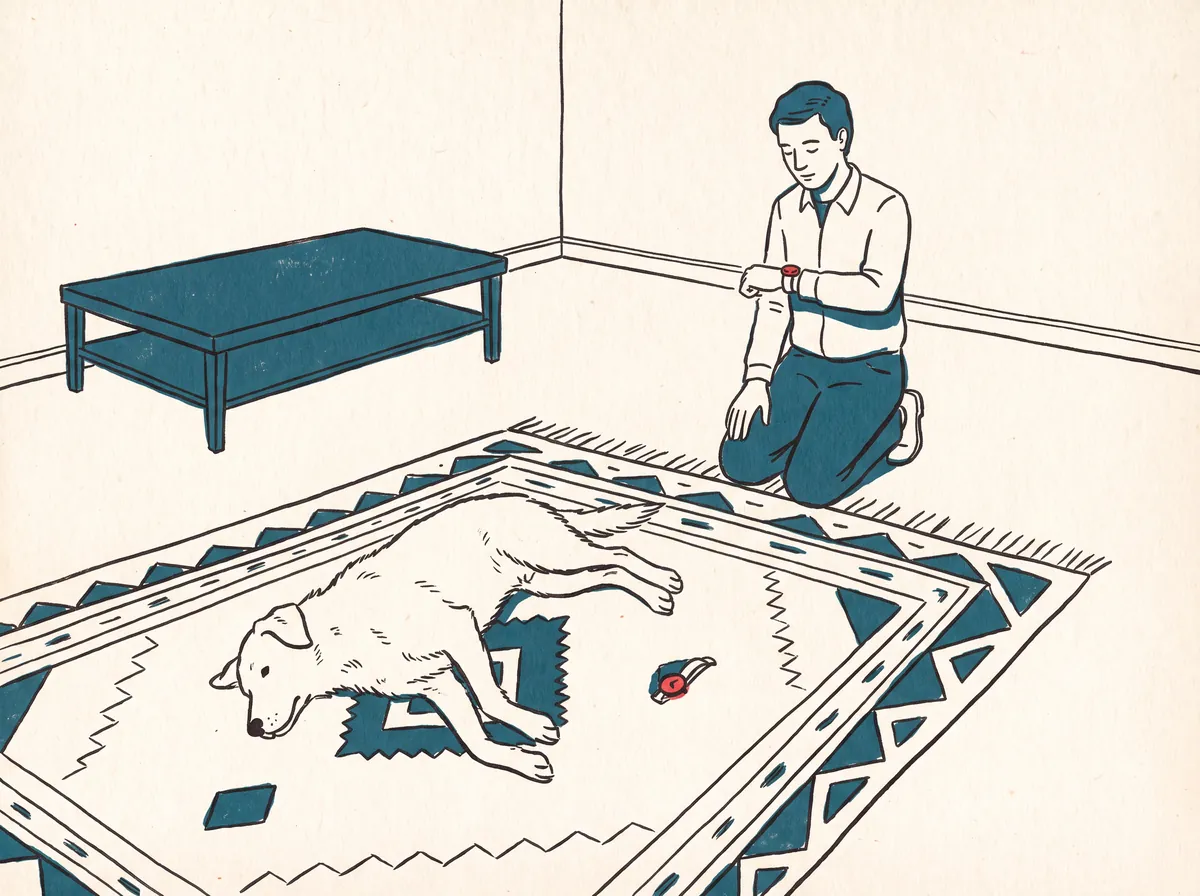
A seizure is terrifying to watch, and most of them stop on their own within a minute or two. Your job isn't to stop it. Your job is to keep them from getting hurt and to watch the clock, because how long it lasted is the first thing I'll ask you.
During
- Move furniture and anything hard out of the way.
- Don't hold them down or try to snap them out of it.
- Keep your hands away from the mouth. They can't swallow their tongue.
- Time it with your phone or watch. A video helps us too.
After
- Keep them warm, quiet, and in a dim room. They'll be wobbly and confused for a while.
- Phone us or the ER and tell us how long it lasted.
Go now if
- It lasts longer than 5 minutes
- It won't stop
- It's 2 or more seizures in 24 hours
Choking
Pawing at the mouth, can't get air
Signs: struggling to breathe, pawing at the mouth, choking sounds when breathing or coughing, and maybe a blue tinge to the lips or tongue.
If they can still breathe, keep them calm and get to a vet. Don't go fishing around in a mouth that's moving air. The steps below are for when they can't.
1. Look and sweep
- If it's safe, open the mouth with both hands and look.
- See it? Grab it with your fingers. The flat side of a spoon can help pull it forward.
- Be careful not to push it deeper.
2. Cats and small dogs
- Pick them up gently by the thighs and swing them side to side.
- Still stuck? Press forward on the belly just behind the ribcage.
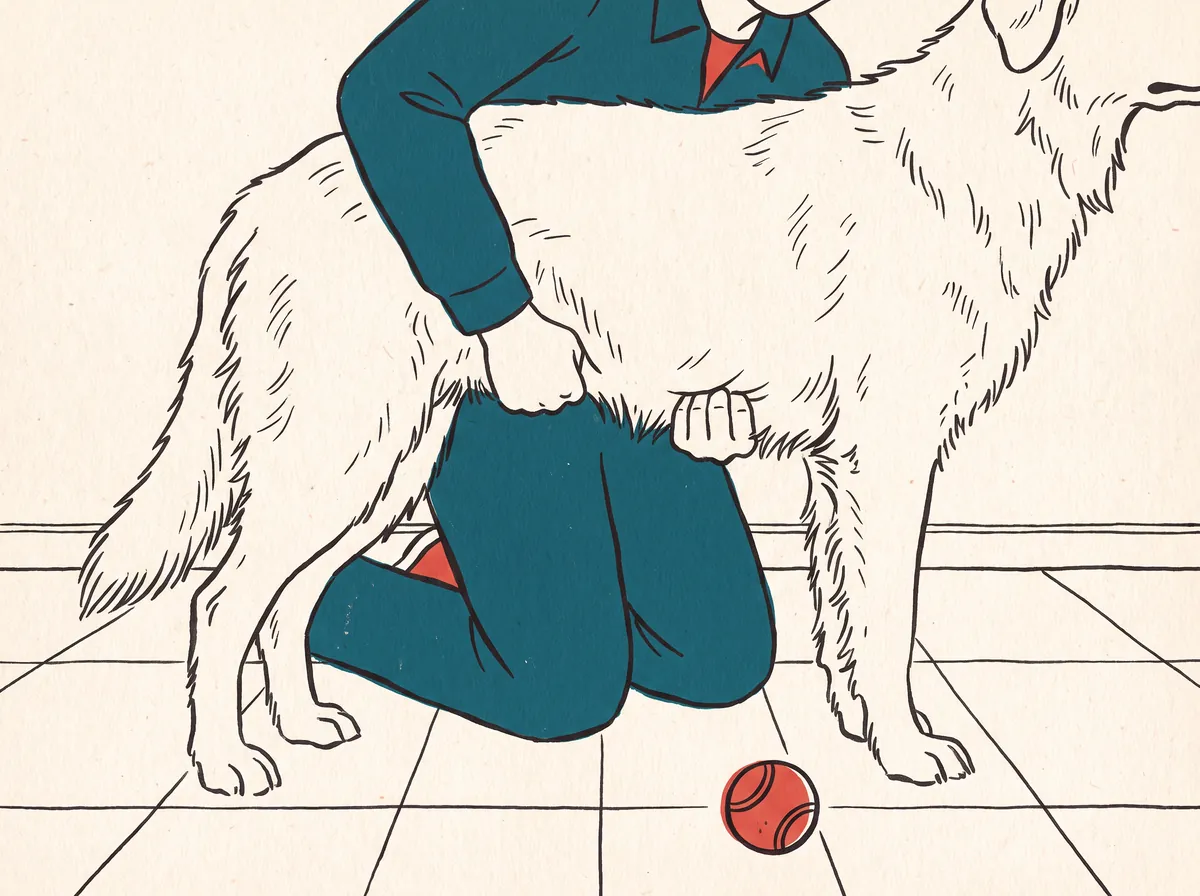
2. Bigger dogs: the Heimlich
- Standing: wrap your arms around the belly like you would a person, make a fist, put it on the soft spot just under the ribs, and push up and forward.
- Lying down: one hand on the back, the other squeezes the belly upward and forward.
Even if you get it out, have them checked. A throat that's been blocked can swell later.
Back to the list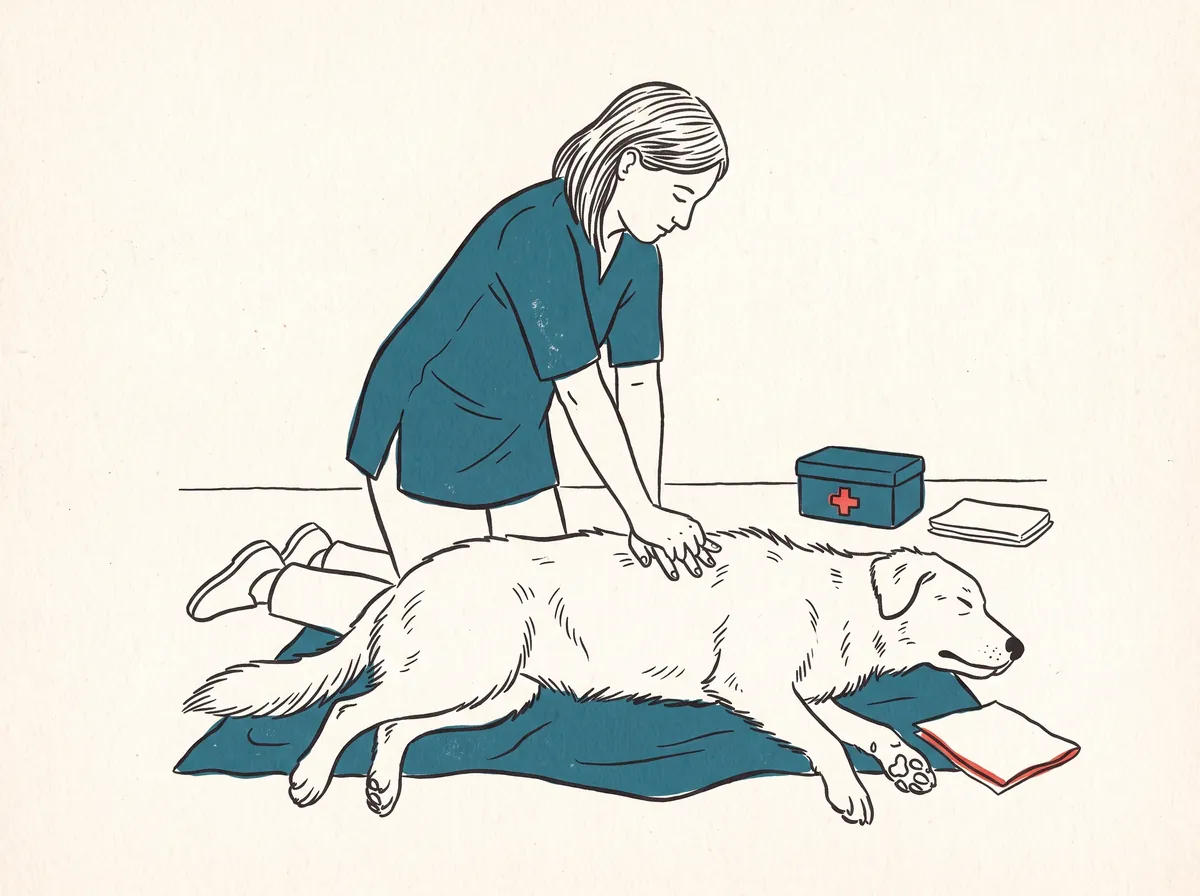
Not breathing / no heartbeat
Rescue breathing and CPR
I'll be honest with you, because you deserve that before you start. Most pets that need CPR don't survive it, even in a hospital. But it's the only chance they've got in that moment, so here's how to give it to them.
Not breathing: rescue breaths
- Stay calm. Open the mouth, gently pull the tongue forward so the tip sits outside the lips.
- Look in the throat for anything blocking it. If something's there, go to the choking steps.
- Hold the mouth shut with your hand and breathe into the nose until you see the chest rise.
- Keep giving 10 breaths a minute until they breathe on their own or you reach the hospital.
No heartbeat: CPR
- Start rescue breathing first.
- Position them (see below), then compress 100 to 120 times a minute, elbows locked.
- Alone: 30 compressions, 2 breaths, repeat. With help: one does nonstop compressions, the other gives 10 breaths a minute.
- Keep the head and neck in line with the spine so the airway stays open.
- Don't stop until there's a heartbeat and steady breathing, or the hospital takes over.
Where your hands go
Cats & small dogs
On their side. Wrap one hand around the bottom of the chest and squeeze between your thumb and fingers.
Most dogs
On their side. Heels of both hands stacked over the widest part of the chest. Push straight down.
Deep, narrow chests
Greyhounds, Dobermans. On their side, hands just behind the armpit (the elbow) instead.
Barrel chests
English Bulldogs and similar. On their back, heels of the hands over the middle of the breastbone.
Be ready
The pet first aid kit
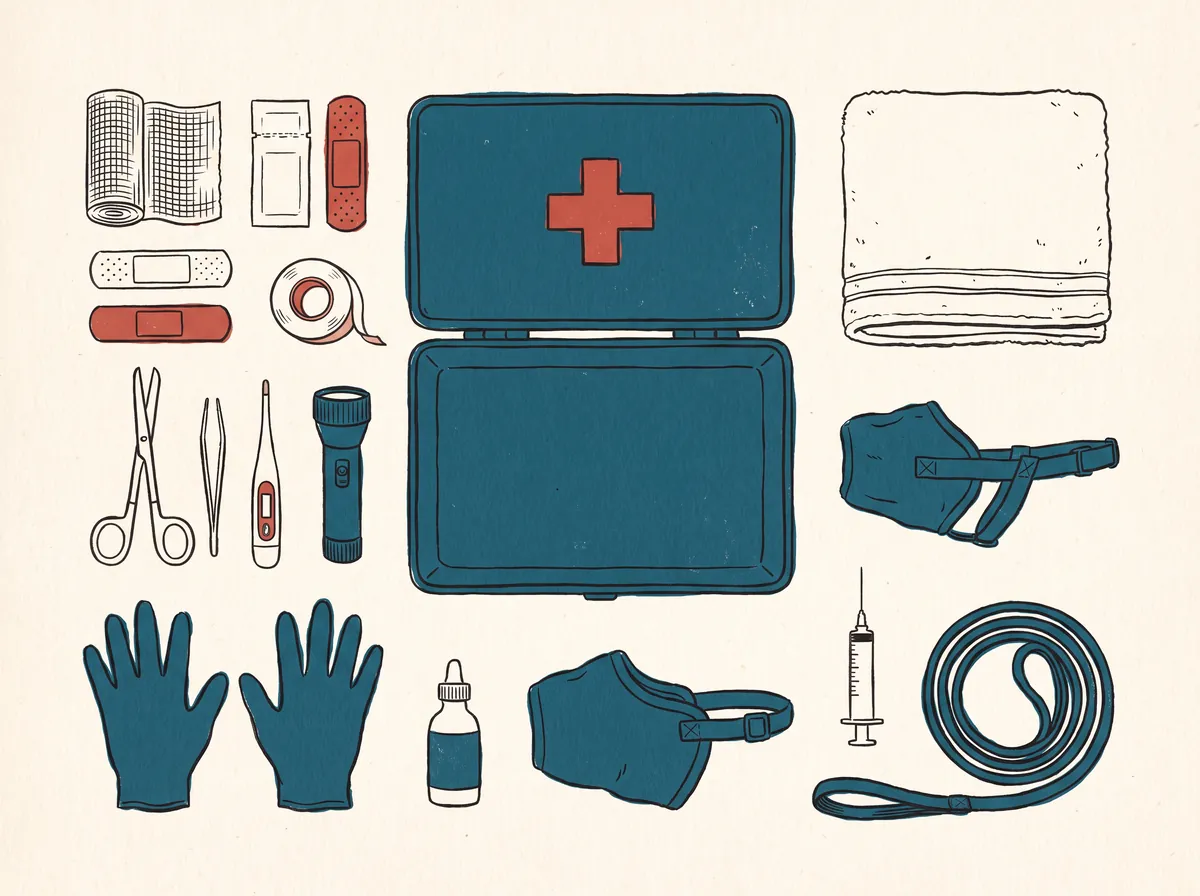
You probably own half of this already in the hall closet. Put it in one box, tape our number and the ER's number inside the lid, and keep a smaller copy in the car for road trips. Check things off as you go. Your phone will remember where you left off.
0 of 19 packed
Your vet may add a few things based on your pet's own health, like extra doses of a seizure medication.
Save these in your phone
The numbers you'll want
Traveling? Look up the 24-hour emergency hospital where you're going before you leave, and pack the kit. If you're leaving your pet with a sitter, give them this page and your vet records.
Common questions
What people ask me about first aid
Should I make my dog throw up if they ate something toxic?
Not on your own. Some things do more damage coming back up, and too much hydrogen peroxide causes its own problems. Phone your vet, an emergency hospital, or poison control first (ASPCA Animal Poison Control (888) 426-4435 or Pet Poison Helpline (855) 764-7661). If they tell you to give peroxide, give one dose of 3% only, unless they tell you otherwise.
How do I do CPR on a dog or cat?
Lay most pets on their side (barrel-chested dogs like English Bulldogs go on their back). Compress the chest 100 to 120 times a minute, the beat of "Stayin' Alive." If you're alone, do 30 compressions, then 2 rescue breaths into the nose with the mouth held shut, and repeat. With a helper, one person does nonstop compressions and the other gives 10 breaths a minute. Keep going until your pet is breathing and has a heartbeat, or until you're at the emergency hospital.
Should I put my overheated dog in an ice bath?
No. A tub of cold or ice water can actually make heatstroke worse. Move them to shade or air conditioning, lay towels soaked in room-temperature water on the neck, armpits, and groin, swap them every few minutes, point a fan at them, and drive to the nearest emergency hospital while you keep cooling.
My dog is having a seizure. Should I hold their tongue?
No. Dogs and cats can't swallow their tongues, and hands near a seizing mouth get bitten badly. Move furniture away, don't hold them down, time it, and keep them quiet and warm afterward. Go to a vet right away if it lasts longer than 5 minutes, won't stop, or if it's the second seizure in 24 hours.
My dog got bitten by a snake. What do I do?
Assume it was venomous and head to a vet or emergency hospital now. Copperheads are common around Cypress. Take a photo of the snake if you can do it from a safe distance, but don't try to catch or kill it, and don't bring it in. Keep your dog as calm and still as you can on the way.
Can Hearthstone handle my pet's emergency?
We're a general practice, not an emergency hospital, so for anything on this page that says go now, go straight to the nearest 24-hour emergency hospital. I recommend Veterinary Emergency Group. Phone them on the way so they're ready when you walk in.
Keep reading
Related pages
The steps and numbers on this page follow the American Veterinary Medical Association's first aid tips for pet owners, rewritten and illustrated for our clients. First aid isn't a substitute for veterinary care.