
Bloat and GDV in Dogs: Warning Signs Every Large-Breed Owner Must Know
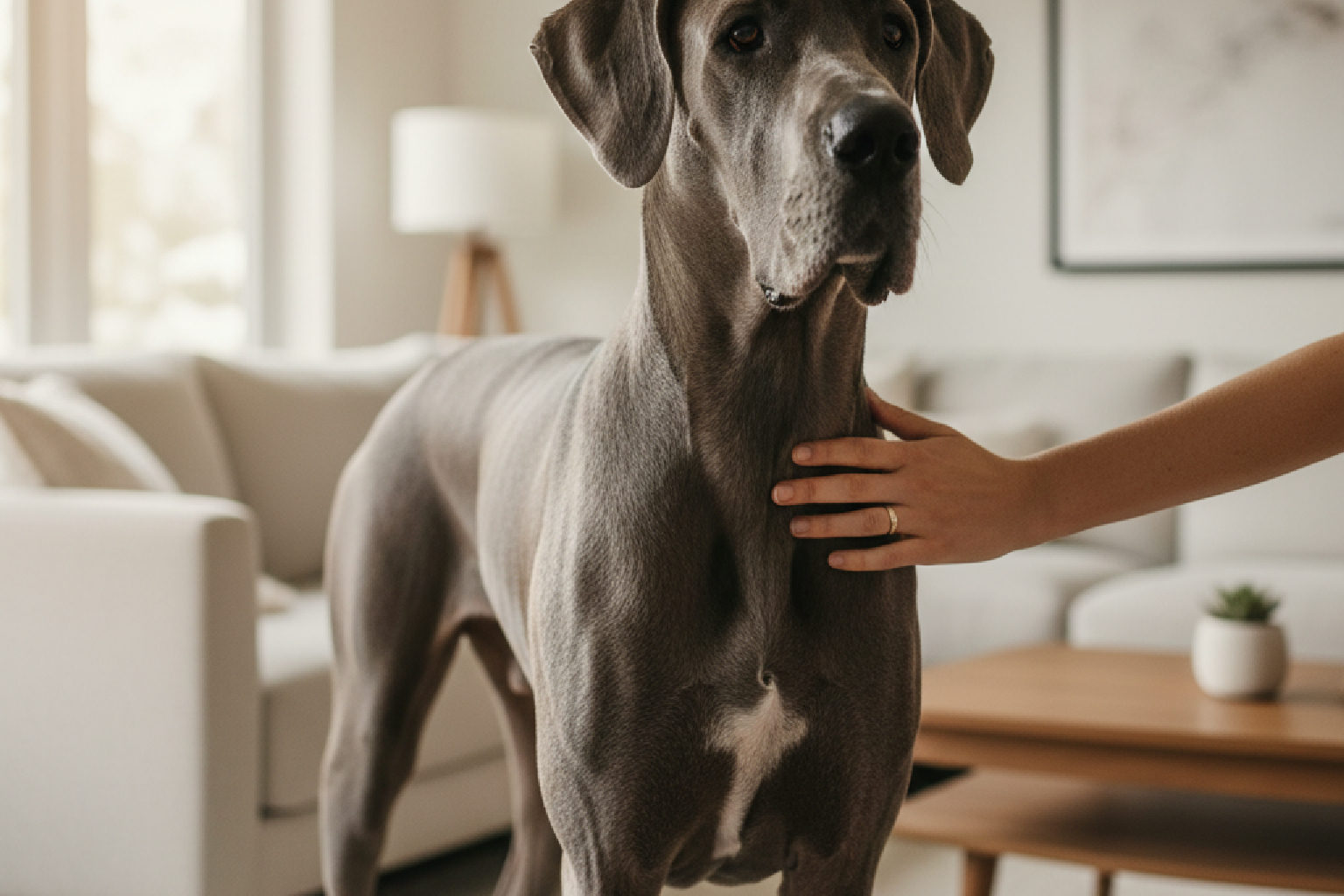
If you own a Great Dane, German Shepherd, Standard Poodle, or any deep-chested large breed, gastric dilatation-volvulus (GDV) is the emergency you need to know about before it happens. As a Cypress veterinarian who has performed emergency GDV surgeries, I can tell you this: the difference between a dog who survives and one who doesn't often comes down to how quickly the owner recognized something was wrong. This post covers what bloat and GDV actually are, which dogs are at risk, and exactly what signs should send you to an emergency clinic immediately.
What is bloat in dogs, and how is GDV different?
The terms get used interchangeably, but they're not the same thing. Bloat (gastric dilatation) means the stomach has filled with gas, fluid, or food and expanded like a balloon. This alone is painful and serious. GDV (gastric dilatation-volvulus) is bloat plus a twist: the distended stomach rotates on its axis, usually 180 to 360 degrees.
That twist is what makes GDV immediately life-threatening. When the stomach rotates, it:
- Traps gas inside with no way to escape (the dog can't vomit or burp)
- Cuts off blood supply to the stomach wall, which begins to die
- Compresses the major veins returning blood to the heart, causing cardiovascular shock
- Often takes the spleen with it, damaging or rupturing it
Without surgery, GDV is fatal. Even with surgery, mortality rates range from 10% to 45% depending on how quickly the dog reaches the operating table and whether the stomach tissue has already died. According to the American College of Veterinary Surgeons, survival rates are highest when surgery happens within the first few hours.
Which dogs are most at risk for GDV?
Deep-chested, large and giant breed dogs top the list. The anatomy matters: a narrow, deep chest cavity allows more room for the stomach to move and rotate. Breeds at highest risk include:
- Great Danes (lifetime risk estimated at 37%, the highest of any breed)
- German Shepherds
- Standard Poodles
- Weimaraners
- Irish Setters
- Gordon Setters
- Doberman Pinschers
- Basset Hounds (deep-chested despite shorter legs)
- Saint Bernards
Other risk factors beyond breed
Breed alone doesn't tell the whole story. Dogs over 7 years old are at higher risk than younger dogs. A first-degree relative (parent or sibling) with GDV doubles the risk. Dogs with anxious or fearful temperaments show up more often in GDV statistics than calm dogs, for reasons we don't fully understand. Male dogs may be slightly more prone than females.
Feeding habits matter too. Eating one large meal per day (instead of two or three smaller ones), eating rapidly, and exercising vigorously right after eating have all been associated with increased risk. The old advice to use elevated food bowls? That's been reversed. A 2000 Purdue study actually found elevated bowls increased risk in large and giant breeds.
What are the warning signs of bloat and GDV?
This is the part that saves lives. The early signs can look vague, which is why they get missed. Here's what I tell owners of at-risk breeds to watch for:
Early signs (first 1-2 hours)
- Restlessness and pacing: the dog can't get comfortable, keeps standing up and lying down
- Unproductive retching: trying to vomit but nothing comes up (this is the classic sign)
- Drooling more than normal
- Abdominal distension: the belly looks swollen or feels tight, especially behind the ribs
- Looking at or biting at the abdomen
- Standing with a "hunched" posture
Late signs (cardiovascular shock is starting)
- Pale or white gums
- Rapid, weak pulse
- Collapse or inability to stand
- Rapid, shallow breathing
- Cold extremities
If your large-breed dog is retching without producing anything and their abdomen looks distended, don't wait to see if it gets better. That combination is GDV until proven otherwise.
What happens at the emergency vet?
Diagnosis starts with an X-ray. The radiograph of a GDV stomach has a distinctive "double bubble" or "Popeye arm" appearance that tells us the stomach has twisted. Once we confirm GDV, treatment moves fast.
First, we stabilize shock with IV fluids and sometimes attempt to decompress the stomach by passing a tube or inserting a needle to release gas. Then the dog goes to surgery. During the procedure, the surgeon untwists the stomach, assesses the tissue for damage (removing any dead sections if necessary), and performs a gastropexy: permanently tacking the stomach to the body wall so it can never twist again.
Surgery costs vary widely based on location and whether complications arise, but expect $3,000 to $7,000 or more for emergency GDV surgery. At Hearthstone Animal Clinic, we can provide transparent pricing information and help you understand your options.
Can bloat and GDV be prevented?
You can reduce risk, but you can't eliminate it completely in predisposed breeds. Here's what the evidence supports:
Feeding changes
- Feed 2-3 smaller meals per day instead of one large meal
- Use a slow-feeder bowl if your dog gulps food
- Keep food bowls on the floor, not elevated
- Avoid exercise for 1-2 hours after meals
Prophylactic gastropexy
For truly high-risk breeds (Great Danes especially), the most effective prevention is a prophylactic gastropexy: the stomach-tacking surgery performed before GDV ever happens. We often perform this during spay or neuter surgery, or it can be done as a standalone procedure. The surgery prevents the stomach from being able to twist. It doesn't prevent simple bloat (the stomach can still dilate), but it takes the life-threatening volvulus off the table.
If you have a Great Dane, Weimaraner, or other giant breed puppy, ask about prophylactic gastropexy when you schedule their spay or neuter. We offer laparoscopic surgery options that can sometimes combine these procedures with faster recovery times. The cost of a prophylactic gastropexy is a fraction of emergency GDV surgery, and it essentially eliminates your dog's risk of the twist.
When to seek emergency care
If your large or giant breed dog shows any combination of these signs, treat it as an emergency:
- Unproductive retching (trying to vomit, nothing comes out)
- Swollen, tight, or distended abdomen
- Restlessness combined with drooling
- Weakness, pale gums, or collapse
Do not wait to see if symptoms improve. GDV progresses from "something seems off" to "too late" in a matter of hours. If your dog has these symptoms after hours, go directly to the nearest emergency veterinary hospital. Time matters more than anything else with this condition.
During regular business hours, get your pet seen the same day if you're concerned. We would much rather see a dog with simple bloat (or even just an upset stomach) than have an owner wait because they weren't sure it was serious enough.
Talk to your Cypress veterinarian about your dog's risk
If you own a large or giant breed dog, knowing the signs of GDV could save their life. Whether you want to discuss prophylactic gastropexy for a new puppy, have questions about feeding practices for your adult dog, or need to learn more about our surgical services, I'm happy to walk through your dog's specific risk factors. If you're reading this because your dog is showing symptoms right now, don't finish the article. Schedule an emergency visit at Hearthstone Animal Clinic or call us at (281) 859-9244. Here in Cypress, TX, we're ready to help when minutes matter.
Have a question about your pet?
Dr. Pelton and the Hearthstone team are here to help, the same day when it counts.
Get Your Pet Seen