
Blue-Green Algae Poisoning in Dogs: Pond and Lake Dangers in Cypress
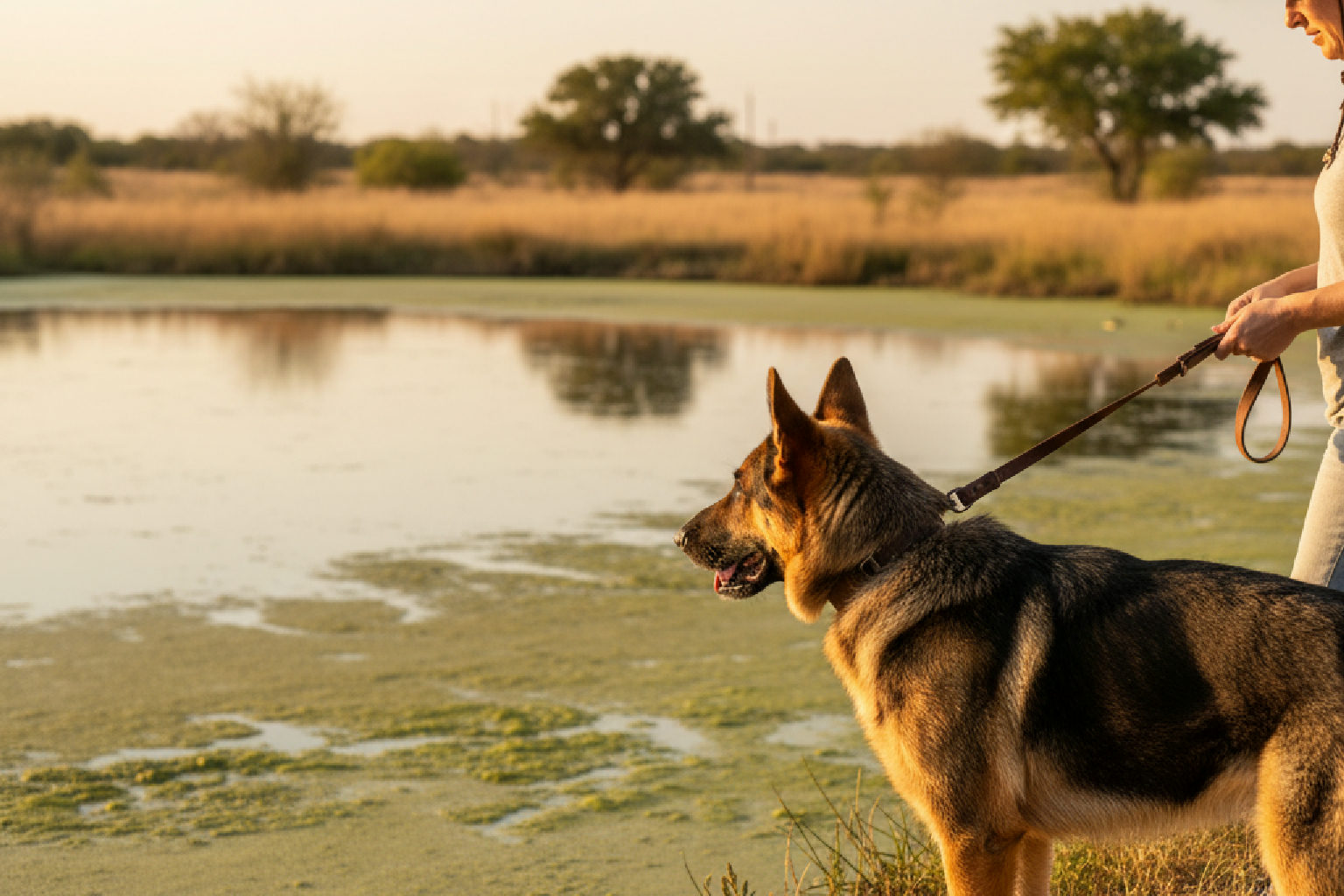
If your dog swims in ponds, lakes, or bayous around Cypress, TX during late summer, you need to know about blue-green algae. This is one of the fastest-acting natural toxins a dog can encounter, and I see cases every year when temperatures stay high and water levels drop. The scary part: a dog can go from healthy to critical in under an hour. At Hearthstone Animal Clinic, we want every pet owner in Harris County to recognize this danger before their next trip to the water.
What is blue-green algae, and why is it dangerous to dogs?
Blue-green algae (cyanobacteria) are microscopic organisms that live in freshwater. They are not technically algae at all, but bacteria that photosynthesize like plants. Under the right conditions, they multiply into visible "blooms" that coat the water surface.
The danger comes from cyanotoxins, poisons some strains produce. There are two main types:
- Microcystins: Attack the liver, causing acute liver failure
- Anatoxins: Target the nervous system, causing paralysis and respiratory failure
Dogs are particularly vulnerable because they drink pond water while swimming, lick contaminated fur afterward, and often weigh little enough that a small dose becomes lethal. A 50-pound dog that swallows a few mouthfuls of heavily contaminated water can receive a fatal dose. Cats rarely encounter these blooms since they avoid swimming, but they can be poisoned too if they drink from a contaminated source.
What does blue-green algae look like?
Toxic blooms typically appear in late summer and early fall when water is warm, stagnant, and nutrient-rich. In the Cypress area, August through October is peak season. Here is what to look for:
Visual warning signs
- Water that looks like pea soup or has a bright green, blue-green, or brownish tint
- A thick, paint-like scum or mat floating on the surface
- Foam accumulating along the shoreline
- A strong, musty, or "swampy" odor (though not all toxic blooms smell)
The tricky part: you cannot tell by looking whether a bloom is producing toxins. Some harmless green algae look similar, and some toxic blooms look relatively mild. The only safe assumption is that any suspicious-looking water could be dangerous. The EPA's cyanotoxin information page has photos that can help you identify potential blooms.
Where blooms form around Cypress
Any slow-moving or standing freshwater can develop blooms, including:
- Retention ponds in neighborhoods and parks
- Stock tanks on rural properties
- Bayous and creeks during low-flow periods
- Lake edges, especially in coves with little circulation
Golf course ponds are common culprits because they receive fertilizer runoff. The nutrients feed the bacteria. If you have a pond on your property, watch it closely during hot, dry spells.
What are the symptoms of blue-green algae poisoning?
Symptoms usually appear within 15 minutes to a few hours after exposure. The specific signs depend on which toxin the dog ingested.
Liver toxin (microcystin) symptoms
- Vomiting and diarrhea (often bloody)
- Weakness and lethargy
- Pale or yellow gums (jaundice)
- Abdominal pain, hunched posture
- Collapse
Neurotoxin (anatoxin) symptoms
- Excessive drooling
- Muscle tremors or rigidity
- Difficulty walking, stumbling
- Seizures
- Paralysis and respiratory failure
Neurotoxin cases progress faster and are often fatal within 30 minutes to two hours. This is not a "wait and see" situation. If your dog has been in questionable water and shows any of these signs, you are dealing with a potential emergency.
What should I do if my dog swims in water with blue-green algae?
If you realize your dog has been in suspicious water, act immediately, even if they seem fine.
Step one: prevent further exposure
Get your dog out of the water. Do not let them drink more. Keep them from licking their coat.
Step two: rinse thoroughly
Use fresh water to rinse your dog's entire body, especially the face, paws, and any areas they are likely to lick. Wear gloves if you have them, as the toxins can irritate human skin. Do not use a hose sprayer that might cause them to inhale water droplets.
Step three: get to a veterinarian
If your dog is already showing symptoms, this is an emergency. If they are not showing symptoms but you are confident the water contained a bloom, I would still recommend getting them checked. There is no antidote for cyanotoxins. Treatment is supportive: IV fluids, anti-seizure medications, liver protectants, and managing symptoms while we wait for the toxin to clear. The earlier treatment starts, the better the odds.
If you are in the Cypress area during clinic hours, you can get your pet seen the same day. After hours, go to the nearest emergency veterinary hospital. Time matters more than location with this toxin.
How can I prevent blue-green algae poisoning?
Prevention is straightforward, though it requires vigilance.
Before letting your dog swim
- Check the water visually. If it looks green, scummy, or off, keep your dog out.
- Check for posted warnings. Parks and public areas sometimes post algae advisories, but not always.
- Watch for dead fish or other animals near the water's edge. This is a red flag.
- Bring fresh water for your dog to drink so they are less tempted to drink from the pond or lake.
General rules for late summer
Avoid small, stagnant bodies of water during hot weather. Lakes with good circulation and flowing streams are generally safer, though blooms can still occur in calm coves. If your dog loves to swim, stick to pools (make sure they can safely exit) or beaches with moving water. At home, keep an eye on any standing water that collects after rain, including bird baths and decorative water features.
If you have a pond on your property, aeration and regular water testing can reduce bloom risk. Your local agricultural extension office can provide guidance on pond management.
Is there any treatment that can save a dog with algae poisoning?
I want to be honest here: the prognosis for severe blue-green algae poisoning is guarded. If a dog ingests a high dose of neurotoxin, death can occur before they reach the clinic. Liver toxin cases that receive early treatment sometimes survive, but liver failure can still develop days later.
What treatment looks like:
- Decontamination: Inducing vomiting if the exposure was very recent and the dog is not already symptomatic (not safe if they are seizing)
- Activated charcoal: May help bind some toxin in the GI tract
- IV fluids: Supports the liver and kidneys, helps flush toxins
- Anti-seizure medications: Diazepam or other drugs to control neurological symptoms
- Liver protectants: SAMe, silymarin, and other supportive supplements
- Monitoring: Blood work to track liver enzymes over several days
There is no antidote. We are buying time and supporting the body while it tries to clear the toxin. This is why prevention is everything. If it was my dog, I would not let them near any water that looked even slightly suspicious during bloom season.
When to contact a Cypress veterinarian
Reach out immediately if:
- Your dog has been in water with visible algae and is showing any symptoms
- Your dog drank from a pond, stock tank, or other standing water and is vomiting, weak, or trembling
- You are unsure about an exposure and want guidance
Even if your dog seems fine after a potential exposure, mention it at your next visit so we can note it in their record. Mild liver damage from microcystins does not always cause obvious symptoms right away. Checking liver values with routine bloodwork can catch problems early.
If your dog has been in questionable water and you are worried, do not wait to see what happens. Schedule a visit at Hearthstone Animal Clinic or reach us at (281) 859-9244. We see pet owners across Cypress, TX and the surrounding area, and we would rather check your dog and find nothing than have you wait until symptoms are severe. With this toxin, speed saves lives.
Have a question about your pet?
Dr. Pelton and the Hearthstone team are here to help, the same day when it counts.
Get Your Pet Seen