
Brachycephalic Dogs and Summer Heat: Why Flat-Faced Breeds Struggle
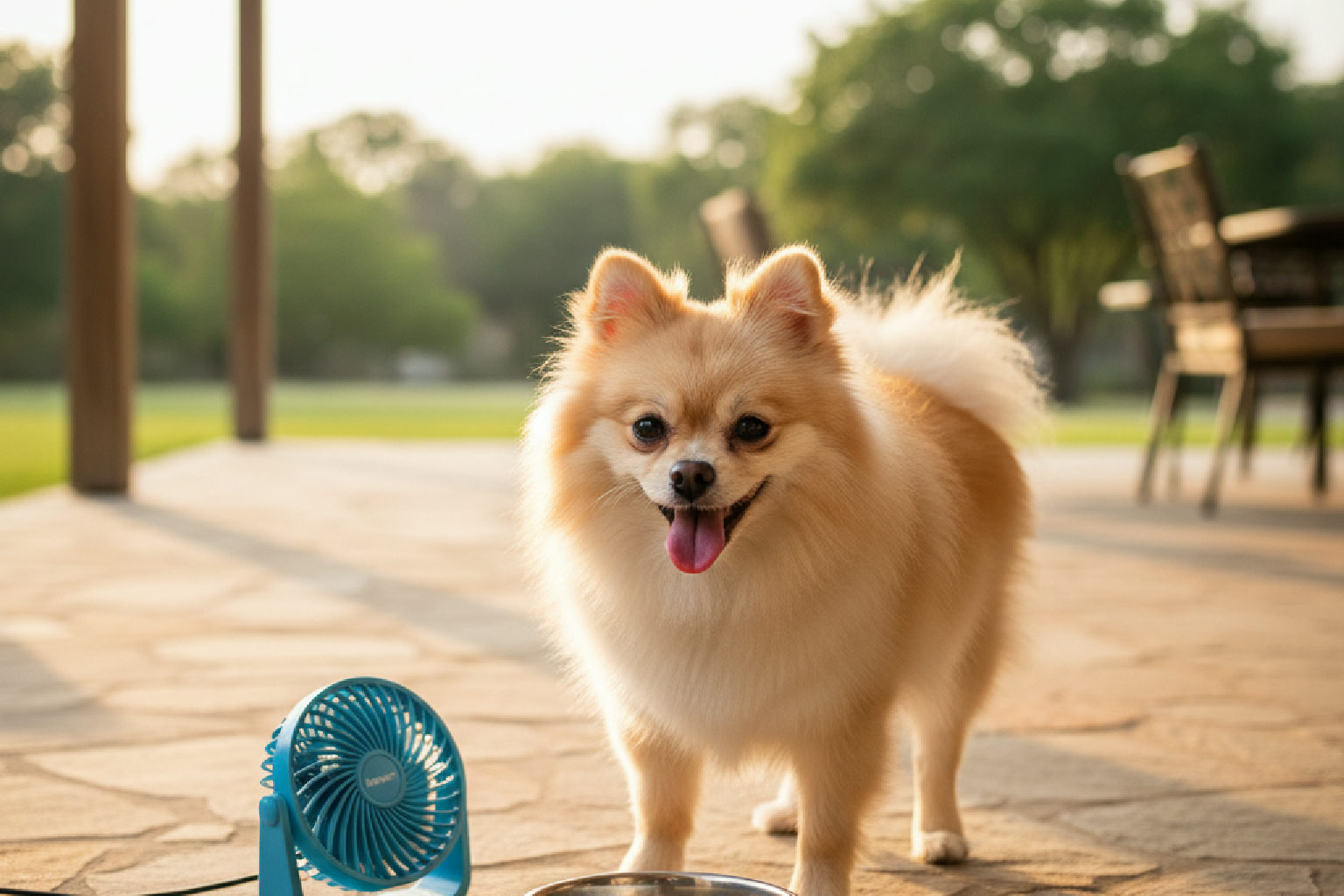
If you own a Bulldog, Pug, French Bulldog, or any other flat-faced breed, Cypress summers are genuinely dangerous for your dog. This isn't about discomfort. These dogs can overheat and die in conditions that barely faze a Labrador. I've treated heat stroke in brachycephalic dogs who were outside for less than 15 minutes on days that didn't feel particularly brutal to their owners. Understanding why this happens (and what to do about it) can save your dog's life.
What does brachycephalic mean, and why does it matter?
Brachycephalic means "short-headed." The term refers to breeds that have been selectively bred for shortened skulls and flat faces. This includes Bulldogs (English and French), Pugs, Boston Terriers, Boxers, Shih Tzus, Pekingese, and Cavalier King Charles Spaniels, among others. The same shortened skull that gives these dogs their distinctive appearance also creates a set of anatomical problems collectively called Brachycephalic Obstructive Airway Syndrome (BOAS).
The anatomy behind the breathing
Here's what's happening inside your flat-faced dog's airway:
- Stenotic nares: Narrowed nostrils that restrict airflow before it even reaches the throat
- Elongated soft palate: The soft tissue at the back of the mouth is too long for the shortened skull, partially blocking the airway
- Hypoplastic trachea: A windpipe that's narrower than it should be for the dog's body size
- Everted laryngeal saccules: Small pouches near the voice box that get sucked into the airway during labored breathing
Dogs don't sweat to cool down. They pant. Panting moves air rapidly across the moist surfaces of the tongue and upper respiratory tract, allowing heat to dissipate through evaporation. A dog with a normal muzzle can move huge volumes of air quickly. A brachycephalic dog is trying to push that same volume of air through a system that's partially obstructed at multiple points. It's like trying to cool down your car's engine while the radiator is half-blocked.
Why is Cypress, TX especially hard on flat-faced breeds?
Texas is hot. Cypress is hot and humid, and that combination is worse than dry heat for any dog trying to thermoregulate. When humidity is high, evaporative cooling (the whole point of panting) becomes less efficient. Your dog pants harder to get the same cooling effect, which generates more body heat and demands more oxygen, which requires even faster panting through an already compromised airway.
The numbers matter here. When the temperature is 85°F with 70% humidity (a typical June afternoon in Cypress), pavement temperature can exceed 130°F. Ground-level air is significantly hotter than what you feel at chest height. Short-legged breeds like French Bulldogs and Pugs are walking through that heat dome with every step.
I see heat-related emergencies in brachycephalic dogs from April through October. The peak is July and August, but September can be deceptive. Owners assume it's cooling down, but afternoon temperatures still regularly hit the low 90s with high humidity.
What does heat stroke look like in a brachycephalic dog?
Heat stroke is a true emergency. Normal canine body temperature is 101-102.5°F. At 104°F, you're entering the danger zone. At 106°F, organ damage begins. At 108°F, the damage is often irreversible.
Early warning signs
- Excessive, frantic panting that doesn't slow down even at rest
- Thick, ropy saliva (the body is losing water)
- Bright red tongue and gums
- Restlessness or anxiety
- Seeking out tile floors, shade, or anywhere cool
Signs of true emergency
- Gums turning pale, gray, or blue
- Vomiting or diarrhea (sometimes bloody)
- Stumbling, disorientation, or collapse
- Seizures
- Loss of consciousness
If you see advanced symptoms, you need a veterinarian immediately. Start cooling measures (cool water, not ice, on the belly, paw pads, and groin) while someone drives. Call ahead so we can prepare. The AVMA's hot weather safety guidelines are a good reference, but the short version is: cool and transport, don't wait to see if they improve.
How can I keep my flat-faced dog safe in summer?
Prevention is everything with these breeds. Once heat stroke starts, the outcome is often determined before you reach the clinic.
Timing and environment
- Walk early or late: Before 8am or after 8pm in peak summer. If you can't hold your hand on the pavement for 5 seconds, it's too hot for paws.
- Keep walks short: A 10-minute potty walk, not a 30-minute exploration. Save exercise for air-conditioned fetch sessions or swimming (if your dog swims safely).
- Never leave them in the car: A car interior reaches 120°F in 10 minutes on a 90°F day, even with windows cracked. This kills normal dogs. It kills brachycephalic dogs faster.
- Air conditioning is not optional: If your AC fails during a Texas summer, a brachycephalic dog needs to go somewhere with working AC immediately.
Physical conditioning
Obesity makes everything worse. Excess body fat insulates heat in and puts additional strain on the respiratory system. If your Bulldog or Pug is carrying extra weight, summer is the most dangerous time to have that conversation. A healthy weight won't fix the underlying anatomy, but it gives your dog more margin for error. I'm happy to discuss a realistic weight loss plan during any routine appointment.
Cooling gear
Cooling vests and mats can help, but they're supplements, not solutions. A cooling vest on a Bulldog at noon in July is still a Bulldog at noon in July. Use them for brief, necessary outings (vet visits, quick errands), not as permission to extend outdoor time.
Should my brachycephalic dog have airway surgery?
Some dogs with BOAS benefit significantly from surgical correction. The most common procedures address the stenotic nares (widening the nostrils) and elongated soft palate (shortening it). These are usually done together, often at the time of spay or neuter while the dog is already under anesthesia.
Not every brachycephalic dog needs surgery. Mild cases can be managed with weight control, exercise restriction, and environmental precautions. More severe cases, dogs who snore heavily, make constant respiratory noise while awake, or have exercise intolerance even in mild weather, often see real improvement after correction.
This is the part where I tell you to be realistic about what surgery can accomplish. It improves airflow, sometimes dramatically. It does not give your French Bulldog the respiratory system of a German Shepherd. A surgically corrected brachycephalic dog still needs the same summer precautions as before, just with a bit more margin.
If you're wondering whether your dog might benefit, that's a conversation for an exam. I can listen to their breathing, assess their anatomy, and give you a straight answer about whether surgery is likely to help and what it typically costs (expect $1,500-$3,000 depending on what's needed). We handle many of these cases and can discuss whether a laparoscopic approach is appropriate for the spay component if we're combining procedures.
When to get your veterinarian involved
Any brachycephalic dog showing signs of heat distress needs to be seen urgently. Don't wait overnight. Don't assume they'll be fine after cooling down. Internal organ damage from heat stroke can progress even after the dog seems to recover.
Beyond emergencies, consider a conversation if:
- Your dog's breathing seems louder or more labored than it used to be
- They tire quickly on walks, even in cool weather
- They snore so loudly it wakes you up
- They've had any episode of collapse, fainting, or blue gums
These warrant evaluation before summer hits its stride. If we can address a correctable problem in April, we're not managing a crisis in August.
The bottom line for Cypress flat-face owners
Your Bulldog, Pug, or Frenchie is not built for Texas summers. That's not a character flaw in the dog or a failure in the owner. It's anatomy. The dogs were bred for a look that comes with real physiological costs, and those costs are highest when heat and humidity combine.
If this is your first summer with a brachycephalic breed in Cypress, TX, or if you're seeing new symptoms in a dog who handled previous summers fine, now is the time to get ahead of it. Schedule a visit at Hearthstone Animal Clinic so we can assess your dog's airway, discuss risk factors, and make a plan. You can reach us at (281) 859-9244. If this was my flat-faced dog, I'd want that baseline before the heat arrives, not after it's already causing problems.
Have a question about your pet?
Dr. Pelton and the Hearthstone team are here to help, the same day when it counts.
Get Your Pet Seen