
Cushing's Disease in Dogs: Signs, Diagnosis, and Treatment Options
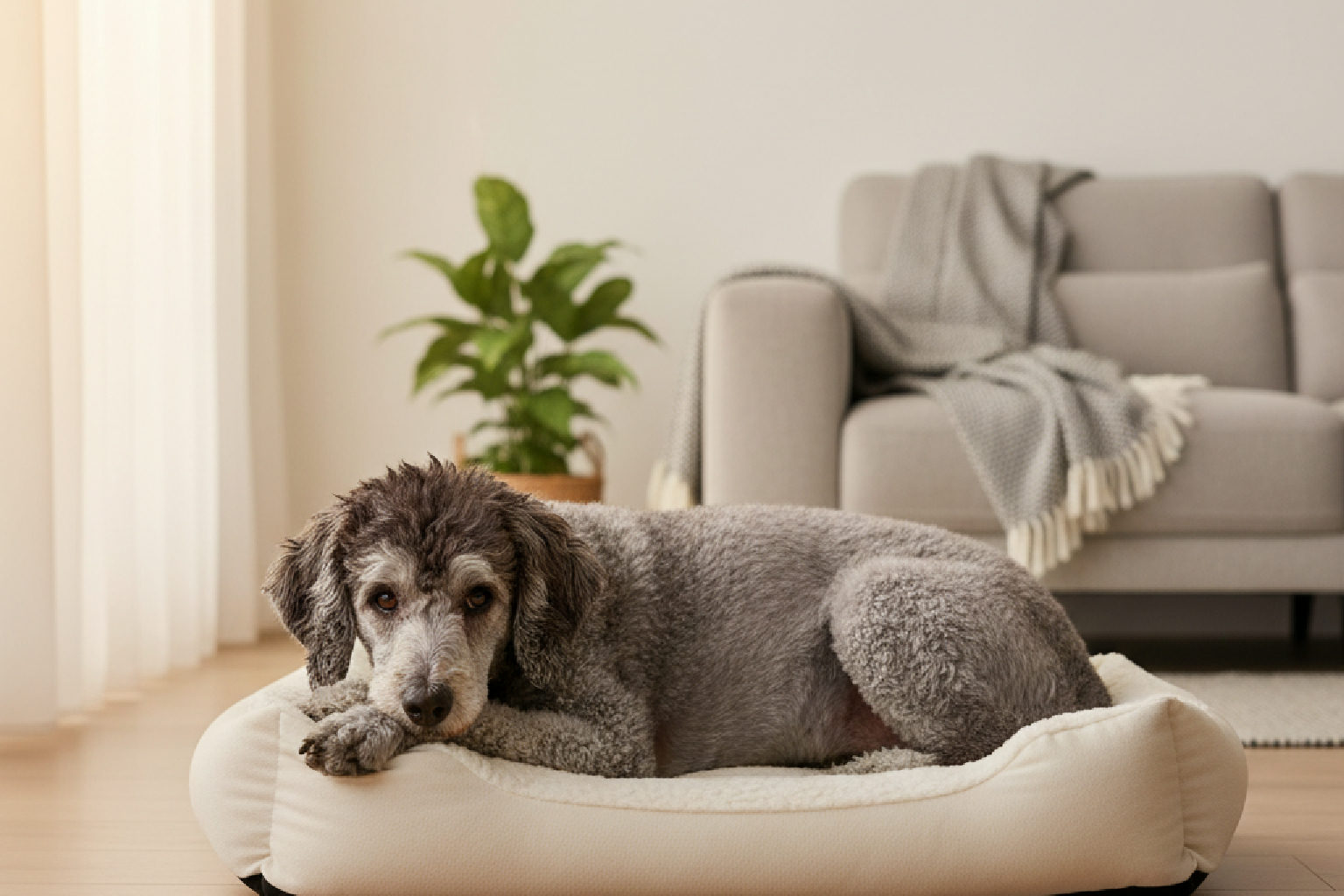
If your senior dog is drinking more water than usual, losing hair symmetrically, or developing a pot-bellied appearance, Cushing's disease (hyperadrenocorticism) belongs on the list of possibilities. This hormone disorder is one of the most common endocrine diseases I diagnose in older dogs here at Hearthstone Animal Clinic in Cypress, TX, and it's also one of the most frequently missed by owners who assume the changes are just "normal aging."
The good news: Cushing's disease is manageable. The challenge is recognizing it early and understanding what you're signing up for with treatment. Here's what I tell owners when we're working through a suspected case.
What is Cushing's disease and why does it happen?
Cushing's disease occurs when your dog's body produces too much cortisol, the "stress hormone." Cortisol is normally made by the adrenal glands (small glands sitting near the kidneys) and regulated by the pituitary gland in the brain. When this system malfunctions, cortisol levels stay chronically elevated, and that excess cortisol slowly damages multiple organ systems.
There are three forms:
- Pituitary-dependent Cushing's (PDH): A small tumor on the pituitary gland tells the adrenal glands to overproduce cortisol. This accounts for about 85% of cases.
- Adrenal-dependent Cushing's: A tumor on one of the adrenal glands itself produces excess cortisol. This is roughly 15% of cases.
- Iatrogenic Cushing's: Caused by long-term steroid medications (prednisone, dexamethasone). This resolves when the medication is tapered off.
Most dogs with Cushing's are over 8 years old. Certain breeds are predisposed, including Poodles, Dachshunds, Boston Terriers, Boxers, and Beagles. If you have a middle-aged to senior dog in one of these breeds showing suspicious signs, Cushing's should be on your radar.
What are the early signs of Cushing's disease in dogs?
The symptoms of Cushing's develop gradually, which is why owners often attribute them to aging. But these changes aren't just "getting old." They're the result of cortisol doing damage over months or years.
The classic signs I look for
- Increased thirst and urination (polydipsia/polyuria): This is usually the first thing owners notice. Your dog may need to go out at night when they never did before, or they're emptying the water bowl twice as fast.
- Increased appetite: Dogs with Cushing's often seem ravenous. They may beg more, eat faster, or get into food they normally wouldn't touch.
- Pot-bellied appearance: Cortisol causes fat redistribution to the abdomen and muscle wasting in the legs. The result is a sagging belly with thin limbs.
- Hair loss: Typically symmetrical and on the trunk, sparing the head and legs. The coat may become dull or thin.
- Skin changes: Thin skin, easy bruising, recurring skin infections, or blackheads on the belly.
- Panting: Even at rest, even when it's not hot.
- Lethargy and muscle weakness: Difficulty jumping on furniture or climbing stairs.
Here's what makes Cushing's tricky: no single sign is specific to this disease. A dog drinking more water could have diabetes, kidney disease, or a urinary tract infection. A pot belly could be liver disease or just weight gain. It's the combination of signs, plus the patient profile (older dog, at-risk breed), that makes me reach for the Cushing's tests.
How do veterinarians diagnose Cushing's disease?
Diagnosing Cushing's is not a one-test process. If I suspect it based on symptoms and physical exam, we start with bloodwork and urinalysis. Dogs with Cushing's often show elevated liver enzymes (especially ALP), high cholesterol, dilute urine, and sometimes elevated blood sugar.
If the initial results support suspicion, we move to specific hormone tests:
The main diagnostic tests
- Low-dose dexamethasone suppression test (LDDS): This is usually my first choice. We give a small dose of synthetic cortisol and measure your dog's response over 8 hours. A normal dog's cortisol levels drop; a Cushing's dog's levels stay elevated.
- ACTH stimulation test: We measure cortisol before and after giving a hormone that stimulates the adrenal glands. This test is faster (about 2 hours) but slightly less sensitive.
- Urine cortisol:creatinine ratio: A screening test done on urine collected at home. A normal result makes Cushing's unlikely; an elevated result means we need more specific testing.
Once we confirm Cushing's, we often recommend an abdominal ultrasound to visualize the adrenal glands. This helps distinguish pituitary-dependent from adrenal-dependent disease, which matters for treatment planning and prognosis. The American College of Veterinary Internal Medicine considers ultrasound an important part of the diagnostic workup for this reason.
I won't sugarcoat it: the full diagnostic process can cost $400-$800 depending on which tests we need. But trying to treat Cushing's without confirming it first leads to problems. The medications we use have real side effects, and starting them based on a hunch is not good medicine.
What are the treatment options for Cushing's disease?
Treatment depends on which type of Cushing's your dog has.
Pituitary-dependent Cushing's (the most common type)
The standard treatment is trilostane (Vetoryl), a medication that reduces cortisol production. Dogs take it once or twice daily with food, usually for life. The starting dose is based on body weight, but we adjust it based on monitoring tests.
What I see in practice: most dogs respond well to trilostane. The excessive drinking and urination usually improve within a few weeks. Hair regrowth takes longer, sometimes 3-6 months. Energy levels often improve noticeably.
The catch is monitoring. Dogs on trilostane need ACTH stimulation tests at 2 weeks, 4 weeks, 12 weeks, and then every 3-6 months ongoing. If cortisol drops too low, it can cause a life-threatening crisis (Addisonian crisis). This isn't common with proper monitoring, but it's why we don't just refill trilostane without rechecking.
Mitotane (Lysodren) is an older medication that's still used in some cases. It actually destroys part of the adrenal gland tissue. It's effective but has a narrower safety margin, so I generally prefer trilostane for most patients.
Adrenal-dependent Cushing's
If an adrenal tumor is causing the problem, surgery to remove the affected adrenal gland is potentially curative. This is major surgery that requires referral to a surgical specialist, and the tumor needs to be assessed for invasiveness before we decide if surgery is feasible. If surgery isn't an option, trilostane can still control symptoms.
Cost expectations
Trilostane runs roughly $50-$150 per month depending on your dog's size. Add in the monitoring tests (ACTH stimulation tests are typically $150-$200 each), and you're looking at ongoing costs. I always want owners to understand this upfront. Treating Cushing's is a commitment.
Is it worth treating Cushing's disease in an older dog?
This is a fair question, and I discuss it honestly with every owner. The answer depends on your dog's overall health, quality of life, and your ability to manage the treatment protocol.
Here's what I usually tell people: untreated Cushing's is not immediately fatal, but it does shorten lifespan and significantly affects quality of life. The excess cortisol suppresses the immune system, making dogs prone to infections (especially urinary tract infections and skin infections). It increases risk of diabetes, blood clots, and high blood pressure. Dogs feel lousy, even if they can't tell you.
Most dogs treated for Cushing's feel better and live longer than they would without treatment. If your 10-year-old dog is otherwise healthy and you can commit to the monitoring schedule, treatment usually makes sense. If your dog has multiple serious health problems and a limited life expectancy regardless, we might decide that managing symptoms without aggressive treatment is the kinder path.
If this was my dog, I would treat. But I would also want the owner to understand that we're managing a chronic disease, not curing it.
When should you see your veterinarian?
If your senior dog is showing any combination of the signs listed above, especially increased thirst and urination plus physical changes like hair loss or a pot belly, it's time for an exam and bloodwork. Don't wait until the symptoms are severe. Earlier diagnosis means we catch the disease before it causes lasting damage to the liver, kidneys, or other organs.
Also contact your vet immediately if a dog already on Cushing's medication shows signs of weakness, vomiting, diarrhea, loss of appetite, or collapse. These can indicate cortisol levels dropped too low and require urgent attention.
If you're in Cypress, TX and your older dog is showing signs that worry you, schedule a visit at Hearthstone Animal Clinic or give us a call at (281) 859-9244. I'd rather rule out Cushing's with a simple blood test than miss it because we assumed the changes were just age. That's a conversation worth having.
Have a question about your pet?
Dr. Pelton and the Hearthstone team are here to help, the same day when it counts.
Get Your Pet Seen