
Eye Injuries and Corneal Ulcers in Dogs: Signs and Emergency Care
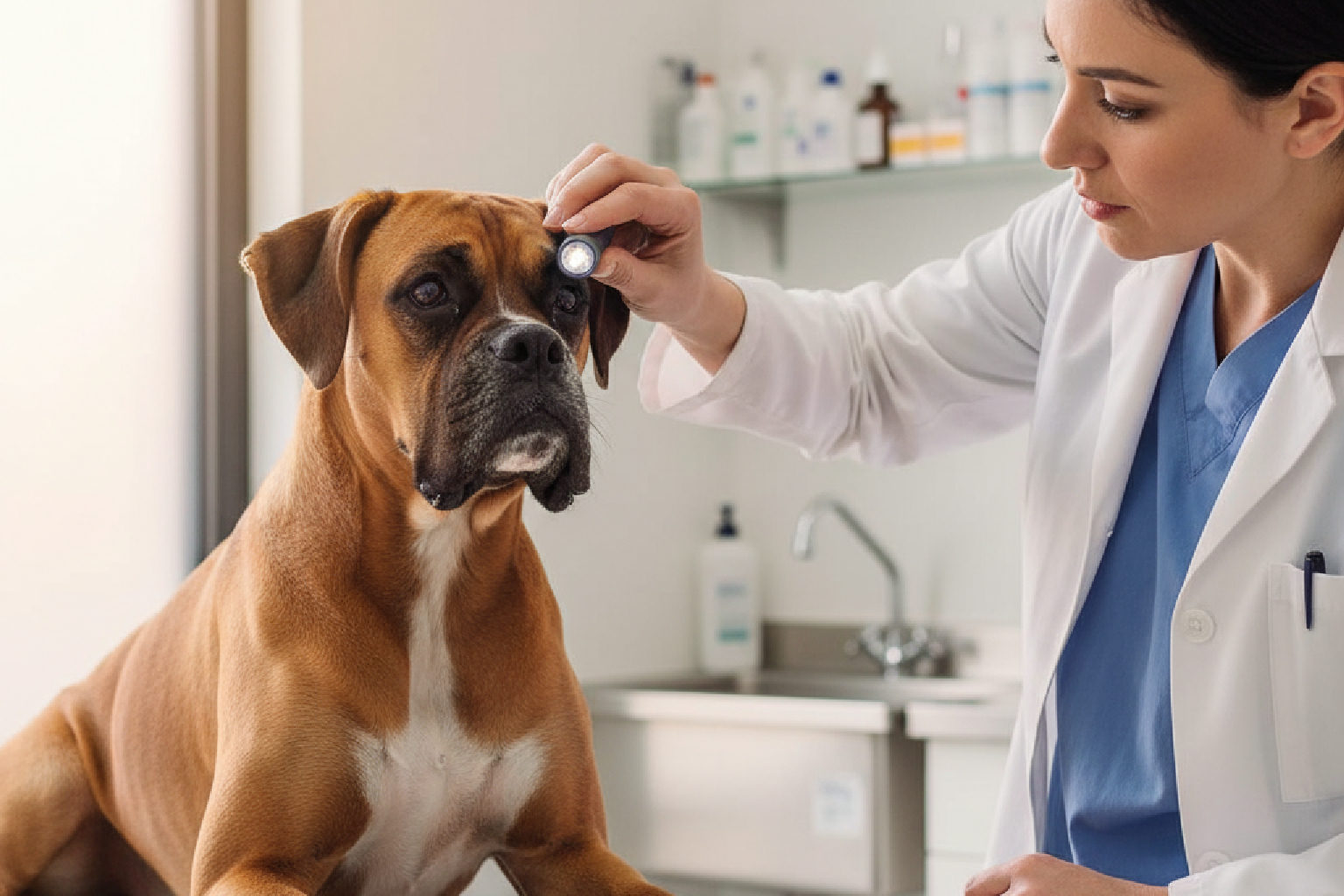
If your dog is suddenly squinting, pawing at their eye, or has visible redness or discharge, you are right to be worried. Eye injuries and corneal ulcers are some of the most time-sensitive problems I see at Hearthstone Animal Clinic in Cypress, TX. The difference between a minor scratch that heals in a week and permanent vision loss often comes down to how quickly the dog gets examined and treated.
This post will help you understand what corneal ulcers actually are, how to recognize the warning signs, and when you need to drop everything and get your dog seen.
What is a corneal ulcer, and how do dogs get them?
The cornea is the clear, dome-shaped surface covering the front of your dog's eye. Think of it as a windshield: it protects everything behind it and allows light to pass through. A corneal ulcer is an open wound on that surface, ranging from a shallow scratch to a deep erosion that threatens to rupture the eye entirely.
Common causes I see in practice
- Trauma: Running through brush, a cat scratch, a thorn, a paw to the face during play. This is the most common cause.
- Foreign bodies: Grass awns, sand, or debris trapped under the eyelid.
- Dry eye (keratoconjunctivitis sicca): When the eye does not produce enough tears, the cornea dries out and becomes vulnerable to ulceration.
- Eyelid abnormalities: Entropion (eyelid rolling inward) or extra eyelashes (distichiasis) cause chronic rubbing.
- Chemical exposure: Shampoo, cleaning products, or anything irritating that gets into the eye.
- Infection: Bacteria, and less commonly fungi or viruses, can infect an existing scratch and make it much worse.
Certain breeds are at higher risk. Flat-faced (brachycephalic) dogs like Pugs, Boston Terriers, Shih Tzus, and Bulldogs have prominent eyes that are more exposed and blink less completely. If you own one of these breeds, you will likely deal with an eye issue at some point.
What are the signs of an eye injury or corneal ulcer?
Dogs cannot tell you their eye hurts, but they show it. Here is what to watch for:
- Squinting or holding the eye closed: This is the number one sign. A painful eye will not stay open.
- Excessive tearing or discharge: Clear tears progressing to yellow or green discharge suggests infection.
- Redness: The white of the eye or the tissue around it appears inflamed.
- Pawing or rubbing at the eye: Dogs try to relieve the discomfort, which usually makes things worse.
- Cloudiness or a blue/gray haze: Edema (swelling) in the cornea causes this. It means the injury is more than superficial.
- Visible defect: Sometimes you can see a divot, rough patch, or foreign object on the eye surface.
- Light sensitivity: The dog avoids bright light or squints more in sunlight.
If you are reading this at 11pm worried about your dog, start here: a squinting eye that appeared suddenly is an emergency until proven otherwise. Corneal ulcers can progress from minor to catastrophic in 24 to 48 hours if bacteria get involved.
Why are corneal ulcers so serious?
The cornea is only about half a millimeter thick in most dogs. A simple scratch typically heals within a week with proper treatment. But if bacteria colonize that wound, they can release enzymes that digest corneal tissue (called melting ulcers or keratomalacia). What started as a surface scratch can become a deep crater within a day or two.
If the ulcer goes deep enough, the eye can rupture. At that point, we are talking about removing the eye or attempting emergency surgery to save it. Neither is a good outcome when the whole thing could have been prevented with early treatment.
The American College of Veterinary Ophthalmologists emphasizes that any suspected corneal ulcer warrants same-day veterinary evaluation. This is not overcautious. I have seen too many eyes lost because the owner waited a few days to "see if it gets better."
How do veterinarians diagnose corneal ulcers?
Diagnosis is straightforward and quick. The key test is a fluorescein stain: I apply a drop of orange-green dye to the eye surface. Healthy cornea repels the dye, but damaged tissue absorbs it and glows bright green under a blue light. This shows exactly where the ulcer is and how big it is.
I also measure tear production (Schirmer tear test) to check for dry eye, examine the eyelids for abnormalities, and assess the depth and character of the ulcer. If I suspect infection or a melting ulcer, I may take a sample for culture or cytology.
The exam takes about 10 minutes and does not require sedation in most dogs.
What does treatment look like?
Treatment depends on the type and severity of the ulcer. Here is what you can generally expect:
Simple, superficial ulcers
- Antibiotic eye drops or ointment: Applied 3 to 4 times daily to prevent infection while the cornea heals. Common options include triple antibiotic ointment or fluoroquinolone drops.
- Atropine drops: These dilate the pupil and relieve the painful spasm of the iris.
- Elizabethan collar (cone): Non-negotiable. One good rub with a paw can turn a healing ulcer into a ruptured eye.
- Pain management: Oral anti-inflammatories if needed.
- Recheck in 5 to 7 days: I re-stain the eye to confirm healing.
Most simple ulcers heal within 7 to 10 days with diligent treatment. Cost for a straightforward case typically runs $150 to $300, including the exam, stain, and medications.
Complicated or deep ulcers
If the ulcer is deep, infected, or not healing after a week, we escalate:
- More aggressive antibiotic regimens: Drops every 2 hours in severe cases.
- Serum eye drops: Made from the dog's own blood, these contain growth factors and anti-collagenase enzymes that help stop melting.
- Debridement: For indolent ulcers (superficial ulcers that refuse to heal, common in Boxers and older dogs), I remove the loose epithelium and create a grid pattern to encourage healing.
- Surgery: Deep ulcers may need a conjunctival graft, corneal transplant, or protective flap to prevent rupture. These cases often get referred to a veterinary ophthalmologist.
Complicated ulcer treatment can run $500 to $2,000 or more, depending on whether surgery is needed. If you have concerns about our pricing, we are always happy to discuss what to expect before we proceed.
A note on indolent ulcers in Boxers
Boxers and related breeds are prone to a frustrating condition called spontaneous chronic corneal epithelial defects (SCCED), also known as indolent ulcers or Boxer ulcers. These are shallow ulcers with loose, non-adherent edges that refuse to heal on their own, sometimes for months. The treatment (grid keratotomy or diamond burr debridement) sounds aggressive but is actually minor and highly effective. If your Boxer has a corneal ulcer that is not improving after a week of standard treatment, this is likely the problem.
When should you seek emergency care?
Not every eye problem is an after-hours emergency, but these situations warrant immediate attention:
- The eye is bulging, sunken, or looks dramatically different from the other eye
- You can see blood inside the eye
- There is visible white or gray tissue protruding from the cornea (this may be the iris herniating through a ruptured ulcer)
- The dog cannot open the eye at all
- The eye was injured by a cat claw, thorn, or other penetrating object
- A known ulcer is getting worse despite treatment
If none of these apply but your dog is squinting and uncomfortable, same-day or next-morning evaluation is still the right call. Waiting over a weekend is how minor problems become major ones.
What NOT to do at home
I understand the instinct to try something before making an appointment. But with eyes, home remedies usually make things worse:
- Do not use human eye drops (Visine, contact lens solution, etc.) unless specifically directed by your vet. Some contain ingredients toxic to damaged corneas.
- Do not use old medications from a previous eye issue without checking first. Steroid-containing drops (like some prescription human drops) can cause a simple ulcer to melt and rupture.
- Do not try to remove a foreign body yourself unless it is clearly sitting on the surface and you can flush it out with sterile saline. Anything embedded needs professional removal.
- Do not skip the cone. I know your dog hates it. Everyone's dog hates it. But the cone is the difference between healing and disaster.
Get your dog's eye examined before it gets worse
Eye injuries are one area where waiting and watching is the wrong approach. The sooner I can examine the eye, stain it, and get your dog on the right treatment, the better the odds of a full recovery. If your dog is squinting, tearing up, or pawing at their face, do not wait to see if it improves on its own.
If you are in Cypress, TX and your dog has an eye injury or you suspect a corneal ulcer, schedule a visit at Hearthstone Animal Clinic or reach us at (281) 859-9244. We see urgent eye cases the same day whenever possible, because with eyes, timing matters.
Have a question about your pet?
Dr. Pelton and the Hearthstone team are here to help, the same day when it counts.
Get Your Pet Seen