
Feline Hyperthyroidism: Weight Loss and Thyroid Signs in Senior Cats
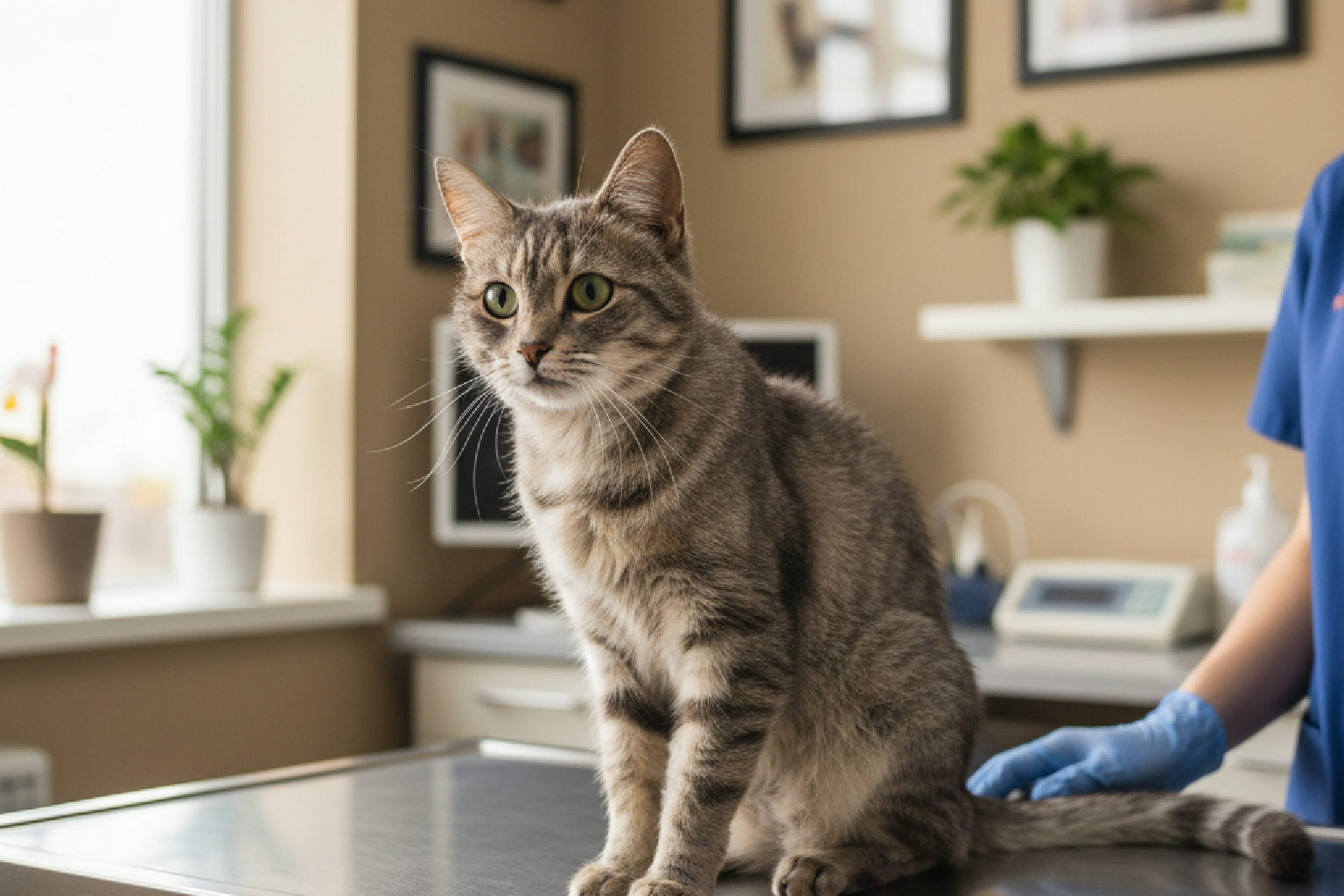
If your cat is over 10 years old, eating like a teenager, and still losing weight, hyperthyroidism belongs at the top of your worry list. This is one of the most common hormonal disorders I diagnose in older cats at Hearthstone Animal Clinic in Cypress, TX, and the good news is that it is very treatable once you know what you are dealing with.
Hyperthyroidism happens when the thyroid gland (a small butterfly-shaped gland in the neck) produces too much thyroid hormone. That hormone controls metabolism, so when levels run high, everything in the body speeds up: heart rate, digestion, calorie burn. The result is a cat who seems hungry all the time but keeps getting thinner.
What causes hyperthyroidism in cats?
In almost every case, the cause is a benign tumor called an adenoma growing on one or both thyroid lobes. These tumors are not cancer, but they do produce thyroid hormone without any of the normal feedback controls. The gland just keeps pumping out T4 (thyroxine) regardless of what the body actually needs.
We do not know exactly why these adenomas form. Researchers have looked at environmental factors, including flame retardants in furniture, BPA in canned food linings, and iodine content in commercial diets. Nothing has been definitively proven, but the disease has become much more common over the past 40 years. Some of that increase is simply because cats live longer now, and hyperthyroidism is almost exclusively a disease of middle-aged to senior cats.
Which cats are at risk?
- Age: Cats over 10 are at highest risk. The average age at diagnosis is 12 to 13 years.
- Breed: Siamese and Himalayan cats may have a slightly lower risk, but no breed is immune.
- Indoor cats: Some studies suggest indoor cats are diagnosed more often, possibly due to higher exposure to certain household chemicals or simply because they live long enough to develop the condition.
What are the signs of hyperthyroidism in cats?
The classic presentation is a cat who is ravenously hungry, losing weight, and more active or restless than usual. But not every case looks textbook. Here is what I commonly see:
- Weight loss despite a good or increased appetite (this is the hallmark sign)
- Increased thirst and urination
- Vomiting or diarrhea
- Unkempt, greasy, or matted coat
- Hyperactivity, restlessness, or increased vocalization (especially at night)
- Rapid heart rate or a heart murmur detected on exam
- Panting (unusual for cats at rest)
Some cats swing the other direction and become lethargic and lose their appetite. This is called apathetic hyperthyroidism and accounts for roughly 10% of cases. These cats are often sicker at diagnosis because the disease went unnoticed longer.
How do veterinarians diagnose hyperthyroidism?
Diagnosis starts with a physical exam. In many hyperthyroid cats, I can feel an enlarged thyroid gland in the neck. A fast heart rate (over 200 beats per minute) and weight loss on the scale add to my suspicion.
The confirming test is a blood panel that measures Total T4. In a healthy cat, T4 runs between roughly 1.0 and 4.0 mcg/dL. Hyperthyroid cats typically show T4 levels above 4.0, and I often see values of 8, 12, or higher. In early or borderline cases, T4 can fluctuate into the normal range, so we sometimes need a Free T4 test or repeat testing a few weeks later.
I also recommend checking kidney values and a urinalysis at the same time. Here is why: hyperthyroidism increases blood flow to the kidneys, which can mask underlying kidney disease. When we treat the thyroid, kidney function sometimes looks worse on paper because we have removed that artificial boost. This does not mean we should skip treatment; it means we need to know the baseline and monitor carefully. Senior bloodwork is how we catch these connections early.
What are the treatment options for feline hyperthyroidism?
There are four main approaches. Each has tradeoffs in cost, convenience, and how definitively it solves the problem.
1. Daily medication (methimazole)
Methimazole (brand name Felimazole or Tapazole) is the most common starting point. It blocks the thyroid from producing excess hormone. Cats typically take it once or twice daily, either as a pill, a flavored liquid, or a transdermal gel applied to the ear.
Pros: Relatively affordable upfront (roughly $20 to $40 per month for the medication itself), widely available, reversible if side effects occur.
Cons: It is lifelong, requires regular bloodwork to adjust the dose, and some cats experience side effects like vomiting, facial itching, or (rarely) liver or bone marrow suppression. About 10 to 15% of cats cannot tolerate it.
2. Radioactive iodine therapy (I-131)
This is the gold standard. A single injection of radioactive iodine destroys the abnormal thyroid tissue while sparing healthy tissue. Cure rates exceed 95% with one treatment.
Pros: Curative in most cases, no daily medication, no anesthesia required.
Cons: Requires referral to a specialty facility (cats must stay isolated for several days until radiation levels drop), costs $1,200 to $1,800 in the Houston area, and is not suitable for cats with severe kidney disease or other conditions that make hospitalization risky.
If this were my cat, and the kidneys looked stable, I would strongly consider radioiodine therapy. The upfront cost is higher, but you are done. No pills for the next five years.
3. Prescription diet (Hill's y/d)
Hill's makes a severely iodine-restricted diet that can control hyperthyroidism without medication. The thyroid cannot make hormone without iodine, so starving it of the raw material slows production.
Pros: No pills, no injections.
Cons: The cat must eat this food exclusively, forever. No treats, no hunting, no other food in a multi-cat household. That is hard to enforce, and many cats refuse to eat it. It controls rather than cures.
4. Surgery (thyroidectomy)
Surgical removal of the thyroid gland is curative but less commonly performed today because radioiodine achieves similar results without anesthesia. Surgery carries risks of damage to the parathyroid glands (which regulate calcium) and is generally reserved for cats who cannot undergo I-131 for other reasons.
How much does hyperthyroidism treatment cost?
Here is a realistic breakdown for Cypress, TX:
- Diagnosis: Exam plus bloodwork typically runs $150 to $250.
- Methimazole: $20 to $50 per month for medication, plus rechecks and blood panels every 3 to 6 months ($80 to $150 each).
- Radioiodine (I-131): $1,200 to $1,800 one-time at a referral center, plus pre-treatment workup.
- Prescription diet: $40 to $60 per month, ongoing.
Over a cat's remaining lifespan, methimazole and I-131 often cost about the same. Radioiodine is just front-loaded.
What happens if hyperthyroidism goes untreated?
Left alone, hyperthyroidism causes progressive damage. The heart muscle thickens (a condition called hypertrophic cardiomyopathy secondary to hyperthyroidism), which can lead to heart failure. Blood pressure rises, sometimes causing sudden blindness from retinal detachment. Cats lose muscle mass and eventually become too weak to eat or groom. This is a survivable, treatable disease, but ignoring it is not a neutral choice.
According to the American Animal Hospital Association's Senior Care Guidelines, routine screening bloodwork in cats over 7 catches conditions like hyperthyroidism early, when treatment is simplest and outcomes are best.
When should you bring your senior cat to the vet?
If your cat is over 10 and showing any combination of weight loss, increased appetite, increased thirst, vomiting, or behavior changes, bloodwork is the next step. Even if your cat seems fine, annual wellness panels for senior cats catch hyperthyroidism (and kidney disease, and diabetes) before obvious symptoms appear. That early window matters.
If you are noticing these signs in your senior cat, or if it has been more than a year since their last bloodwork, schedule a visit at Hearthstone Animal Clinic. We see cats with these exact concerns every week in Cypress, TX, and a simple blood draw can answer the question. You can reach us at (281) 859-9244.
Have a question about your pet?
Dr. Pelton and the Hearthstone team are here to help, the same day when it counts.
Get Your Pet Seen