
Feline Urinary Blockage in Cats: Why Summer Stress Causes FLUTD
If your male cat is straining in the litter box and nothing is coming out, you probably already sense something is wrong. You're right to be worried. Urinary blockages in cats are one of the true emergencies I see at Hearthstone Animal Clinic, and here in Cypress, TX, I see a surprising uptick during the summer months. That pattern catches most owners off guard because they associate urinary problems with cold weather or "holding it." The reality is more complicated, and understanding why can help you protect your cat.
What is FLUTD and why does it affect male cats?
Feline Lower Urinary Tract Disease (FLUTD) is an umbrella term covering several conditions that affect a cat's bladder and urethra. The most common form, especially in cats under 10 years old, is feline idiopathic cystitis (FIC), which means inflammation of the bladder without an obvious cause like infection or stones. About 60-70% of FLUTD cases fall into this category.
Here's what matters: male cats have a much narrower, longer urethra than females. When bladder inflammation produces mucus, crystals, or debris, that narrow tube can become completely blocked. Female cats get FLUTD too, but they rarely obstruct because the plumbing is wider and shorter. A blocked male cat cannot urinate at all, which means toxins build up in the bloodstream. Within 24-48 hours, this becomes life-threatening.
The stress connection most owners miss
FIC is fundamentally a stress-related disease. The bladder lining in affected cats is abnormally sensitive to stress hormones. When cortisol and adrenaline spike, the bladder wall becomes inflamed, irritated, and prone to producing the mucus plugs that cause blockages. This is the part most owners get wrong, and it's not their fault. We think of stress as something dramatic: a new baby, a house move, a new pet. But for cats, stress can be subtle and cumulative.
Why do urinary blockages spike in summer in Cypress?
Summer in Cypress, TX brings specific stressors that hit cats hard:
- Kids home from school: More noise, more unpredictable activity, more people in the house during the day. Cats are creatures of routine, and summer breaks that routine.
- Vacation disruptions: Whether the family travels or a pet sitter comes in, any change to the household triggers feline stress responses.
- Air conditioning changes: Cats often drink less when the AC runs constantly. Even mild dehydration concentrates urine and increases crystal formation.
- Thunderstorms: Summer storm season in the Houston area means unpredictable barometric pressure changes and loud noises, both of which stress cats.
- Heat forcing indoor confinement: Cats that usually have patio or catio access may be stuck inside, reducing their environmental enrichment.
I've practiced as a Cypress veterinarian since 2007, and I can almost predict when blockage cases will cluster: the week after July 4th, the first week kids are back in school, and anytime we have a run of severe thunderstorms. The pattern is consistent enough that it's not coincidence.
What are the warning signs of a urinary blockage?
Recognizing early signs can mean the difference between a manageable episode and a full emergency. Watch for:
- Frequent trips to the litter box with little or no urine produced
- Straining or crying while attempting to urinate
- Licking the genital area excessively
- Blood-tinged urine or urine outside the litter box
- Vomiting or lethargy (these indicate toxins are building up)
- Hiding or refusing food
If your cat is straining and producing nothing at all, that's the red flag. A cat who is posturing to urinate repeatedly with zero output needs to be seen within hours, not tomorrow. If you're reading this at 11pm worried about your cat, and he hasn't produced urine in 6-8 hours, don't wait until morning.
How is a urinary blockage treated?
Treatment involves sedation or anesthesia, passing a urinary catheter to relieve the obstruction, and flushing the bladder. Most blocked cats need to stay hospitalized for 24-72 hours with the catheter in place, receiving IV fluids to flush out toxins and correct electrolyte imbalances. The most dangerous part of a blockage isn't the blockage itself; it's the potassium buildup that can cause fatal heart arrhythmias.
What does treatment cost?
At Hearthstone Animal Clinic, treating an uncomplicated urinary blockage typically runs $800-1,500, depending on how long your cat needs hospitalization and whether complications arise. If you're coming from an emergency clinic on a weekend, expect $1,500-3,000 or more. Cats who have been blocked for 24+ hours often need more intensive care, which drives costs higher. This is one case where catching it early saves money and suffering.
For more information about our approach to emergency care and diagnostic work, check out our services or our pricing page.
Can you prevent urinary blockages in cats?
Yes, and prevention is where you have real power. If your cat has had one episode of FLUTD or a blockage, he's at high risk for recurrence. Here's what I tell my clients:
Increase water intake
More water means more dilute urine, which means fewer crystals and less concentrated irritants touching the bladder wall. Strategies that work:
- Wet food: If your cat eats dry kibble, switching to canned or pouch food is the single most effective change. Cats evolved to get most of their water from prey, not a bowl.
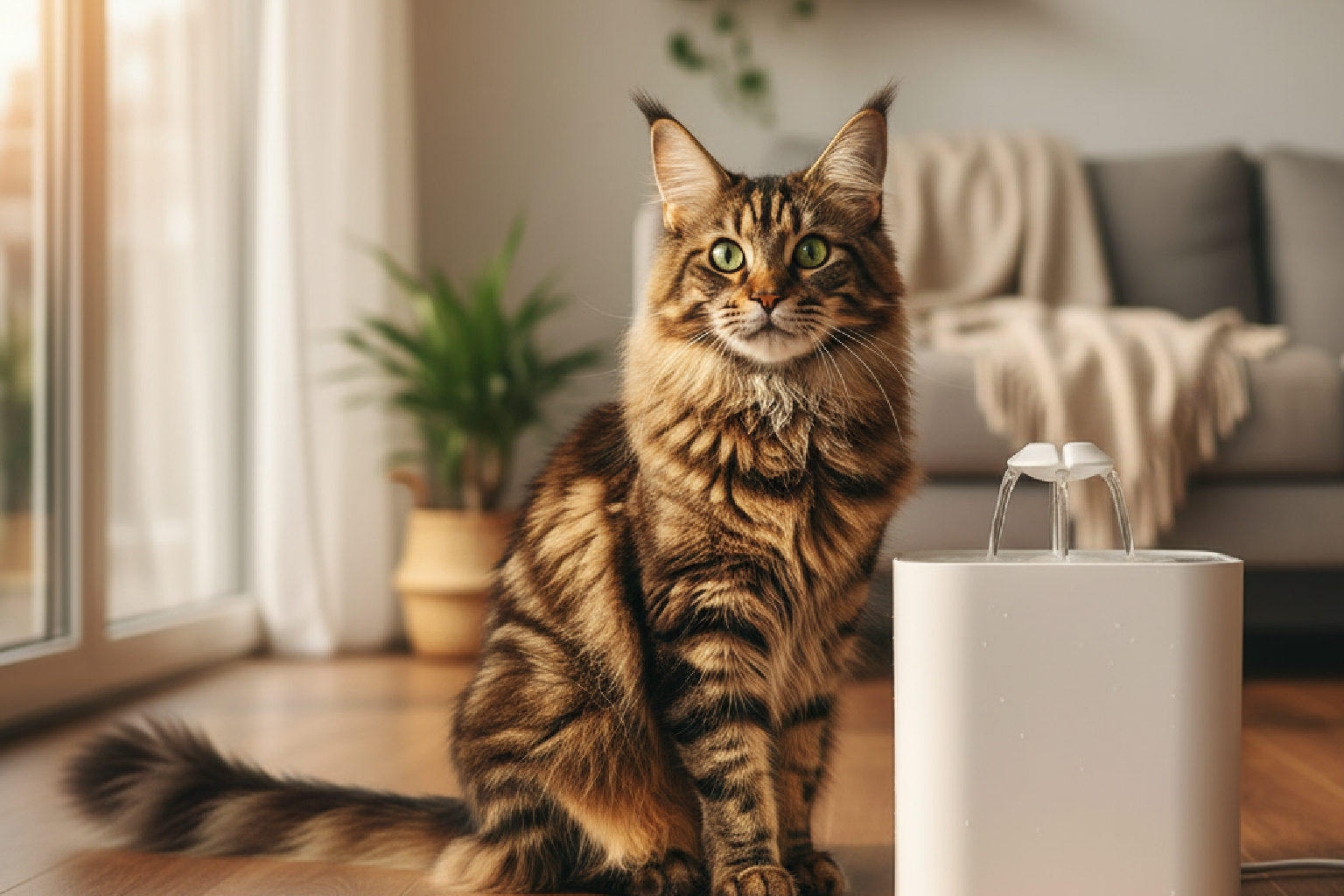
- Water fountains: Many cats prefer moving water. A $30 fountain can make a measurable difference.
- Multiple water stations: Place bowls in several rooms, away from food and litter boxes.
Reduce stress
This is harder but equally important. The American Association of Feline Practitioners has excellent resources on creating a cat-friendly environment. Key principles:
- Predictable routine: Feed at the same times daily. Keep the litter box in the same place.
- Vertical space: Cat trees and shelves give cats escape routes and control over their environment.
- Multiple litter boxes: The rule is one per cat plus one extra, in different locations.
- Feliway or similar pheromone diffusers: These don't work for every cat, but when they work, they help significantly.
- Safe hiding spots: Covered beds, boxes, or closet access give cats a place to retreat.
Prescription diets
If your cat has had a blockage or recurrent FLUTD, prescription urinary diets (Royal Canin Urinary SO, Hill's c/d, Purina UR) are often worth the investment. These diets modify urine pH and mineral content to reduce crystal formation. They're not cheap, typically $50-70 for a case of canned food, but compared to another $1,500 hospitalization, the math is clear.
When should you seek emergency care?
The distinction between "watch at home" and "get to a vet now" matters:
Watch at home for 12-24 hours if: Your cat is urinating small amounts but still producing urine, is eating normally, and is otherwise acting like himself. Increase water intake and monitor closely.
See a vet today if: Blood in urine, frequent trips to the box with small production, or any behavior changes. This is when you want to request an appointment and get ahead of a potential blockage.
Emergency (go now) if: No urine production for 6+ hours despite straining, vomiting, lethargy, or a cat who won't move or seems painful when you touch his belly. If this was my cat, I wouldn't wait.
Protect your cat this summer
Summer should be a good season for your cat, not one where he ends up with a urinary catheter. Start with wet food and a water fountain. Keep routines predictable during vacation season. And if your cat has a history of FLUTD or you notice any straining in the litter box, get him checked before a bad situation becomes a dangerous one.
If your cat is showing any signs of urinary trouble, or if you want to discuss prevention strategies for a cat who's had problems before, schedule a visit at Hearthstone Animal Clinic. We're here for Cypress, TX pet owners at (281) 859-9244. Urinary blockages are one problem where catching it early makes all the difference.
Have a question about your pet?
Dr. Pelton and the Hearthstone team are here to help, the same day when it counts.
Get Your Pet Seen