
Grape and Raisin Toxicity in Dogs: Why Even a Few Can Be Fatal
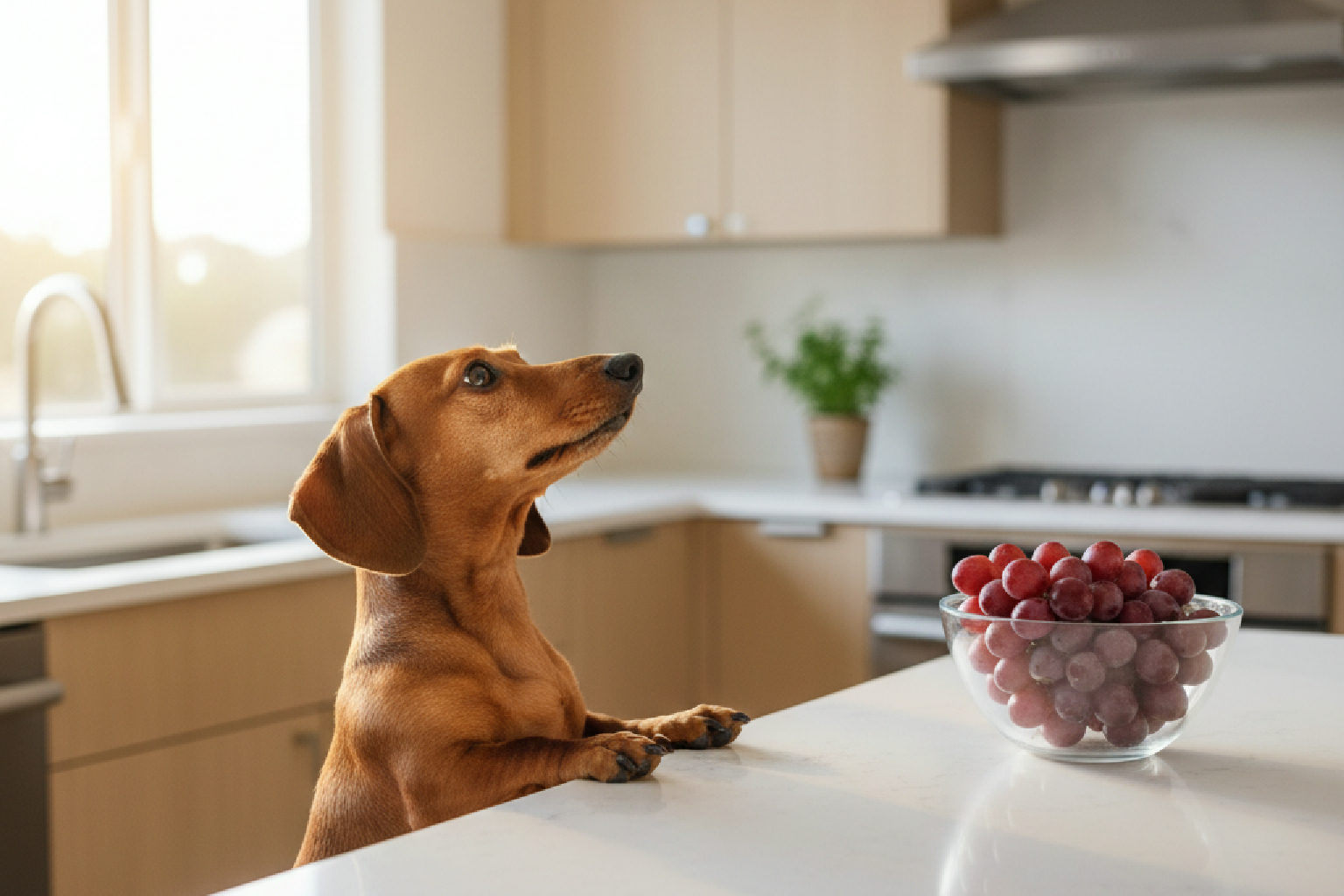
Your dog just ate a few grapes off the floor, or maybe swiped a handful of trail mix with raisins. Now you're wondering if this is actually an emergency or if you're overreacting. Let me be clear: this is one of those times where the worry is justified. I've practiced veterinary medicine in Cypress, TX for over 25 years, and grape and raisin toxicity remains one of the most unpredictable poisonings I see at Hearthstone Animal Clinic. Some dogs eat a whole bunch and walk away fine. Others develop acute kidney failure from a dozen raisins. We cannot predict which dog will be which, and that's exactly what makes this so dangerous.
Why are grapes and raisins toxic to dogs?
Here's what frustrates me and every other veterinarian: we still don't know exactly why grapes are toxic. For decades, researchers suspected pesticides, molds, or heavy metals. None of those theories held up. The most recent evidence, published in 2021 by the ASPCA Animal Poison Control Center, points to tartaric acid as the likely culprit. Tartaric acid is naturally present in grapes, and dogs appear uniquely sensitive to it.
But even this doesn't explain everything. The concentration of tartaric acid varies wildly between grape varieties, growing conditions, and ripeness. This is why one dog eats 20 grapes with no effect while another develops kidney failure from 5. Raisins are more dangerous gram-for-gram simply because they're concentrated: the water is gone, but the tartaric acid remains.
Which products contain grapes or raisins?
It's not always obvious. Watch out for:
- Trail mix, granola bars, and energy bars
- Raisin bran and other cereals
- Grape juice and wine (yes, dogs will drink spilled wine)
- Fruit salad and holiday stuffing with grapes
- Chocolate-covered raisins (double toxicity: chocolate and raisins)
- Cookies, muffins, and breads with raisins
- Currants (Zante currants are actually dried grapes, not true currants)
How many grapes does it take to hurt a dog?
This is the question I get most often, and I wish I had a simple answer. The toxic dose is wildly variable. Some literature suggests as few as 0.3 ounces of grapes per pound of body weight can cause problems. For a 20-pound dog, that's about 6 ounces, or roughly 12 to 15 grapes. But I've seen smaller dogs get sick from far less.
Because we cannot predict which individual dog will react and which won't, the safest approach is to treat any grape or raisin ingestion as a potential emergency. One grape in a Great Dane? Probably fine, but I'd still want to know about it. A handful of raisins in a Chihuahua? That dog needs to be seen immediately.
What are the signs of grape toxicity in dogs?
Symptoms typically appear within 6 to 12 hours, though some dogs show signs earlier. Here's what to watch for:
Early signs (within 2-12 hours)
- Vomiting (often with grape or raisin pieces visible)
- Diarrhea
- Loss of appetite
- Lethargy and weakness
- Abdominal pain (hunched posture, reluctance to move)
Later signs (12-72 hours, indicating kidney damage)
- Decreased urination or no urination at all
- Excessive thirst initially, then refusal to drink
- Bad breath with an ammonia-like smell (uremic breath)
- Tremors or seizures
- Collapse
If your dog stops producing urine, that's a sign the kidneys are shutting down. At that point, the prognosis gets much worse. This is why early treatment matters so much.
What should I do if my dog eats grapes or raisins?
Time is everything here. The faster we can get the grapes out of your dog's system, the better the outcome.
Step 1: Don't wait for symptoms
If you know your dog ate grapes or raisins within the last 2 hours, we can often induce vomiting and prevent absorption. This is far less expensive and far more effective than treating kidney failure after it's already started.
Step 2: Get your dog seen immediately
If you're in the Cypress area, get your pet seen the same day. If it's after hours, head to the nearest emergency vet. Do not wait until morning. Do not "see how it goes." Kidney damage can be irreversible once it progresses.
Step 3: Bring the packaging if possible
If your dog ate something from a package (trail mix, raisin bran), bring it with you. Knowing the quantity and whether other toxic ingredients were present (chocolate, xylitol) helps us plan treatment.
What NOT to do
Do not try to induce vomiting at home without talking to a veterinarian first. Hydrogen peroxide can work, but the dose matters, and some situations (like if the dog is already showing neurological signs) make vomiting dangerous. Let us guide you.
How do veterinarians treat grape toxicity?
Treatment depends on how quickly you get to us and whether symptoms have started.
If caught early (within 2 hours)
We induce vomiting to remove the grapes, then give activated charcoal to absorb any remaining toxins in the GI tract. We'll run baseline bloodwork to check kidney values, then start IV fluids to support the kidneys and flush out any absorbed toxin. Most dogs treated this early go home within 24 to 48 hours and recover fully.
If caught later or symptoms have started
If kidney damage has begun, treatment becomes more intensive. We're talking 48 to 72 hours (or longer) of aggressive IV fluid therapy, frequent monitoring of kidney values (BUN, creatinine, phosphorus), and supportive care. Some dogs require hospitalization for a week or more. In severe cases where the kidneys fail completely, dialysis or euthanasia become the only options.
What does treatment cost?
Early treatment (induced vomiting, charcoal, 24-hour fluid support, and monitoring) typically runs $400 to $800 at most general practices. If your dog needs several days of hospitalization with intensive monitoring, you're looking at $1,500 to $4,000 or more. Emergency specialty hospitals charge even more. This is why I tell clients: the $300 visit you think you're avoiding by waiting becomes a $3,000 hospitalization if kidney failure develops.
Can dogs recover from grape poisoning?
Yes, if caught early. Dogs treated within the first few hours, before kidney values rise, have an excellent prognosis. Most recover completely with no lasting damage.
Once kidney failure sets in, the picture changes. Some dogs recover partial kidney function with aggressive treatment. Others don't. The kidneys have limited ability to regenerate, and if enough tissue dies, it's permanent. I've seen dogs survive grape toxicity and live normal lives afterward. I've also seen dogs that couldn't be saved despite everyone's best efforts. The difference almost always comes down to how quickly they got to us.
How do I prevent grape toxicity?
Prevention is straightforward, but it requires vigilance:
- Keep grapes, raisins, and all products containing them out of reach
- Educate everyone in your household, especially children who may share snacks with the dog
- Be especially careful around holidays when fruit bowls, baked goods, and trail mix are common
- If you drop a grape, find it before your dog does
If you have questions about other foods that are toxic to dogs or want to discuss your pet's overall health, our services cover everything from wellness exams to emergency triage. For older pets, senior pet bloodwork can establish baseline kidney values, which is helpful if a poisoning ever does occur.
When to call your Cypress veterinarian
If your dog has eaten any amount of grapes, raisins, or currants, contact a veterinarian immediately. Don't wait for symptoms. Don't Google "how many grapes are toxic" and try to calculate whether you're in the danger zone. The math doesn't work that way because we can't predict individual sensitivity.
If you're in Cypress, TX or the surrounding area and your dog has gotten into grapes or raisins, schedule a visit at Hearthstone Animal Clinic right away, or call us at (281) 859-9244. If it's after hours, get to an emergency vet. This is one of those situations where being cautious isn't overreacting. It's the right call.
Have a question about your pet?
Dr. Pelton and the Hearthstone team are here to help, the same day when it counts.
Get Your Pet Seen