
Halloween Candy and Wrapper Dangers for Cats: What to Know
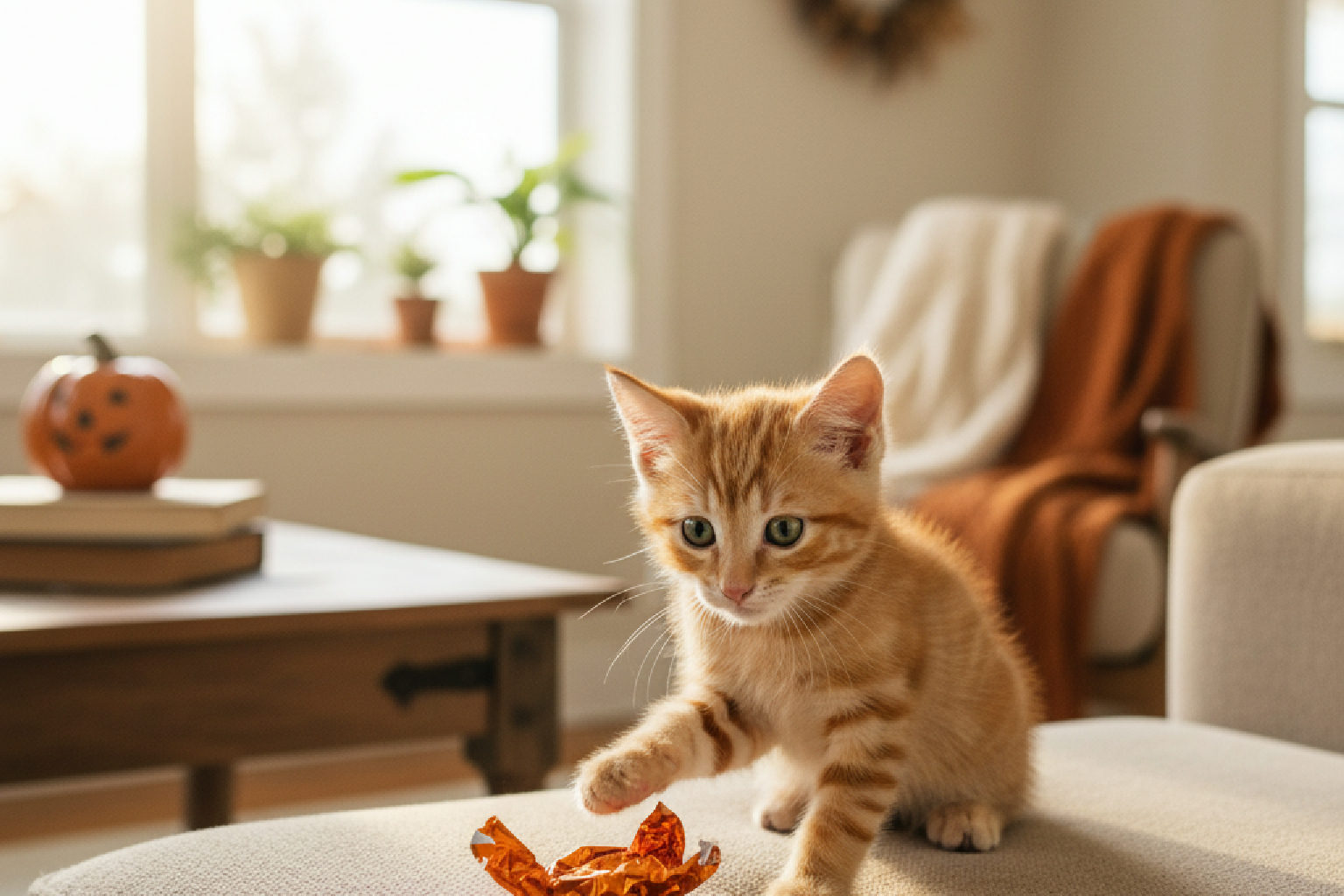
Halloween candy isn't just a dog problem. Cats may not have a sweet tooth like dogs do, but they're curious creatures who bat, chase, and sometimes swallow the crinkly wrappers that fall on the floor. Every October, I see at least a few cats in Cypress come in after getting into the Halloween stash, and most of the time, it's the wrapper causing trouble rather than the candy itself.
Here's the short answer: most chocolate and candy is less toxic to cats than to dogs (cats are less likely to eat enough to cause poisoning), but xylitol is still dangerous, and wrappers can cause intestinal blockages that require surgery. If your cat ate candy or a wrapper, don't wait to see what happens. Read below to figure out what you're dealing with.
Why do cats get into Halloween candy?
Cats can't taste sweetness the way we can. They lack the taste receptors for it. So why do they bother with candy at all?
The answer is almost always the wrapper. Foil, cellophane, and those little twist-tie ends are irresistible to a lot of cats. They crinkle. They skitter across the floor. They're the perfect prey substitute. And once a cat starts batting something around, there's a good chance part of it ends up in their mouth.
Some cats are also drawn to certain textures. Chewy candies, gummy worms, and soft caramels feel interesting to chew on. The flavor might not matter, but the act of chewing does.
Is chocolate dangerous for cats?
Chocolate contains theobromine and caffeine, both of which are toxic to cats and dogs. The difference is that cats rarely eat enough chocolate to cause a serious problem. They're pickier than dogs, and they don't wolf down an entire bag of fun-size Snickers bars.
That said, toxicity is dose-dependent. A 10-pound cat would need to eat roughly 1.5 ounces of milk chocolate to reach a toxic dose, or less than half an ounce of dark chocolate. Baker's chocolate is the most dangerous: even a small amount can cause vomiting, rapid heart rate, tremors, and seizures.
If your cat licked a piece of chocolate or ate a small bite of a milk chocolate bar, you're probably fine. If they got into dark chocolate, baker's chocolate, or cocoa powder, that's worth a call to your vet or the ASPCA Animal Poison Control Center (888-426-4435).
Signs of chocolate toxicity in cats
- Restlessness or hyperactivity
- Vomiting or diarrhea
- Rapid breathing or panting
- Muscle tremors
- Increased heart rate
- Seizures (in severe cases)
Symptoms typically show up within 6 to 12 hours of ingestion. If you see any of these signs after your cat got into chocolate, they need to be seen right away.
What about xylitol in candy?
Xylitol is an artificial sweetener found in sugar-free gum, mints, some peanut butter brands, and certain candies. In dogs, xylitol causes a rapid drop in blood sugar and can lead to liver failure. The data on cats is less clear because cats are less likely to eat sweet things, but xylitol is still considered toxic to cats and should be treated seriously.
The tricky part is that xylitol isn't always listed by name on ingredient labels. It may appear as "birch sugar" or simply "sugar alcohol." If your cat ate something labeled "sugar-free," assume xylitol is a possibility and act accordingly.
What to do if your cat ate something with xylitol
- Don't induce vomiting at home without veterinary guidance (hydrogen peroxide is not safe for cats)
- Bring the packaging if you still have it
- Get your cat to a vet immediately, even if they seem fine
Xylitol toxicity can cause symptoms within 30 minutes, but sometimes it takes longer for signs to appear. This is one situation where waiting to see if your cat gets sick is genuinely risky.
Why candy wrappers are the bigger problem
In my experience, most of the Halloween-related cat emergencies I see aren't poisonings. They're foreign body obstructions caused by wrappers.
When a cat swallows a piece of cellophane, foil, or plastic, it doesn't always pass through cleanly. Wrappers can bunch up in the stomach or intestines and create a blockage. Linear foreign bodies (like strings from twist-ties or ribbon) are especially dangerous because they can saw through the intestinal wall as the gut tries to move them along.
Signs your cat may have swallowed a wrapper
- Vomiting (especially repeated vomiting without producing much)
- Loss of appetite
- Lethargy or hiding
- Painful abdomen (your cat may hunch or resist being picked up)
- Straining in the litter box with no results
- Drooling
If you saw your cat swallow a wrapper and they're acting normally, it may pass on its own within 24 to 48 hours. Watch for vomiting, changes in appetite, or any of the signs above. If the wrapper was large, had a string or ribbon attached, or your cat starts showing symptoms, don't wait. A blockage that goes untreated can be fatal.
For more on when digestive symptoms become emergencies, I wrote about red flags in vomiting and diarrhea.
Other Halloween candy hazards for cats
Beyond chocolate and xylitol, a few other items deserve mention:
- Raisins and grapes: Some trail mix or chocolate-covered raisin candies contain grapes or raisins, which are toxic to cats (and dogs). Even small amounts can cause kidney failure.
- Macadamia nuts: Toxic to dogs, and there's some evidence they may affect cats too. Best avoided.
- High-fat treats: Cats who eat large amounts of fatty candy or baked goods can develop pancreatitis. This is less common than in dogs, but it happens.
- Hard candies and lollipops: Choking hazard, and the sticks can cause injury if swallowed or chewed.
How to keep your cat safe during Halloween
Prevention is easier than treatment. A few practical steps:
- Store candy in closed containers. Cats can knock over bowls and bags. A sealed bin or cabinet is safer.
- Throw wrappers away immediately. Don't leave them on the couch or coffee table. A wrapper on the floor is a toy to most cats.
- Watch the door. Cats can slip out when you're greeting trick-or-treaters. This is also a night when scared cats sometimes bolt.
- Keep decorations out of reach. Fake cobwebs, string lights, and small decorations can all become foreign bodies if swallowed.
If you have kids, remind them that candy left on the floor is an invitation for curious pets. A wrapper that seems harmless to us can mean surgery for a cat.
When to call your veterinarian
Not every candy incident is an emergency, but some situations need immediate attention:
Go to the vet right away if:
- Your cat ate dark chocolate, baker's chocolate, or cocoa powder
- Your cat ate something containing xylitol
- Your cat swallowed a large wrapper, ribbon, or string
- Your cat is vomiting repeatedly, lethargic, or refusing to eat
- You notice drooling, abdominal pain, or straining to defecate
Monitor at home and call if symptoms develop if:
- Your cat licked or ate a small amount of milk chocolate
- Your cat swallowed a tiny piece of wrapper and is acting completely normal
When in doubt, call. A quick phone conversation can help you figure out whether you need to come in or whether you can safely watch and wait.
What happens if my cat needs treatment?
If your cat ate something toxic, treatment depends on what they ate and how long ago. We may induce vomiting (using medications safer than home remedies), give activated charcoal to reduce absorption, or provide IV fluids and monitoring. For xylitol ingestion, blood sugar and liver values need to be checked.
If your cat swallowed a wrapper and it's causing a blockage, surgery is often the only option. The sooner we catch it, the better the outcome. Waiting until the intestines are damaged makes everything harder and more expensive.
For reference, I've also written about what to do when pets eat things they shouldn't, which covers foreign body ingestion in more detail.
Let's help your cat stay safe this Halloween
If your cat got into Halloween candy, or you're not sure what they swallowed, don't wait to see if they get sick. You can schedule a visit at Hearthstone Animal Clinic or give us a call at (281) 859-9244. We're here in Cypress, TX, and we'd rather see your cat early, when treatment is simpler, than late, when the options are fewer.
Have a question about your pet?
Dr. Pelton and the Hearthstone team are here to help, the same day when it counts.
Get Your Pet Seen