
Megaesophagus in Dogs: Causes, Symptoms, and How to Help
If your dog brings up undigested food minutes after eating (and it looks like it never made it to the stomach), you are probably dealing with regurgitation, not vomiting. The most common cause of chronic regurgitation in dogs is megaesophagus, a condition where the esophagus loses the ability to push food down into the stomach. Here at Hearthstone Animal Clinic in Cypress, TX, I see this condition more often than most owners expect, and while it is not curable in most cases, it is very manageable once you understand what is happening and why.
What is megaesophagus?
The esophagus is a muscular tube that connects the mouth to the stomach. In a healthy dog, food travels down the esophagus through a coordinated wave of muscle contractions called peristalsis. In megaesophagus, those muscles either never developed properly or have lost their ability to contract. The result is a dilated, floppy esophagus that acts more like a storage bag than a delivery tube.
Food sits in the esophagus, sometimes for hours, and eventually slides back up and out. This is regurgitation, and it is passive. There is no retching, no abdominal heaving. The dog simply lowers its head and food comes out, usually tubular in shape and covered in mucus because it was never exposed to stomach acid.
Congenital vs. acquired megaesophagus
Congenital megaesophagus shows up in puppies, usually around weaning when they start eating solid food. Some breeds are predisposed: German Shepherds, Great Danes, Irish Setters, Labrador Retrievers, Miniature Schnauzers, and Wire Fox Terriers. In these dogs, the nerves that control esophageal motility never fully develop.
Acquired megaesophagus appears in adult dogs and has a long list of possible causes, including myasthenia gravis (an autoimmune neuromuscular disease), hypothyroidism, Addison's disease, lead poisoning, and esophageal tumors. In many adult-onset cases, we never identify a cause. That is called idiopathic megaesophagus, and it is frustratingly common.
How do I know if my dog has megaesophagus?
The hallmark sign is regurgitation of undigested food, often shortly after eating. But timing can vary. Some dogs regurgitate immediately; others hold food in the esophagus for hours before it comes back up. Because the food never reaches the stomach, it looks almost exactly the same as when it went down (just wetter).
Other signs to watch for:
- Weight loss and muscle wasting despite a normal appetite
- Coughing or gagging, especially after eating or drinking
- Raspy breathing or recurrent pneumonia (more on this below)
- Bad breath from food fermenting in the esophagus
- Excessive drooling
Diagnosis is straightforward. A chest X-ray usually shows a dilated, air-filled esophagus. In some cases, we use a contrast study (barium swallow) to see how food moves, or fluoroscopy to watch the swallowing process in real time. Once we confirm megaesophagus, the next step is looking for an underlying cause with bloodwork, including thyroid levels and an acetylcholine receptor antibody test for myasthenia gravis.
Why is aspiration pneumonia the biggest risk?
This is what I spend the most time explaining to owners. Dogs with megaesophagus do not die from starvation in most cases. They die from aspiration pneumonia, an infection that develops when regurgitated food or liquid is inhaled into the lungs.
Even small amounts of aspirated material can cause a serious infection. The bacteria that normally live in the mouth and esophagus become dangerous when they reach the lungs. Signs of aspiration pneumonia include fever, rapid breathing, lethargy, coughing, and nasal discharge. If your dog with megaesophagus suddenly seems "off," get them seen the same day. Aspiration pneumonia can become life-threatening within hours.
The goal of management is not just to get food into the stomach. It is to prevent aspiration. Every feeding decision you make should be filtered through that lens.
How should I feed a dog with megaesophagus?
Feeding management is the core of treatment for most dogs with this condition. The specifics will vary depending on your dog's size, severity, and what consistency of food they tolerate best.
Elevated feeding (the Bailey Chair)
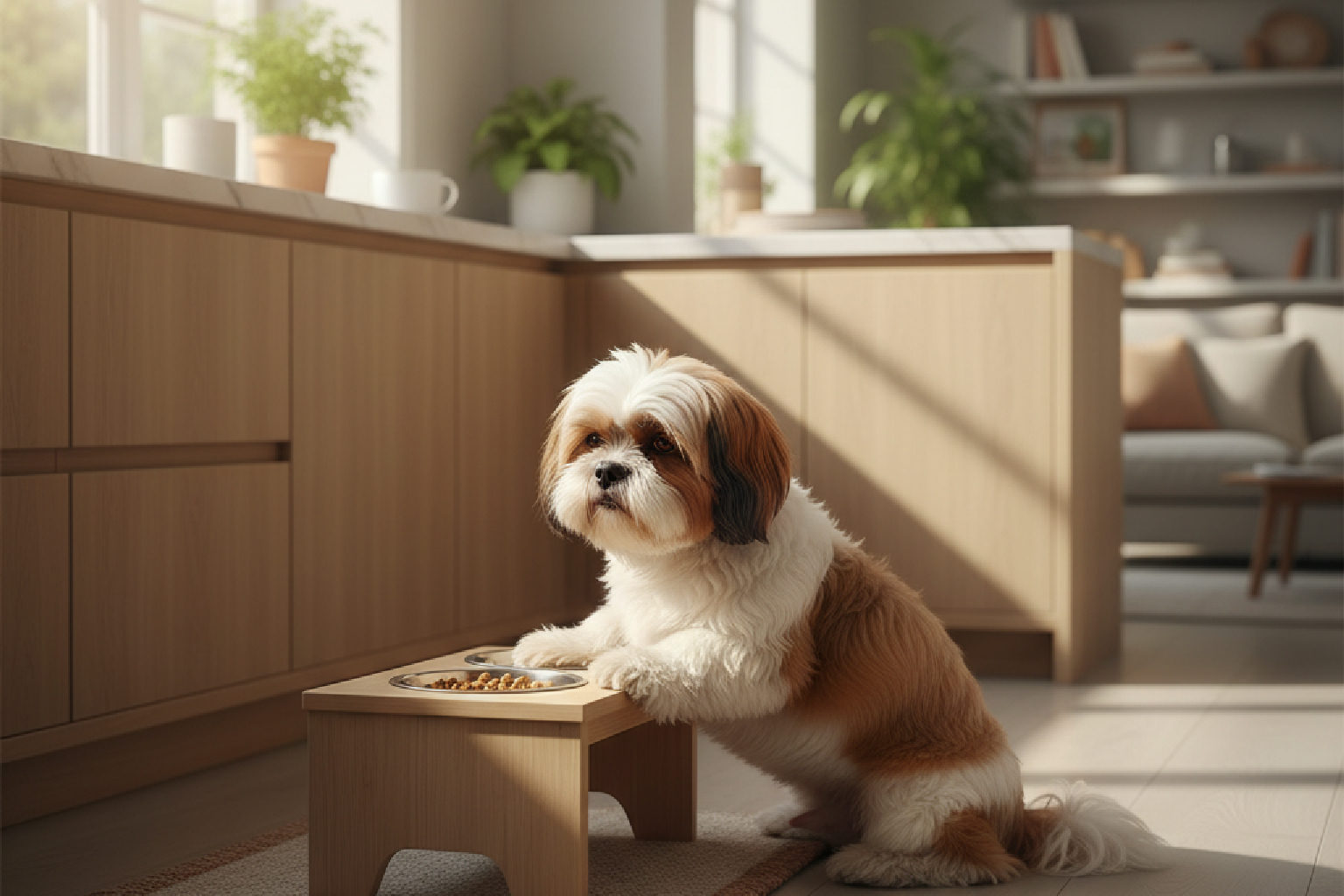
Dogs with megaesophagus should eat in an upright position, sitting or standing with their front end elevated at least 45 to 90 degrees. This allows gravity to help move food down into the stomach. A Bailey Chair is a specialized chair that holds the dog in this position, and many owners build or buy one. You can find plans online, and there are organizations that donate them to families in need.
After eating, the dog should stay upright for 15 to 30 minutes. This is not optional. If your dog lies down immediately after eating, food will pool in the esophagus and eventually come back up (or worse, be aspirated).
Food consistency matters
Some dogs do best with a slurry (kibble blended with water into a milkshake consistency). Others do better with small meatballs of canned food or even dry kibble. There is no universal answer. I usually recommend starting with a slurry and adjusting based on how your dog responds. What we are looking for is the consistency that moves through the esophagus most reliably without being regurgitated.
Small, frequent meals (3 to 4 per day) are usually better than two large ones. Less volume per meal means less stretching of the esophagus and a lower risk of regurgitation.
Water can be a problem too
Liquid can be just as difficult to manage as food, sometimes more so. Some dogs do better drinking water that has been thickened with unflavored gelatin or a commercial thickening product. Others tolerate ice cubes or water given in small amounts from an elevated bowl. Pay attention to when your dog coughs, not just what they are eating but also what they are drinking.
What medications help dogs with megaesophagus?
There is no drug that restores normal esophageal function. Medications are used to treat underlying causes (when we find one) or to manage complications.
- Sildenafil (yes, the same drug as Viagra) relaxes the lower esophageal sphincter and may help food pass into the stomach in some dogs. Studies are mixed, but I have seen it help in specific cases.
- Metoclopramide or cisapride are prokinetic drugs that can improve stomach emptying, which reduces the risk of reflux back into the esophagus.
- Antacids (omeprazole, famotidine) reduce stomach acid production and protect the esophagus from acid damage if reflux is occurring.
- If myasthenia gravis is the cause, pyridostigmine (Mestinon) is often prescribed. Some dogs with myasthenia gravis-associated megaesophagus can go into remission with treatment.
For dogs with hypothyroidism or Addison's disease as the underlying cause, treating the primary condition can sometimes improve esophageal function. This is why the diagnostic workup matters.
What is the prognosis for dogs with megaesophagus?
I will be honest: this is a condition that requires lifelong management, and the prognosis varies widely. Dogs with mild megaesophagus who respond well to elevated feeding can live normal or near-normal lifespans. Dogs with severe dilation and frequent aspiration events have a harder road.
Puppies with congenital megaesophagus sometimes improve as they grow, particularly if the cause is a vascular ring anomaly (a birth defect where a blood vessel wraps around the esophagus), which can be surgically corrected. Adult dogs with idiopathic megaesophagus usually do not improve, but many can be managed successfully for years with dedicated owners.
The World Small Animal Veterinary Association has published guidelines on diagnosing and managing esophageal disorders that your veterinarian may reference when developing a treatment plan.
When to get your dog seen
If your dog is regurgitating food regularly, especially if you notice weight loss, coughing after meals, or any difficulty breathing, do not wait. Early diagnosis lets us look for treatable causes and get you started on a feeding plan before aspiration pneumonia becomes a crisis.
Signs that require same-day veterinary care:
- Fever or lethargy
- Rapid, labored breathing
- Coughing with discharge or a wet, rattling sound
- Refusal to eat or sudden worsening of symptoms
If your dog has already been diagnosed with megaesophagus, keep a close relationship with your vet. We may recommend periodic chest X-rays to monitor for pneumonia, bloodwork to recheck thyroid or antibody levels, and adjustments to the feeding protocol as your dog's needs change.
If your dog is regurgitating and you are not sure what is going on, or if you have a megaesophagus diagnosis and need help fine-tuning the management plan, I am happy to see you. Schedule a visit at Hearthstone Animal Clinic or reach us at (281) 859-9244. We are here in Cypress, TX, and we will figure out how to help your dog eat safely and comfortably.
Have a question about your pet?
Dr. Pelton and the Hearthstone team are here to help, the same day when it counts.
Get Your Pet Seen