
Microchipping Your Pet in Cypress, TX: The Best Way to Get Them Home
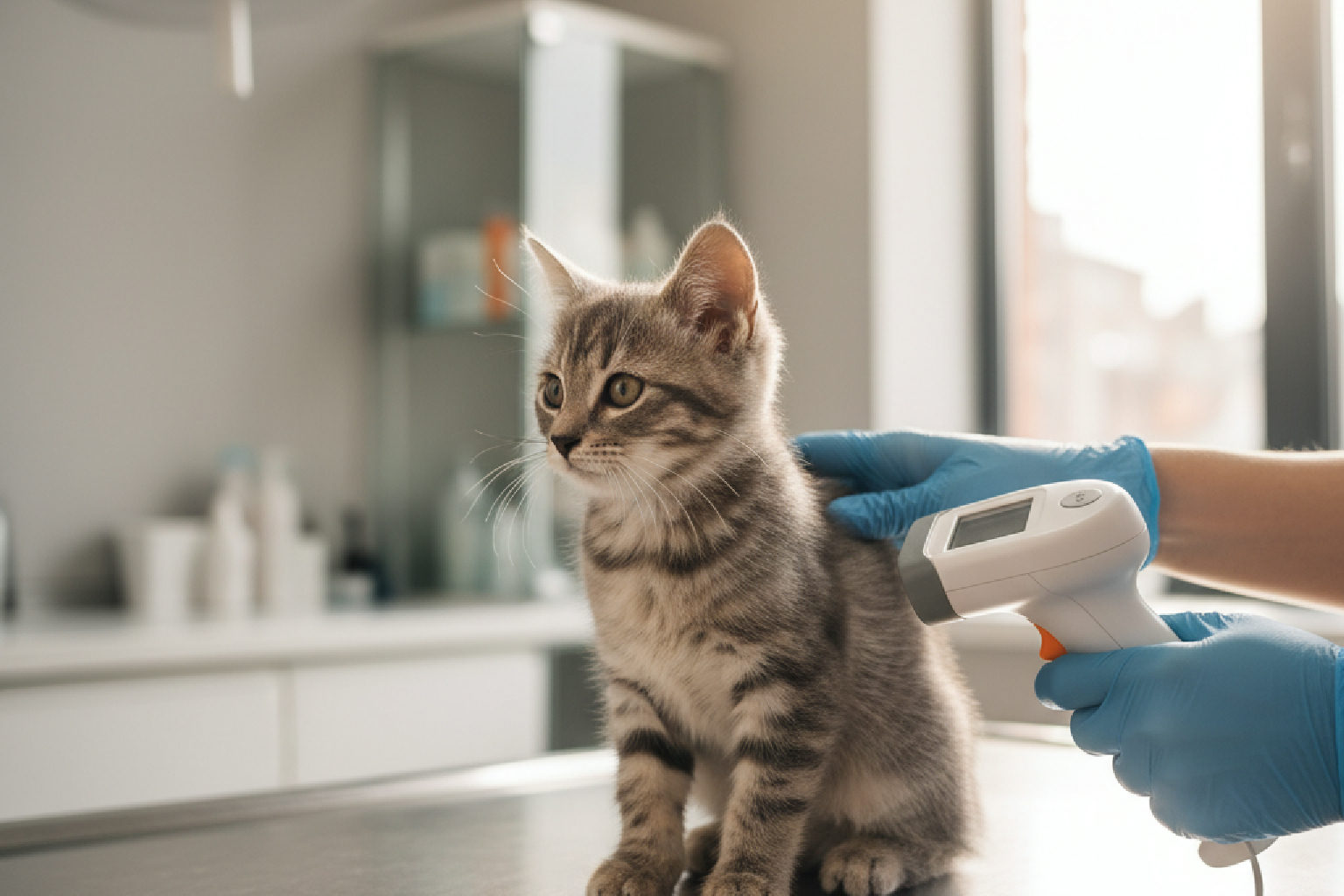
If your dog or cat ever gets out, a microchip is the single most reliable way to get them back. Collars fall off. Tags fade. But a microchip stays with your pet for life, and it takes less than 10 seconds to implant. Here at Hearthstone Animal Clinic in Cypress, TX, I microchip puppies, kittens, and adult pets every week. It is one of the simplest and most effective things you can do to protect your pet.
This post covers how microchips actually work, what happens during the procedure, what it costs, and the one step most owners forget that makes the whole thing useless.
What is a pet microchip and how does it work?
A microchip is a tiny electronic chip, about the size of a grain of rice, enclosed in a biocompatible glass cylinder. It does not have a battery, GPS, or any moving parts. Instead, it uses radio-frequency identification (RFID) technology. When a scanner passes over the chip, it emits a low-frequency radio wave that powers the chip just long enough for it to transmit its unique ID number.
That ID number links to your contact information in a national pet recovery database. When a lost pet shows up at a shelter, veterinary clinic, or animal control, the staff scans the pet, retrieves the ID, and contacts the database. If your information is current, you get a phone call.
What a microchip does NOT do
- It does not track your pet's location in real time (that requires a GPS collar, which needs batteries and cellular service)
- It does not store medical records
- It does not replace a collar and ID tag, which give anyone who finds your pet a way to contact you immediately without needing a scanner
Think of the microchip as permanent backup identification. The collar is the first line of defense; the chip is the failsafe.
Does microchipping hurt? What happens during the procedure?
The chip is injected under the skin between the shoulder blades using a needle slightly larger than a standard vaccine needle. Most pets react about the same as they do to a vaccination: a brief flinch, then nothing. No anesthesia is needed. The whole process takes about 10 seconds.
I typically microchip puppies and kittens at the time of their spay or neuter, since they are already under anesthesia and will not feel it at all. But there is no medical reason to wait. If you adopt an adult pet that is not yet chipped, we can do it during any routine office visit.
Is the chip safe?
Yes. Microchips have been used in pets since the 1990s, and adverse reactions are extremely rare. The chip is coated in biocompatible glass and typically stays in place once the surrounding tissue forms a small capsule around it. Migration (the chip moving from its original location) can happen occasionally, but it does not cause harm and modern scanners are designed to detect chips anywhere on the body. The American Veterinary Medical Association considers microchipping a safe and effective form of permanent identification.
How much does it cost to microchip a dog or cat in Cypress?
At most veterinary clinics in the Cypress, TX area, microchipping costs between $45 and $75 for the chip implantation and lifetime registration. Some clinics bundle it into a puppy or kitten wellness package. If your pet is being spayed or neutered, adding a microchip at the same time often costs less since there is no separate office visit.
This is a one-time cost. The chip lasts the life of the pet, and most registries do not charge annual fees (though some offer paid upgrades for additional services like lost pet alerts).
Compared to what a lost pet can cost you, financially and emotionally, microchipping is one of the best values in veterinary medicine. You can see our full pricing page for current rates on microchipping and other preventive services.
Why is registration the step most owners forget?
Here is the part that matters more than the chip itself: you must register the chip and keep your contact information updated. The microchip is just a number. If that number is not linked to your name, phone number, and address in a pet recovery database, the chip cannot help your pet get home.
I see this problem more often than I would like. A lost pet comes in, we scan the chip, retrieve the ID, and contact the database, only to find the phone number is disconnected or the address belongs to a previous owner.
How to register and update your information
- When your pet is microchipped, you will receive paperwork with the chip's ID number and the name of the registry (common ones include HomeAgain, PetLink, and the AKC Reunite database).
- Go to that registry's website and create an account. Enter your current phone number, email, and address.
- If you move or change phone numbers, log back in and update your information. This takes two minutes and could be the difference between a reunion and never seeing your pet again.
- If you adopt a pet that was already microchipped, contact the registry to transfer ownership to your name.
If you are not sure whether your pet's chip is registered or which database it is in, we can scan it during your next visit and give you the ID number to look up.
Is a microchip really better than a collar and tag?
No, and yes. This is not an either/or situation. You should use both.
Collars and tags are visible immediately. If a neighbor finds your dog in their backyard, they can read the tag and call you within minutes. No scanner required, no database lookup. That is faster than any microchip reunion.
But collars come off. Buckles break. Frightened pets can slip out of harnesses. Outdoor cats lose their collars in bushes and fences. When a pet has no visible ID, the only way to identify them is a microchip scan.
According to a study published in the Journal of the American Veterinary Medical Association, microchipped dogs were returned to their owners 52.2% of the time, compared to 21.9% of dogs without microchips. For cats, the difference was even more dramatic: 38.5% for microchipped cats versus only 1.8% for cats without chips.
Those numbers are the reason I microchip every pet I own.
Should indoor cats be microchipped?
Yes. Indoor cats are actually the pets most likely to benefit from a microchip, because when they get out, they are often terrified, hiding, and far from home by the time anyone finds them. They may not be wearing a collar at all (many indoor cat owners skip collars entirely). Without a microchip, there is often no way to identify them.
Cats are also underrepresented at shelters. They are harder to catch, harder to identify, and statistically less likely to be reunited with their owners. A microchip dramatically improves those odds.
When to talk to your veterinarian about microchipping
There is no wrong time to microchip a healthy pet. The best opportunities are:
- Puppy or kitten wellness visits: we can chip them as early as 8 weeks old
- Spay or neuter surgery: since the pet is already under anesthesia, they will not feel anything
- New pet adoption: if your newly adopted pet is not already chipped, or if the chip is registered to a previous owner
- Any routine exam: it takes seconds and requires no special preparation
If you have not had your pet scanned recently, bring them in and we will confirm the chip is still reading properly and help you verify that your registration is current.
Get your pet microchipped at Hearthstone Animal Clinic
A microchip is one of those things you hope you never need, but you will be grateful for if you do. If your dog or cat is not yet microchipped, or if you are not sure whether their registration is up to date, schedule a visit at Hearthstone Animal Clinic. We serve pet owners throughout Cypress, TX and the surrounding area, and we are always happy to scan your pet's chip and help you sort out the registration. Reach us at (281) 859-9244. If this was my pet, I would not skip this step.
Have a question about your pet?
Dr. Pelton and the Hearthstone team are here to help, the same day when it counts.
Get Your Pet Seen