
Summer Dehydration in Cats: Why Your Cypress Cat Won't Drink Enough
If you've ever watched your cat walk past a full water bowl without so much as a glance, you're not imagining things. Cats are notoriously poor drinkers, and during a Cypress summer when temperatures push past 100 degrees, that quirk can turn into a real medical problem. At Hearthstone Animal Clinic, I see a spike in dehydrated cats every year between June and September, and the frustrating part is that most of these cases are preventable once owners understand what's actually going on.
The instinct to worry about your cat's water intake is correct. Let me explain why cats are wired this way and what you can actually do about it.
Why don't cats drink enough water?
Cats evolved as desert animals. Their ancestors, African wildcats, got most of their moisture from prey (mice are about 70% water). That evolutionary programming never went away. Your modern housecat's thirst drive is remarkably weak compared to dogs, which means they often won't drink until they're already mildly dehydrated.
Here's what makes it worse: most pet cats eat dry kibble, which contains only about 10% moisture. A cat eating exclusively dry food needs to drink significantly more water to compensate, but their instincts don't tell them that. It's a mismatch between biology and diet that I see cause problems constantly.
Indoor cats face unique risks
You might think indoor cats are protected from summer heat, but air conditioning creates its own problem. AC removes humidity from the air, which means your cat loses more moisture through respiration than they would in humid conditions. If your cat spends time in a sunny window (and they all do), they're also absorbing heat that increases their cooling needs.
What are the signs of dehydration in cats?
Cats hide illness well, and dehydration is no exception. By the time you notice obvious symptoms, your cat may already be 5-8% dehydrated, which is the point where organ function starts to suffer. Here's what to watch for:
- Skin tent test: Gently pinch the skin between your cat's shoulder blades and release. In a hydrated cat, it snaps back instantly. If it stays tented for 2-3 seconds or more, that's dehydration.
- Dry, tacky gums: Run your finger along your cat's gums. They should feel slick and wet, not sticky or dry.
- Sunken eyes: Dehydrated cats often have eyes that look slightly recessed into the skull.
- Lethargy: A cat that's usually active but suddenly seems tired and disinterested, especially in summer, should raise a red flag.
- Decreased urination: If you're scooping the litter box less often than usual, pay attention.
- Constipation: Dehydration is one of the most common causes of hard, dry stools in cats.
If you see multiple signs from this list, don't wait to see if it improves. Cats can decline fast in the heat.
How much water should a cat drink per day?
The general guideline is that cats need about 4 ounces of water per 5 pounds of body weight daily. For a 10-pound cat, that's roughly one cup (8 ounces) per day. But here's the catch: if your cat eats wet food, a significant portion of that requirement is already covered. A cat eating exclusively wet food may drink very little from the bowl and still be perfectly hydrated.
What I tell my clients: don't obsess over measuring exact ounces. Instead, learn what's normal for your cat and watch for changes. If your cat usually drinks from the bowl twice a day and suddenly you never see them drink, that's worth investigating.
How can I get my cat to drink more water?
This is the part most owners get wrong, and it's not their fault. You can't just put out more bowls and hope for the best. You have to work with your cat's instincts, not against them.
Try a cat water fountain
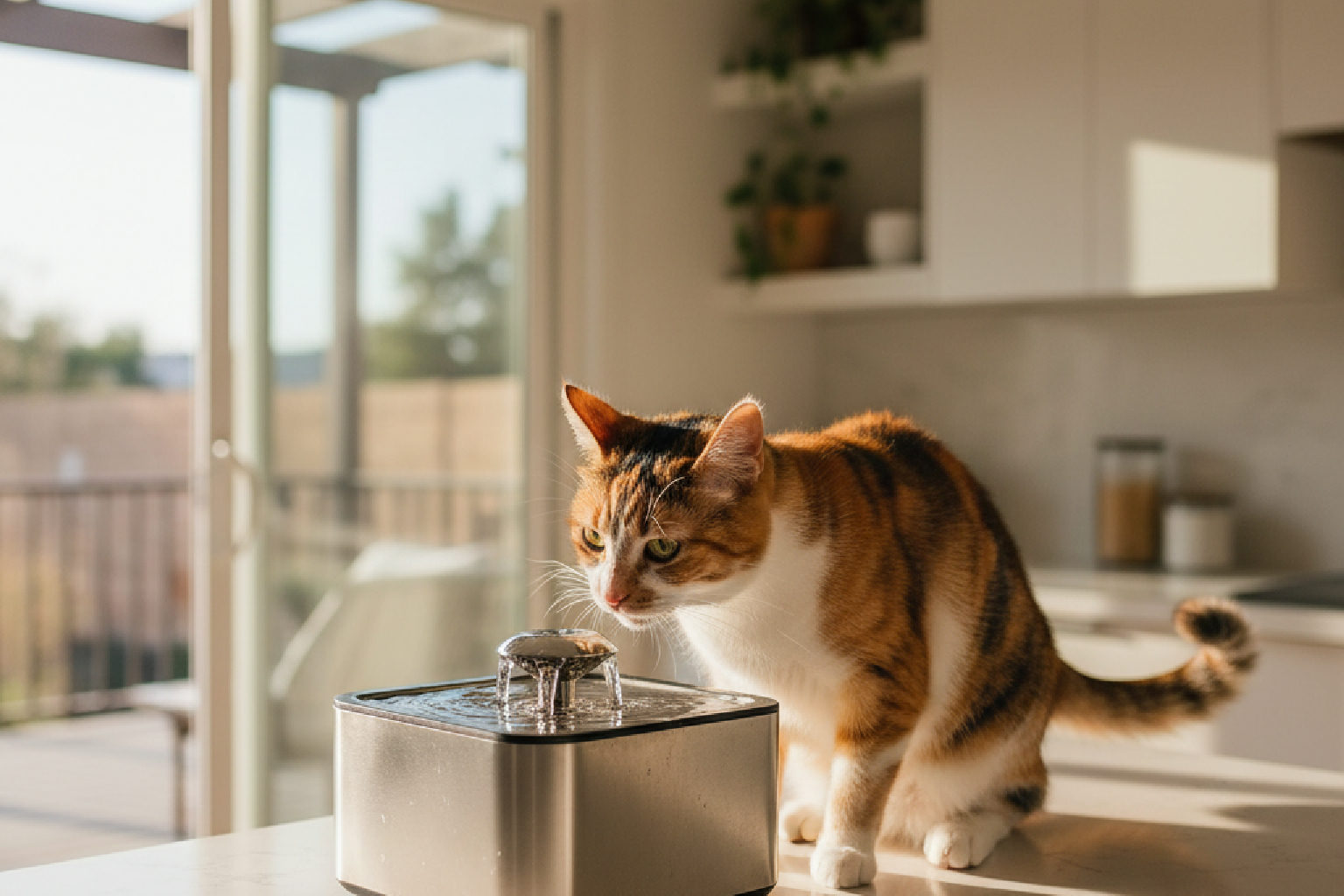
Cats are hardwired to prefer moving water. In the wild, stagnant water is more likely to harbor bacteria. A simple pet fountain that keeps water circulating often makes a dramatic difference. I've had clients whose cats went from barely drinking to camping out next to the fountain. The American Animal Hospital Association notes that increased water intake is one of the simplest ways to support kidney and urinary health in cats.
Location matters more than you think
Cats don't like drinking water that's near their food. It seems counterintuitive to us, but again, it's an instinct thing. In nature, prey carcasses could contaminate nearby water sources. Try placing water bowls in multiple locations away from the food dish. Many cats also prefer wide, shallow bowls that don't touch their whiskers.
Add wet food to the diet
If this was my cat, I would make wet food at least part of the daily diet, especially during summer. Even adding one meal of canned food per day can significantly boost total water intake. Some cats will also accept water added directly to their dry food (making a "gravy"), though others refuse it.
Ice cubes and flavor tricks
Some cats are fascinated by ice cubes floating in their water. Others will drink water that's been flavored with a small amount of low-sodium chicken broth (make sure it contains no onion or garlic). These aren't magic solutions, but they work for certain cats.
Which cats are at highest risk for dehydration?
Any cat can become dehydrated in a Texas summer, but some need closer monitoring:
- Senior cats (over 10 years): Kidney function naturally declines with age, and early kidney disease makes it harder for cats to concentrate their urine. They need more water to compensate, but their thirst drive doesn't increase to match. If you have a senior cat, consider asking about senior bloodwork to check kidney values before summer heat hits.
- Cats with diabetes or hyperthyroidism: Both conditions cause increased urination, which leads to faster fluid loss.
- Cats on certain medications: Diuretics and some other drugs increase water requirements.
- Overweight cats: They have a harder time regulating body temperature.
- Long-haired breeds: That beautiful coat traps heat.
When is dehydration a medical emergency?
Mild dehydration can usually be addressed at home by increasing water availability and monitoring closely. But severe dehydration requires veterinary intervention, specifically subcutaneous or IV fluids. Here's when you need to act fast:
- Your cat hasn't urinated in 24 hours
- The skin tent stays up for more than 3 seconds
- Your cat is vomiting or has diarrhea (which accelerates fluid loss)
- Your cat is panting, which is abnormal for cats and suggests overheating
- Your cat seems confused, unsteady, or unresponsive
In these situations, home remedies aren't enough. Cats can develop serious complications including urinary blockages (especially in males), acute kidney injury, and heat stroke. These are emergencies that need same-day care.
Preventing summer dehydration in your Cypress cat
Prevention is straightforward once you know the risks:
- Provide multiple water sources in different locations
- Consider a fountain if your cat ignores still water
- Add wet food to the diet, even just once daily
- Keep your home at a reasonable temperature (cats do best below 80 degrees)
- Monitor the litter box for changes in urination
- Know what's normal for your cat so you can spot changes early
If you're concerned about your cat's hydration status or haven't had bloodwork done recently, now is a good time. Kidney disease is common in older cats and often shows up first as subtle dehydration that owners attribute to summer heat. Catching it early makes a real difference in how we can manage it.
For cats in Cypress, TX showing signs of dehydration, or if you'd like a wellness check before the worst of summer hits, schedule a visit at Hearthstone Animal Clinic. We can assess your cat's hydration, check for underlying issues, and give you a specific plan for your cat's situation. Reach us at (281) 859-9244. Summer is hard on cats here in Cypress, but a little prevention goes a long way.
Have a question about your pet?
Dr. Pelton and the Hearthstone team are here to help, the same day when it counts.
Get Your Pet Seen