
Toxic Foods for Cats: What Cypress Owners Often Overlook
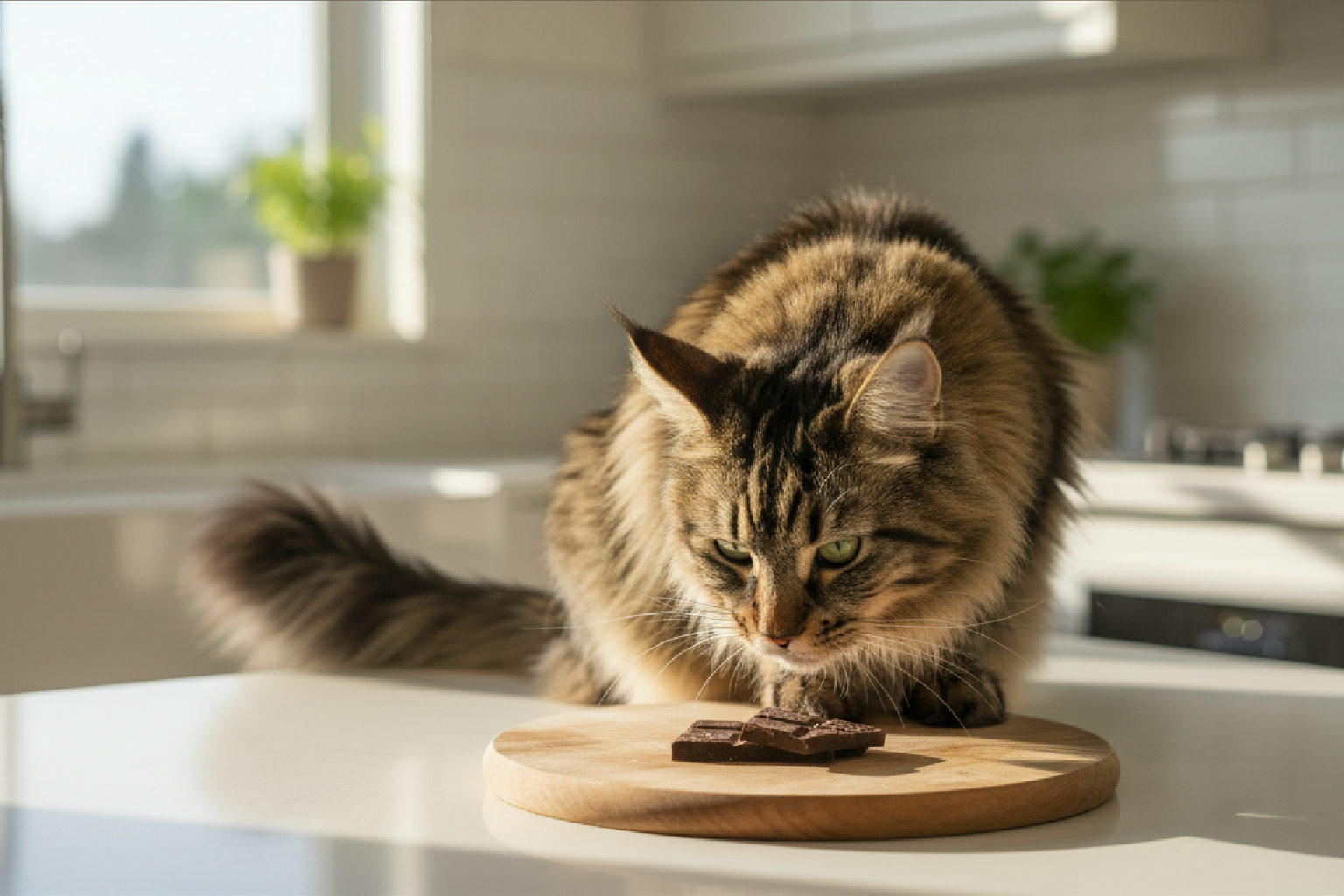
Most cat owners know chocolate is bad for dogs, but here's what surprises many of my clients at Hearthstone Animal Clinic: chocolate can poison cats too, and it's far from the only kitchen danger lurking in your Cypress home. I see at least a few toxicity cases every month, and the foods involved are often things owners never suspected.
The good news is that cats are generally pickier eaters than dogs, so they're less likely to gobble down a pan of brownies. The bad news is that when cats do ingest something toxic, their smaller body size means even tiny amounts can cause serious problems. Let me walk you through what actually matters.
Is chocolate really dangerous for cats?
Yes, but probably not in the way you're imagining. Theobromine and caffeine are the toxic compounds in chocolate, and cats are more sensitive to them than dogs on a per-pound basis. The darker the chocolate, the higher the concentration. Baking chocolate and espresso beans are the most dangerous; milk chocolate is less concentrated but still harmful.
Here's the practical reality: most cats won't eat chocolate voluntarily. They lack the taste receptors for sweetness, so a Hershey bar doesn't tempt them the way it tempts your Labrador. But I have seen cats lick chocolate frosting, eat chocolate ice cream, and (more than once) chew on chocolate-covered espresso beans that fell on the floor.
Symptoms of chocolate toxicity in cats
- Restlessness or hyperactivity
- Vomiting and diarrhea
- Rapid breathing or panting
- Increased heart rate
- Muscle tremors
- Seizures (in severe cases)
Symptoms typically appear within 6 to 12 hours of ingestion. If you know your cat ate chocolate, don't wait for symptoms. A 10-pound cat eating just half an ounce of baking chocolate is in serious danger.
Which foods are actually more dangerous than chocolate?
This is the part most owners get wrong, and it's not their fault. We've been so conditioned to think "chocolate = pet poison" that we overlook foods that cause far more real-world cat emergencies. In my 25 years of practice, these are the ones I see most often:
Onions and garlic
Allium toxicity is the big one. Onions, garlic, leeks, chives, and shallots all contain compounds that destroy red blood cells in cats, causing a condition called Heinz body anemia. Cats are especially susceptible, more so than dogs.
The tricky part: garlic and onion powder are in everything. Baby food, broth, gravy, deli meat, pizza, soup. I've had owners come in genuinely confused because their cat "just licked some chicken broth." If that broth contained onion powder, even a few tablespoons can cause problems in a small cat.
Lilies
I know this isn't a food, but I'm including it because it's the toxicity emergency I see most often in Cypress, especially around Easter and Mother's Day. True lilies (Lilium and Hemerocallis species) cause acute kidney failure in cats. A cat brushing against the pollen and then grooming it off can be enough. This one is life-threatening within 24 to 72 hours if untreated.
Grapes and raisins
We still don't fully understand why grapes and raisins cause kidney failure in some pets, but the reaction can be unpredictable and severe. Dogs get more attention for this one, but cats are also at risk. I treat any grape or raisin ingestion as an emergency.
Xylitol (birch sugar)
This artificial sweetener shows up in sugar-free gum, some peanut butters, certain medications, and baked goods. In dogs, xylitol causes rapid insulin release and potentially fatal hypoglycemia. Cats appear to be less sensitive, but I still recommend treating any xylitol exposure seriously. The data on cats is limited, which means we don't fully know the safe threshold.
What about raw meat and raw fish?
The instinct behind raw feeding is right: owners want less-processed, more "natural" food for their cats. The execution is what's dangerous. Raw meat carries Salmonella and E. coli risks for both cats and the humans handling the food. Raw fish contains thiaminase, an enzyme that destroys vitamin B1. Chronic raw fish feeding can lead to neurological problems.
If you're interested in improving your cat's diet, that's a conversation worth having at your next wellness appointment. There are safer ways to get there.
How much of a toxic food does it take to hurt my cat?
This depends on three things: the toxin, the dose, and your individual cat. But here are some general numbers:
- Chocolate: Approximately 20 mg of theobromine per pound of body weight can cause symptoms. That's about 0.5 oz of baking chocolate or 2 oz of dark chocolate for a 10-pound cat.
- Onion/garlic: As little as 5 grams of onion per kilogram of body weight (about one tablespoon for an average cat) can start damaging red blood cells.
- Lilies: There is no safe amount. Any exposure is an emergency.
- Grapes: Unknown threshold. Even one grape warrants a call.
When in doubt, assume the worst and get help. Toxicity is one area where being overly cautious is the right call.
What should I do if my cat eats something toxic?
First: do not induce vomiting unless specifically instructed by a veterinarian. Unlike dogs, cats are difficult to make vomit safely at home, and some toxins (like caustic substances) cause more damage coming back up.
Steps to take immediately
- Remove the source. Get remaining food away from your cat and any other pets.
- Identify what was eaten and how much. Check packaging for ingredients. Take photos if helpful.
- Note the time. Treatment options depend heavily on how recently the exposure occurred.
- Call your vet or an emergency line. ASPCA Animal Poison Control is available 24/7 at (888) 426-4435 (there's a consultation fee). Or if it's during business hours, call us at (281) 859-9244.
The faster we can act, the better the outcome. Within the first 1 to 2 hours, we often have more treatment options, including decontamination, than we do once the toxin has been fully absorbed.
Keeping your cat safe: practical prevention
Most toxicity cases I see are preventable. Here's what actually works:
- Store allium vegetables and chocolate out of reach. Cats can jump, so "out of reach" often means inside a closed cabinet.
- Read labels on anything you're sharing. Broth, baby food, flavored medications. If it contains garlic or onion powder, it's off limits.
- No lilies in the house. Full stop. Roses, orchids, and spider plants are safer alternatives.
- Keep grapes and raisins secured. Don't leave them on the counter where a curious cat might investigate.
- Know your cat's hiding spots. If you suspect a toxicity, being able to find and observe your cat quickly matters.
If you have questions about what's safe to feed your cat or want to discuss nutrition during a wellness visit, I'm happy to go over specifics for your pet's situation.
When to get your cat seen for a possible poisoning
Call immediately if your cat:
- Ate any known toxic substance (chocolate, onion, garlic, grapes, xylitol, or lily exposure)
- Is vomiting repeatedly or has bloody vomit
- Shows lethargy, weakness, or collapse
- Has tremors, seizures, or difficulty breathing
- Isn't eating or drinking for more than 12 hours after a suspected exposure
If this was my cat, I wouldn't wait for "obvious" symptoms. With most toxins, the damage is happening before signs appear. Early treatment is almost always less expensive and more effective than waiting.
If you're worried your cat got into something they shouldn't have, or you'd like to discuss pet-proofing your kitchen, schedule a visit at Hearthstone Animal Clinic or call us at (281) 859-9244. We're here in Cypress, TX to help you figure out what's going on and what needs to happen next.
Have a question about your pet?
Dr. Pelton and the Hearthstone team are here to help, the same day when it counts.
Get Your Pet Seen