
Degenerative Myelopathy in Dogs: Why Your Dog's Back Legs Are Getting Weak
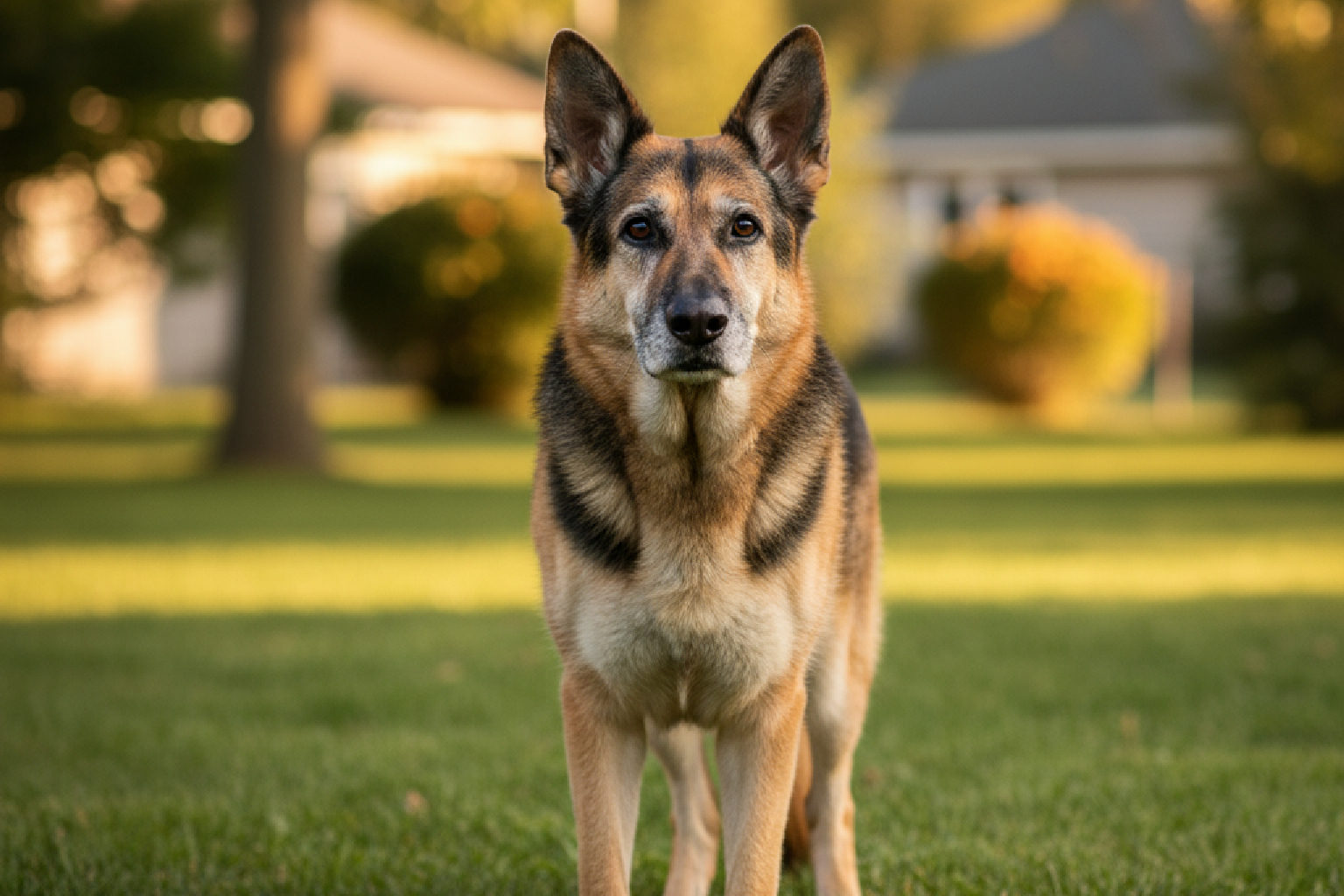
If your older dog's back legs have been getting progressively weaker over the past few months, and now you're noticing the paws dragging or knuckling under, degenerative myelopathy (DM) is one of the conditions I need to rule out. It's a progressive spinal cord disease with no cure, but knowing what you're dealing with changes everything about how you manage the months ahead.
DM is not painful. That's the first thing I tell owners, and it matters more than you might think. Your dog isn't suffering the way you might imagine. But the disease does progress, and understanding the timeline helps you plan for mobility aids, quality of life decisions, and when the hard conversation needs to happen.
What is degenerative myelopathy?
Degenerative myelopathy is a progressive disease of the spinal cord in dogs, most commonly affecting dogs over 8 years old. The myelin sheath (the insulation around nerve fibers) breaks down over time, and the nerve fibers themselves eventually die. This happens in the thoracolumbar spinal cord, which is the section that controls the hind legs.
The result is a slow, progressive loss of coordination and strength in the back legs. It typically starts subtly: maybe you notice your dog swaying a bit when standing, or the back feet seem to scuff the ground when walking. Over weeks to months, it progresses to obvious weakness, difficulty rising, and eventually paralysis of the hind limbs.
The disease is caused by a mutation in the SOD1 gene, the same gene involved in some forms of ALS (Lou Gehrig's disease) in humans. Dogs need two copies of the mutated gene to develop the disease, though not every dog with two copies will. The mutation is common in German Shepherds, Boxers, Pembroke Welsh Corgis, Rhodesian Ridgebacks, and Chesapeake Bay Retrievers, but I see it in mixed breeds too.
What are the early signs of degenerative myelopathy?
The early signs are easy to miss or attribute to "just getting old." Here's what to watch for:
- Swaying or wobbling in the hind end when standing still
- Scuffing the back paws when walking (you might hear the nails dragging on concrete)
- Crossing the back legs when walking or turning
- Knuckling, where the paw folds under and the dog walks on the top of the foot briefly
- Difficulty rising from a lying position, especially on slick floors
- Wearing down the toenails unevenly on the back feet
These signs are symmetrical, meaning they affect both back legs roughly equally. If your dog is dramatically weaker on one side, that points away from DM and toward something like a disc problem, nerve root tumor, or other asymmetric spinal disease.
One thing I look for specifically: can your dog still feel the position of their feet? I'll flip a back paw over so the dog is standing on the top of the foot, and a normal dog corrects immediately. A dog with DM is slow to correct or doesn't notice at all. This is called proprioceptive deficits, and it's one of the earliest neurological signs.
How do vets diagnose degenerative myelopathy?
Here's the honest answer: DM is a diagnosis of exclusion. There's no blood test or X-ray that confirms it. The only definitive diagnosis is examining the spinal cord under a microscope after death. In living dogs, we diagnose DM by ruling out everything else that could cause the same symptoms.
That means imaging. Specifically, MRI of the spine to look for disc herniations, tumors, infections, or other structural problems. If the MRI is clean and the clinical picture fits, DM becomes the most likely diagnosis.
There is a genetic test for the SOD1 mutation, available through the Orthopedic Foundation for Animals. This test tells you if your dog carries the mutation, but it doesn't confirm they have the disease. A dog can test "at risk" (two copies of the mutation) and never develop clinical DM. The test is most useful when combined with compatible clinical signs and a clean MRI.
What else causes hind leg weakness in older dogs?
Before assuming DM, I need to rule out conditions that are treatable:
- Intervertebral disc disease (IVDD): Can look similar but often has pain and can be treated surgically. See my article on IVDD in dogs for more on this.
- Lumbosacral stenosis: Compression at the base of the spine, common in German Shepherds, often painful
- Spinal tumors: Usually asymmetric and may have other signs
- Hip dysplasia or severe arthritis: Causes weakness from pain and muscle loss, not neurological deficits. More on this in my post about hip dysplasia in large breed dogs.
- Cauda equina syndrome: Nerve compression causing pain, incontinence, and weakness
The difference between these conditions and DM often comes down to whether there's pain involved and whether the symptoms are symmetric. DM is painless and affects both sides equally.
How fast does degenerative myelopathy progress?
This is the question every owner asks, and I wish I had a more precise answer. The typical progression from first symptoms to inability to walk is 6 to 12 months, though some dogs progress faster and some slower.
The disease moves through stages:
- Early stage (1-3 months): Wobbling, scuffing paws, mild weakness. Most dogs are still walking well.
- Middle stage (3-6 months): Obvious weakness, difficulty rising, knuckling regularly. Many dogs need help on stairs or slick floors.
- Late stage (6-12 months): Paralysis of hind limbs. Dogs may drag their back legs or need a wheelchair. Some develop urinary and fecal incontinence.
- End stage (12+ months): Weakness spreads to front legs. Difficulty breathing if it progresses far enough.
Physical therapy and regular exercise seem to slow progression in some dogs. Dogs that stay active tend to maintain mobility longer than dogs that become sedentary. This isn't a cure, but it can buy meaningful time.
Is there any treatment for degenerative myelopathy?
There's no treatment that stops or reverses DM. The nerve damage is permanent and progressive. But that doesn't mean there's nothing to do.
Physical therapy and exercise
The single most helpful thing for dogs with DM is keeping them moving. Regular, controlled exercise maintains muscle mass and seems to slow the rate of decline. Swimming and underwater treadmill therapy are especially good because they work the muscles without putting weight on unstable legs.
If you have access to a canine rehabilitation specialist, their guidance is worth it. If not, daily walks on good footing (grass, carpet, rubber mats) help maintain what function remains.
Mobility aids
As the disease progresses, mobility aids become essential:
- Toe grips or booties help with traction on slick floors
- Harnesses with handles let you support your dog's hind end when walking or going up stairs
- Dog wheelchairs (rear carts) allow paralyzed dogs to stay mobile and active. Many dogs adapt surprisingly well to these.
- Non-slip rugs and mats throughout the house
Skin care
Dogs that drag their feet or become recumbent need regular skin checks. Pressure sores develop quickly, and dragged paws get abrasions. Protective booties and padded bedding help prevent these problems.
When do you know it's time?
This is the hardest part. Because DM isn't painful, the question isn't about suffering in the traditional sense. It's about quality of life, dignity, and what you can realistically manage at home.
Most owners reach the decision point when:
- The dog can no longer stand or walk, even with support
- Incontinence becomes unmanageable
- The dog seems frustrated, anxious, or depressed about their condition
- The front legs start weakening (the disease is progressing further)
- Home care becomes unsustainable for the family
There's no perfect moment. Some owners use a wheelchair and manage care for months after hind leg paralysis. Others feel that once mobility is gone, their dog's quality of life has dropped below an acceptable level. Both decisions can be right.
If this was my dog, I'd focus on whether they still seem happy: do they eat with enthusiasm, enjoy attention, wag their tail, engage with the family? A paralyzed dog that's still joyful is different from one that's withdrawn and struggling.
Can degenerative myelopathy be prevented?
There's no way to prevent DM in a dog that carries two copies of the SOD1 mutation. But responsible breeders can use genetic testing to avoid producing affected puppies. Dogs with two copies of the mutation shouldn't be bred. Dogs with one copy can be bred to clear dogs (producing carriers but not affected dogs).
If you're considering a puppy from a high-risk breed, ask the breeder about SOD1 testing. Breeders who are doing it right will have results available.
Living with a DM diagnosis
A diagnosis of degenerative myelopathy is devastating to hear, but many dogs live good months after diagnosis with the right support. The disease is progressive and terminal, but it's also slow enough that you have time to adapt, plan, and make sure your dog's remaining time is comfortable.
Focus on what you can control: keeping your dog active as long as possible, protecting their skin, making your home easier to navigate, and watching for signs that quality of life is declining. And know that when the time comes, letting go peacefully is a kindness, not a failure.
When to see your veterinarian
If your older dog is showing progressive weakness in the back legs, wobbling, or dragging their paws, they need an exam. While DM is one possibility, several of the conditions that look similar are treatable, and getting the right diagnosis matters.
Bring your dog in if you notice:
- Any new weakness or instability in the hind legs
- Scuffing or dragging of the back paws
- Difficulty rising or walking on slick floors
- Worn or bleeding toenails on the back feet
- Sudden worsening of symptoms (this suggests something other than DM)
If your senior dog's back legs aren't working the way they used to, let's figure out what's going on. Schedule a visit at Hearthstone Animal Clinic or reach us at (281) 859-9244. We're in Cypress, TX, and I'd rather catch a treatable problem early than assume the worst.
Have a question about your pet?
Dr. Pelton and the Hearthstone team are here to help, the same day when it counts.
Get Your Pet Seen