
Hip Dysplasia in Large-Breed Dogs: Signs, Diagnosis, and What Actually Helps
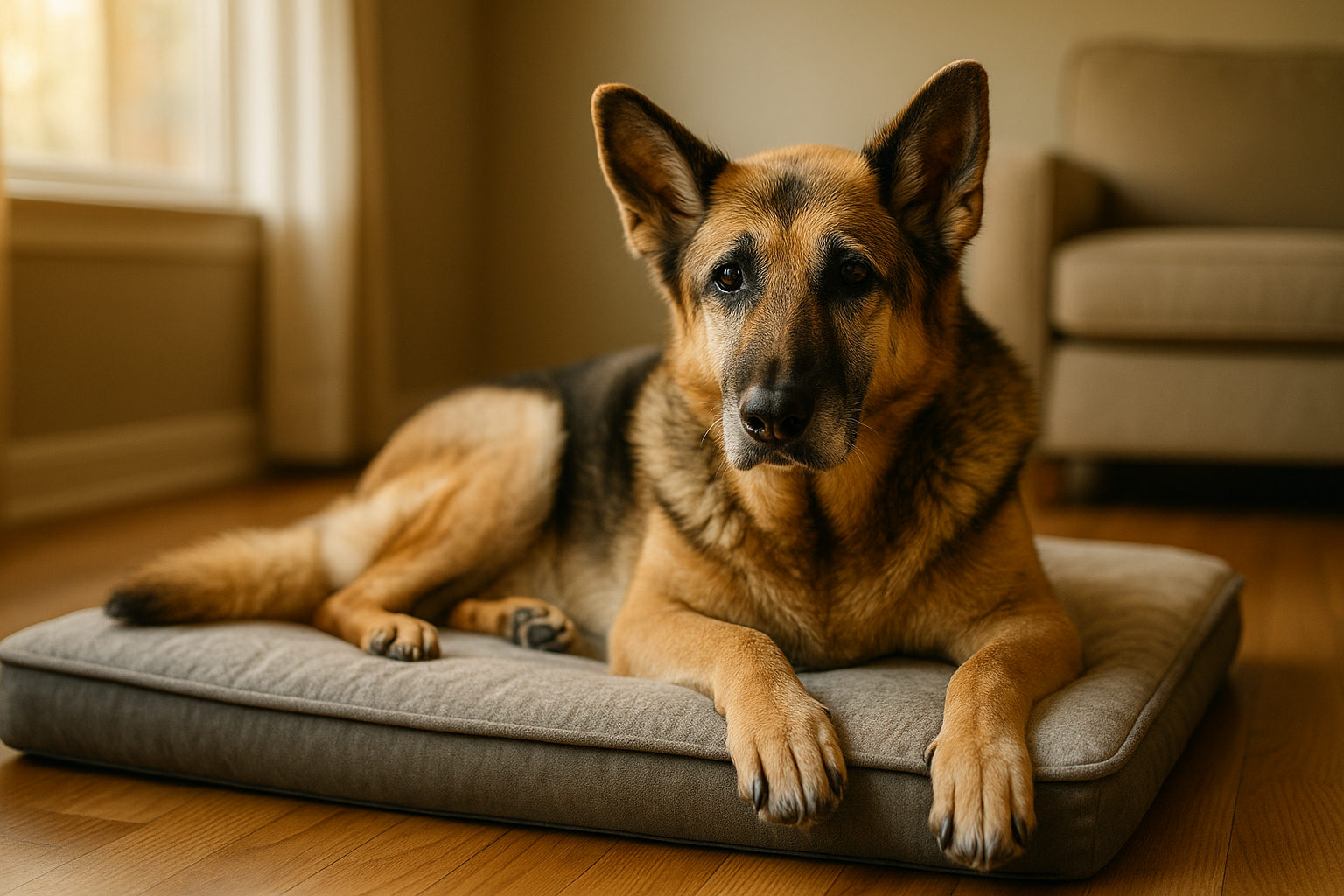
If you have a large-breed dog and you're noticing stiffness after rest, reluctance to jump, or a "bunny hop" gait when running, hip dysplasia is one of the first things I consider. It's one of the most common orthopedic conditions I see in German Shepherds, Labrador Retrievers, Golden Retrievers, Rottweilers, and other large and giant breeds in the Cypress area.
Hip dysplasia is not a death sentence for your dog's mobility, and it's not automatically surgical. Most dogs with hip dysplasia can live comfortable, active lives with the right management. But catching it early makes a real difference in what options you have and how well they work.
What is hip dysplasia and why do large breeds get it?
Hip dysplasia is a developmental condition where the ball-and-socket joint of the hip doesn't form properly. In a normal hip, the head of the femur (thigh bone) sits snugly in a deep socket in the pelvis. In a dysplastic hip, the socket is too shallow, the femoral head is misshapen, or both. The result is a loose, unstable joint.
That instability causes two problems. First, the joint wears abnormally, leading to osteoarthritis over time. Second, the looseness itself causes pain and inflammation, even before significant arthritis develops.
The genetics piece
Hip dysplasia is primarily genetic. If both parents have it, puppies are far more likely to develop it. The Orthopedic Foundation for Animals (OFA) maintains a registry where breeders can certify their dogs' hip status before breeding. Buying from a breeder who does OFA or PennHIP screening significantly reduces (but doesn't eliminate) risk.
Environment matters too
Genetics loads the gun, but environment pulls the trigger. In predisposed dogs, several factors can make dysplasia worse:
- Rapid growth: Large-breed puppies that grow too fast (often from overfeeding or high-calorie diets) put excess stress on developing joints
- Excess weight: Every extra pound adds stress to already unstable hips
- Over-exercise in puppies: Repetitive high-impact activity before growth plates close can worsen joint development
This is why I'm particular about feeding large-breed puppies a diet specifically formulated for their growth rate, and why I tell owners to avoid forced running (like jogging alongside a bike) until dogs are at least 12 to 18 months old.
What are the early signs of hip dysplasia?
Hip dysplasia can show up as early as 4 to 6 months of age in severely affected puppies, but many dogs don't show obvious signs until 1 to 2 years old, or even later when arthritis accumulates. Here's what to watch for:
Signs in puppies and young dogs
- Bunny hopping: Both back legs move together when running instead of alternating normally
- Reluctance to climb stairs or jump
- Sitting with legs splayed out to the side ("frog sitting" or "lazy sit")
- Stiffness after rest that improves with movement
- Decreased activity level compared to littermates or other dogs their age
Signs in adult and senior dogs
- Difficulty rising from a lying position
- Obvious lameness in one or both back legs
- Narrow stance in the back end (legs held close together)
- Muscle loss in the thighs and hindquarters
- Reluctance to exercise or tiring quickly on walks
- Audible clicking from the hip area when walking
The tricky part is that dogs are stoic. They adapt to chronic pain by moving differently, and owners often attribute slowing down to "just getting older." If your large-breed dog is showing any of these signs, even mildly, it's worth an exam.
How is hip dysplasia diagnosed?
I can often suspect hip dysplasia on physical exam. There's a specific test called the Ortolani sign where I manipulate the hip joint while the dog is relaxed (sometimes under light sedation). A positive Ortolani sign, where I can feel the femoral head subluxating (slipping out) and then popping back in, is highly suggestive of dysplasia.
But definitive diagnosis requires X-rays. Radiographs let me see:
- How shallow the hip socket is
- How well the femoral head fits in the socket
- How much arthritis has already developed
- Whether one hip is worse than the other
For the clearest images, dogs need to be positioned precisely on their backs with their legs extended. Most dogs require sedation for this because the positioning is uncomfortable and even slight movement blurs the image.
When to X-ray
If your dog is showing symptoms, X-rays are diagnostic and help guide treatment decisions. For breeding dogs, OFA certification requires X-rays at 24 months of age. PennHIP, another screening method, can be done as early as 16 weeks and measures laxity (looseness) in the joint.
What are the treatment options?
Treatment for hip dysplasia falls into two categories: conservative (non-surgical) management and surgery. Which approach is right depends on your dog's age, severity of disease, level of pain, and your goals and budget.
Conservative management
For many dogs, especially those with mild to moderate dysplasia or significant arthritis, conservative management provides good quality of life. This is usually what I try first unless there's a compelling reason for surgery.
Weight management: This is the single most important thing you can do. Keeping your dog lean reduces stress on dysplastic hips dramatically. I'm not exaggerating when I say that getting an overweight dog to ideal body condition can be as effective as some medications. If your dog is carrying extra weight, we can talk about a weight loss plan that works.
Exercise modification: Low-impact, consistent exercise is better than weekend-warrior bursts. Swimming is ideal because it builds muscle without stressing joints. Leash walks on flat surfaces are good. Avoid activities that involve sudden stops, jumping, or rough play.
Joint supplements: Glucosamine and chondroitin sulfate are widely used. The evidence is mixed on how much they help, but they're safe, and some dogs do seem to improve. I typically recommend trying them for 8 to 12 weeks to see if there's a noticeable difference. Omega-3 fatty acids (fish oil) have better evidence for reducing joint inflammation.
Pain medication: Non-steroidal anti-inflammatory drugs (NSAIDs) like carprofen (Rimadyl), meloxicam, or galliprant are the mainstay for managing arthritis pain. They reduce inflammation and pain effectively. Long-term use requires periodic bloodwork to monitor liver and kidney function, but most dogs tolerate them well for years.
Physical therapy and rehabilitation: Underwater treadmill therapy, range-of-motion exercises, and targeted strengthening can help maintain muscle mass and joint function. This is especially valuable after surgery or for dogs who aren't surgical candidates.
For dogs dealing with both hip issues and arthritis pain, a combination approach usually works best.
Surgical options
Surgery is typically recommended for young dogs with severe dysplasia, dogs that don't respond adequately to conservative management, or cases where quality of life is significantly impaired.
Juvenile pubic symphysiodesis (JPS): This procedure is only for puppies under 16 to 20 weeks old who are diagnosed early. It alters pelvic growth to create a deeper hip socket. It's relatively simple and inexpensive, but the window for doing it is very narrow.
Triple pelvic osteotomy (TPO) or double pelvic osteotomy (DPO): These procedures cut and reposition the pelvis to improve socket coverage over the femoral head. They're best for dogs under 10 to 12 months with minimal arthritis. Recovery is several months but outcomes are generally good.
Femoral head ostectomy (FHO): This removes the ball of the hip joint entirely. The body forms a "false joint" of scar tissue. It sounds radical, but it works well for small to medium dogs and can be appropriate for larger dogs when total hip replacement isn't an option. It's also the most affordable surgical option.
Total hip replacement (THR): This is the gold standard for severe hip dysplasia in large dogs. The entire joint is replaced with artificial components. Success rates exceed 90%, and dogs typically return to normal or near-normal function. The downsides are cost ($5,000 to $7,000 or more per hip) and the need for a specialized surgeon.
What does hip dysplasia management cost?
Costs vary considerably depending on the approach:
- Diagnosis: Exam, sedation, and X-rays typically run $300 to $500
- Monthly NSAID medication: $30 to $80 depending on dog size and specific drug
- Joint supplements: $20 to $60 per month
- Physical therapy: $50 to $100 per session, often recommended weekly initially
- FHO surgery: $1,500 to $3,000
- Total hip replacement: $5,000 to $7,000+ per hip (performed by specialists)
If this was my dog and cost was a real constraint, I'd focus hard on weight management and NSAIDs. You can get good results without spending thousands on surgery for many dogs.
Can hip dysplasia be prevented?
You can reduce the risk, but you can't eliminate it in genetically predisposed dogs. Here's what helps:
- Buy from breeders who screen: OFA or PennHIP certification of both parents significantly reduces risk
- Feed large-breed puppy food: These formulas have controlled calcium and calorie levels to promote steady (not rapid) growth
- Keep puppies lean: You should easily feel ribs without pressing hard
- Avoid over-exercising puppies: No forced running or jumping until growth plates close (12 to 18 months for large breeds)
- Provide good footing: Slippery floors can cause splaying that stresses developing joints
When should you see a vet about hip dysplasia?
Bring your dog in if you notice:
- Any persistent lameness or stiffness in the back end
- Reluctance to exercise, jump, or climb stairs
- A bunny-hopping gait, especially in a puppy
- Muscle loss in the thigh area
- Difficulty rising after rest
Earlier diagnosis means more treatment options. If your puppy is from a breed at high risk and you're concerned, getting X-rays around 12 to 16 weeks can identify problems when interventions like JPS are still possible.
Hip dysplasia is manageable. Most dogs I treat live comfortable, happy lives with the right combination of weight control, exercise modification, and medication. Surgery is there for dogs who need it, but it's not the only path to a good outcome.
If your large-breed dog is showing signs of hip pain or mobility problems, let's get X-rays and figure out what we're dealing with. The sooner we have a diagnosis, the more options we have. Schedule a visit at Hearthstone Animal Clinic or call us at (281) 859-9244 in Cypress, TX.
Have a question about your pet?
Dr. Pelton and the Hearthstone team are here to help, the same day when it counts.
Get Your Pet Seen