
Dry Eye in Dogs: Why Your Dog's Eyes Look Red and Goopy
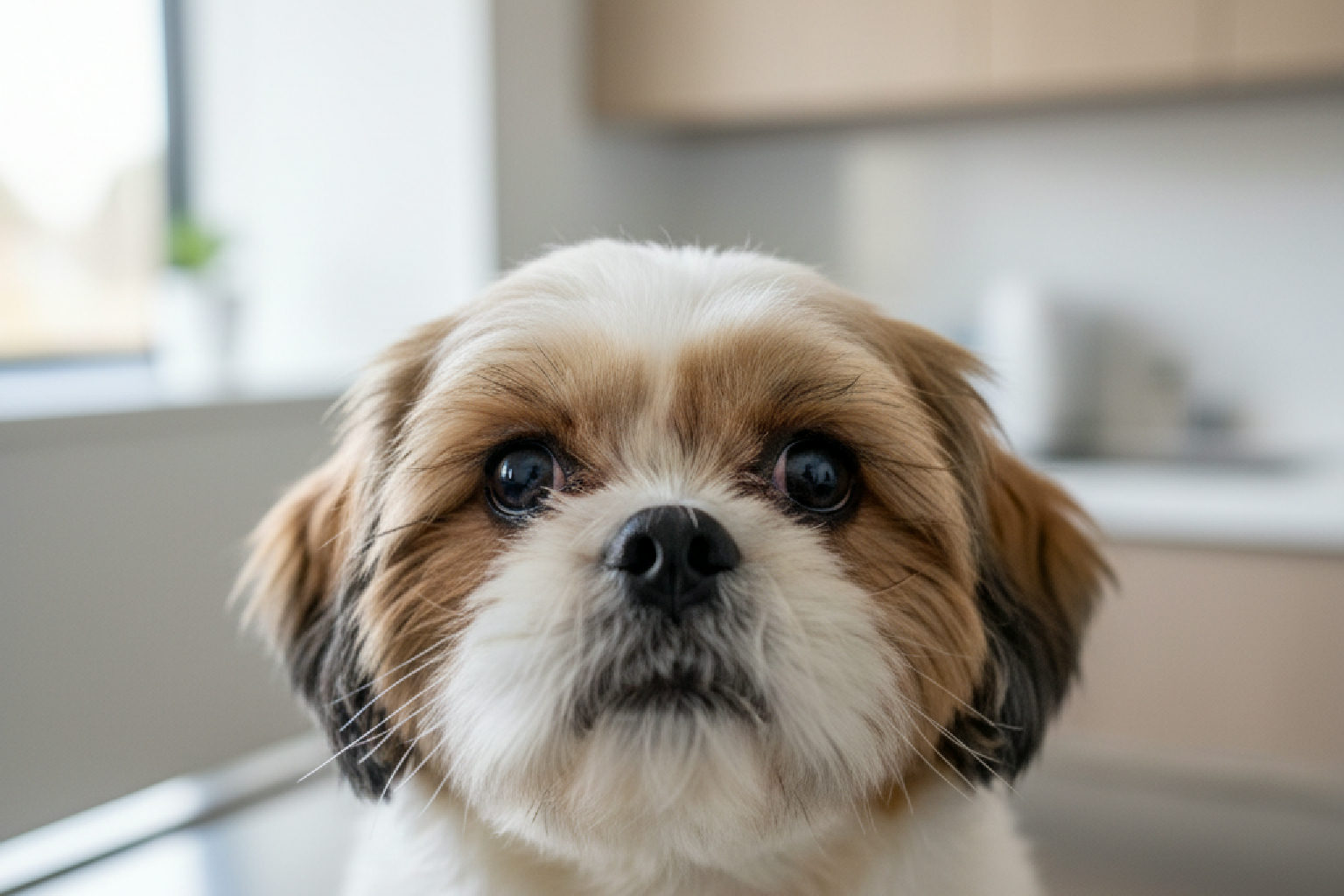
If your dog's eyes are chronically red, irritated, and producing thick, yellowish-green discharge that keeps coming back no matter how often you wipe it away, you're probably dealing with keratoconjunctivitis sicca, or KCS. We call it dry eye. It's one of the most common eye conditions I diagnose, and the good news is that with proper treatment, most dogs do well. The catch is that treatment is lifelong, and starting early makes all the difference.
Dry eye happens when the tear glands don't produce enough of the watery portion of tears. Without adequate lubrication, the cornea (the clear surface of the eye) becomes inflamed, painful, and vulnerable to damage. Left untreated, KCS can lead to corneal ulcers, scarring, and permanent vision loss.
What causes dry eye in dogs?
The most common cause of KCS in dogs is immune-mediated destruction of the tear glands. For reasons we don't fully understand, the dog's own immune system attacks the lacrimal glands (the glands that produce tears), gradually destroying their ability to function. This accounts for the vast majority of cases I see.
Other causes include:
- Drug-induced KCS: Certain sulfonamide antibiotics (like sulfasalazine used for colitis) can cause temporary or permanent damage to tear glands
- Distemper virus: Can damage tear glands as part of the infection
- Hypothyroidism: Occasionally associated with reduced tear production
- Nerve damage: The nerves that stimulate tear production can be damaged by trauma, middle ear disease, or surgery
- Congenital issues: Some dogs are born with underdeveloped tear glands
- Chronic blepharitis: Long-standing eyelid inflammation can eventually affect tear production
Breeds predisposed to dry eye
Certain breeds are significantly more likely to develop KCS:
- Cocker Spaniels (both American and English)
- Bulldogs (English and French)
- West Highland White Terriers
- Shih Tzus
- Pugs
- Lhasa Apsos
- Cavalier King Charles Spaniels
- Yorkshire Terriers
- Boston Terriers
If you own one of these breeds and notice recurring eye issues, KCS should be high on the list of possibilities.
What does dry eye look like?
The classic presentation is a dog with red, irritated eyes and thick, ropy, mucoid discharge. This discharge is different from the clear, watery tearing you see with allergies or the thin yellow discharge of a simple bacterial infection. The mucus in KCS is often described as "stringy" or "gooey," and it tends to accumulate in the corners of the eyes and stick to the eyelids.
Other signs I look for:
- Dull, lusterless cornea: A healthy cornea is clear and shiny. With KCS, it often looks hazy or has a dull surface
- Pigmentation on the cornea: In chronic cases, brown or black pigment creeps across the cornea (this is the eye trying to protect itself)
- Squinting or pawing at the eyes: KCS is uncomfortable
- Blepharospasm: The eyelids may stay partially closed
- Recurrent corneal ulcers: Without adequate tear protection, the cornea is prone to damage
- Crusty eyelids: Dried discharge accumulates on the lid margins
Dogs with mild KCS may just look like they have chronic "eye boogers" that never quite clear up. Dogs with severe KCS look miserable, with angry red eyes and heavy discharge.
How do vets diagnose dry eye?
Diagnosis is straightforward with a test called the Schirmer Tear Test (STT). I place a small strip of specialized absorbent paper inside the lower eyelid for exactly 60 seconds, then measure how much of the strip got wet. This tells me how many millimeters of tears the eye produced in one minute.
Normal dogs produce 15-25 mm/minute. Here's how I interpret the results:
- 15-25 mm/min: Normal tear production
- 11-14 mm/min: Borderline, early KCS suspected
- 6-10 mm/min: Mild to moderate KCS
- 0-5 mm/min: Severe KCS
The test is quick, inexpensive, and doesn't require sedation. I run it on any dog with chronic eye discharge, redness that doesn't respond to standard treatment, or corneal changes that suggest poor tear film.
I'll also examine the cornea closely with magnification and a fluorescein stain to check for ulcers. Corneal ulcers and KCS often go hand in hand.
How is dry eye treated?
Treatment for KCS has two goals: stimulate natural tear production (when possible) and protect the cornea with artificial lubrication. In most cases, we can accomplish both.
Cyclosporine or tacrolimus eye drops
The mainstay of KCS treatment is a medication that suppresses the immune attack on the tear glands. Cyclosporine ophthalmic (brand name Optimmune) is the most commonly used, applied twice daily. For dogs that don't respond to cyclosporine, tacrolimus (compounded as an ophthalmic ointment) often works.
These medications don't just replace tears; they actually stimulate the glands to produce more tears while stopping the immune-mediated destruction. In dogs with some remaining gland function, I often see Schirmer values improve significantly over 4-8 weeks of treatment.
The key point: these medications only work as long as you use them. Stop the medication, and in most cases, the immune system resumes its attack on the tear glands. This is lifelong therapy for most dogs.
Artificial tears and lubricants
While we're waiting for cyclosporine or tacrolimus to take effect (or in dogs with severe disease who need extra support), artificial tear gels and lubricating ointments help protect the cornea. I prefer the thicker gel formulations over watery drops because they stay on the eye longer. These are applied multiple times daily as needed.
Treating secondary infections
Dogs with KCS commonly develop secondary bacterial conjunctivitis because the eye's natural defenses are compromised. I'll often prescribe a topical antibiotic during the initial treatment phase. Once tear production improves, the infections usually resolve.
What if medications don't work?
For dogs with severely damaged tear glands that don't respond to medical management, there is a surgical option called parotid duct transposition. A veterinary ophthalmologist can reroute one of the salivary ducts to deliver saliva to the eye instead of tears. Saliva isn't a perfect substitute for tears, but it provides moisture. This surgery has complications and isn't my first choice, but it can be life-changing for dogs who would otherwise face chronic pain or blindness.
What happens if dry eye goes untreated?
This is where I want owners to understand why ongoing treatment matters. Untreated KCS is not just uncomfortable; it's a progressive disease that causes permanent damage:
- Corneal vascularization: Blood vessels grow into the normally clear cornea
- Corneal pigmentation: Brown/black pigment covers the cornea, eventually blocking vision
- Recurrent ulcers: Without tear protection, minor trauma becomes a serious ulcer
- Corneal scarring: Each ulcer that heals leaves scar tissue behind
- Perforation: Severe ulcers can erode through the cornea entirely
- Blindness: The end result of progressive pigmentation and scarring
The frustrating part is that much of this damage is preventable with consistent treatment. I've seen dogs maintain good vision for years with twice-daily cyclosporine. I've also seen dogs go blind because owners didn't realize how important the eye drops were, or ran out of medication and didn't refill it.
What does treatment cost?
Cyclosporine ophthalmic ointment typically runs $40-80 per tube, and a tube lasts about a month with twice-daily dosing. Tacrolimus is compounded, which may be slightly more or less expensive depending on the pharmacy. Artificial tears are inexpensive and available over the counter.
The Schirmer test itself is quick and usually included as part of a comprehensive eye exam. Rechecks to monitor tear production are important early on, then can be spaced out once the condition is stable.
Compared to the cost of treating corneal ulcers, managing chronic pain, or referral to a veterinary ophthalmologist for surgery, consistent medical management is the economical choice. More importantly, it's the choice that keeps your dog comfortable and seeing clearly.
When should I bring my dog in?
Schedule a regular appointment if:
- Your dog has recurring eye discharge that clears with antibiotics but keeps coming back
- You notice a dull or hazy look to the cornea
- Your dog is a breed predisposed to KCS and you want baseline screening
- You've been treating KCS and want to recheck tear production
Come in sooner (same-day if possible) if:
- Your dog is squinting, holding the eye closed, or pawing at it constantly
- The eye looks cloudy, blue, or has a visible divot on the surface
- There's sudden worsening despite ongoing treatment
A corneal ulcer in a KCS dog can progress quickly. If something seems off, don't wait. The American College of Veterinary Ophthalmologists provides detailed information on KCS for owners who want to learn more.
If your dog also has other chronic issues affecting quality of life, like arthritis or hypothyroidism, it's worth addressing them together since some conditions overlap and overall comfort matters.
If your dog has chronically red, goopy eyes that you can't seem to get ahead of, let's check tear production and find out what's really going on. You can schedule a visit at Hearthstone Animal Clinic or call us at (281) 859-9244. We're in Cypress, TX, and I'm happy to take a look.
Have a question about your pet?
Dr. Pelton and the Hearthstone team are here to help, the same day when it counts.
Get Your Pet Seen