
Giving Your Diabetic Cat Insulin at Home: A Vet's Guide to Stress-Free Injections
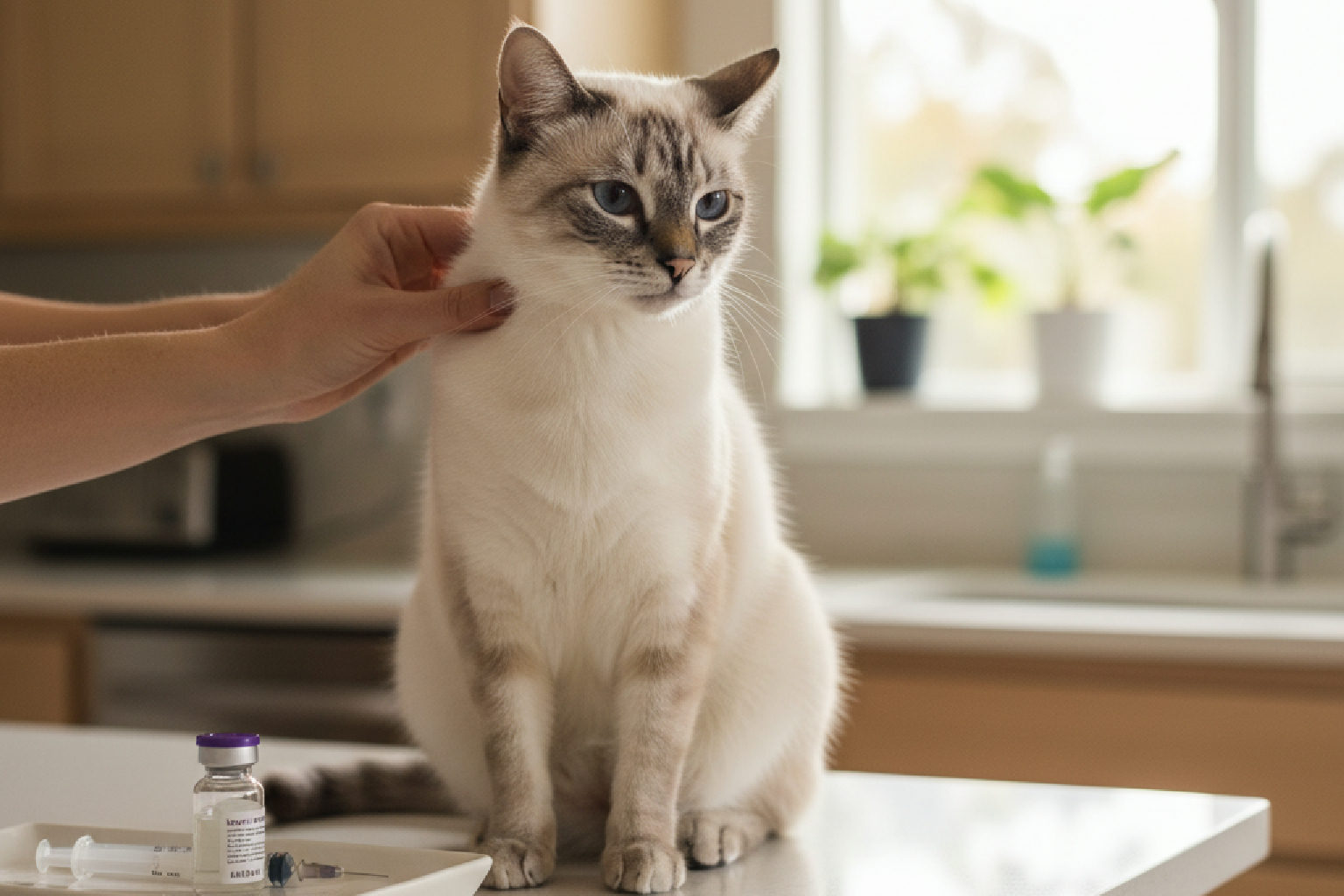
If your cat was just diagnosed with diabetes and you're staring at a vial of insulin wondering how you're going to do this twice a day, take a breath. You can do this. Most owners I work with go from "I can't possibly give my cat a shot" to giving injections without a second thought within a week or two. The technique is simple, the needles are tiny, and cats tolerate it far better than most people expect.
Feline diabetes mellitus is manageable, and insulin injections are the cornerstone of treatment for most diabetic cats. The goal of this post is to walk you through exactly how to give those injections at home, what mistakes to avoid, and how to make the whole process easier for both you and your cat.
Why do cats need insulin injections?
Diabetes in cats is similar to Type 2 diabetes in humans. The pancreas either doesn't produce enough insulin or the body's cells don't respond to it properly. Without insulin, glucose can't get into cells where it's needed for energy. Instead, blood sugar stays dangerously high while the cat's body starts breaking down fat and muscle for fuel.
Oral diabetes medications exist for humans, but they don't work reliably in cats. Insulin injections are the standard treatment, and they work. With good control, many cats feel dramatically better within weeks. And here's something that surprises most owners: diabetic cats can actually go into remission, meaning they no longer need insulin at all. This happens in roughly 30 to 50 percent of cats when treatment starts early and blood sugar is controlled well. That's a real possibility worth working toward.
What supplies do you need for insulin injections?
You'll go home with most of this from your veterinary visit, but here's what the setup looks like:
- Insulin: Most commonly Vetsulin (porcine insulin) or ProZinc (protamine zinc insulin) for cats. Human insulins like glargine (Lantus) work well in cats too and may be prescribed in some cases.
- Insulin syringes: These are the U-40 or U-100 syringes, depending on which insulin you're using. The number must match the insulin concentration. Using the wrong syringe is one of the most dangerous mistakes you can make.
- A sharps container: Any hard plastic container with a lid works (old laundry detergent bottles work fine). Never throw loose needles in the trash.
- A consistent feeding schedule: Insulin timing revolves around meals.
Store insulin in the refrigerator (not the freezer, not the door where it can get jostled). Gently roll the vial between your palms before drawing up the dose. Never shake it.
How do you actually give the injection?
This is the part that feels impossible until you've done it a few times. The actual technique is straightforward.
Step-by-step injection technique
- Feed your cat first. Give the meal, confirm they're eating, then give the injection. If your cat doesn't eat or only eats half, contact your vet about whether to adjust the dose. Giving a full dose of insulin to a cat that hasn't eaten can cause dangerously low blood sugar.
- Draw up the correct dose. Roll the vial gently. Insert the needle into the rubber stopper with the vial upside down. Pull back to the correct number of units. Check for air bubbles and tap them out if present.
- Find your injection site. The scruff of the neck or along the side of the body works well. Many owners alternate sides (left in the morning, right in the evening) to avoid injecting the same spot repeatedly.
- Tent the skin. Pinch up a fold of skin between your thumb and forefinger. This creates a little pocket.
- Insert the needle. Slide the needle into the base of that skin tent at about a 45-degree angle. The needle should go into the space under the skin, not into muscle and not back out the other side of the skin fold.
- Inject. Push the plunger smoothly. Withdraw the needle.
- Check for wet fur. If the injection site feels wet, some insulin may have leaked out or gone through the skin tent entirely. Note it so you can mention it at your next recheck, but don't re-dose.
The needles used for insulin are extremely fine, typically 29 to 31 gauge. Most cats don't react at all. If your cat is especially squirmy, giving injections while they're eating or getting a treat can help distract them.
What if I miss an injection?
It happens. If you miss a dose, don't double up the next one. Just give the next scheduled dose as normal. One missed dose is unlikely to cause a crisis. Two or three missed doses in a row is more concerning. If you're going to be away and can't give injections, you need to arrange for someone else to do it or board your cat where insulin can be administered.
What mistakes do owners make with insulin injections?
After years of working with diabetic cat owners, I see the same issues come up repeatedly:
- Using the wrong syringe. U-40 insulin requires U-40 syringes. U-100 insulin requires U-100 syringes. If you mix these up, you'll give the wrong dose, and that can be life-threatening. When in doubt, call us before injecting.
- Injecting through the skin fold. If you tent the skin too tightly or insert the needle too far, it can come out the other side. The insulin ends up on the fur instead of under the skin. Watch for wet spots.
- Giving insulin to a cat that didn't eat. This is the fastest route to hypoglycemia (low blood sugar). Always confirm your cat has eaten before injecting.
- Adjusting the dose without guidance. I understand the instinct to tweak things when blood sugar numbers aren't perfect, but insulin dose changes should be made with your vet. Small adjustments can have big effects.
- Storing insulin incorrectly. Insulin that's been frozen, left out in heat, or shaken vigorously may not work properly. If you're not seeing the response you expect, the insulin itself might be the problem.
How do you know if the insulin is working?
At home, you'll notice the clinical signs improving. A well-regulated diabetic cat should be:
- Drinking less water (excessive thirst is a hallmark of uncontrolled diabetes)
- Urinating less frequently and producing smaller volumes
- Gaining weight back if they had lost weight
- More energetic and engaged
At the clinic, we monitor with periodic blood glucose curves, where we measure blood sugar every 2 to 4 hours over a day to see how the insulin is working. Some owners learn to do home glucose monitoring with a glucometer and ear prick, which gives us even better data and reduces the stress of clinic visits.
Fructosamine levels (a blood test that reflects average blood sugar over the previous 2 to 3 weeks) are also useful for tracking long-term control.
What are the signs of low blood sugar (hypoglycemia)?
This is the emergency you need to be prepared for. Hypoglycemia happens when blood sugar drops too low, usually because of an insulin overdose or giving insulin when the cat hasn't eaten. Signs include:
- Weakness or wobbliness
- Disorientation or confusion
- Trembling or twitching
- Seizures (in severe cases)
- Collapse or unresponsiveness
If you see these signs, rub corn syrup or honey on your cat's gums immediately. Don't try to force liquid into their mouth if they're not fully conscious, as they could aspirate it. Rubbing a small amount on the gums gets sugar absorbed quickly. Then get to a veterinarian.
According to the AAHA Diabetes Management Guidelines, hypoglycemia is a known risk of insulin therapy, and owners should be counseled on recognition and emergency response before starting treatment.
Keep corn syrup or honey in the house at all times when you have a diabetic cat on insulin. This is not optional.
What about diabetic ketoacidosis (DKA)?
On the opposite end of the spectrum, uncontrolled diabetes can lead to diabetic ketoacidosis, a serious complication where the body starts breaking down fat so rapidly that it produces toxic ketones. Signs include vomiting, lethargy, loss of appetite, and a distinctive sweet or acetone smell on the breath. DKA requires emergency hospitalization with IV fluids and insulin. If your diabetic cat becomes suddenly very sick, especially if they've missed insulin doses or have another illness going on, this is a same-day emergency.
Can giving injections ever become easy?
Yes. I've had clients who were terrified at diagnosis become completely nonchalant about injections within a month. The routine helps: same time, same place, same process. Your cat picks up on your confidence. If you're tense and hesitant, they'll be tense. If you're calm and matter-of-fact, they'll often just sit there and eat while you inject.
Some tips that help:
- Make it part of mealtime. Injection becomes associated with food, which is a positive.
- Don't chase your cat. If they run, let them settle. Chasing creates negative associations.
- Practice the motion. Before your first real injection, practice tenting the skin and going through the motions without the needle.
- Ask for a demonstration. We're happy to show you exactly how to do this at the clinic, and some owners benefit from a recheck visit specifically to refine their technique.
What if my cat needs long-term insulin?
Many cats do achieve remission, but some will need insulin for the rest of their lives. That's okay. Diabetic cats can live for years with good quality of life when their blood sugar is well managed. The injections become routine. The monitoring becomes routine. And your cat feels good.
The most important factors for success are consistency (same times, same doses, unless your vet adjusts them), weight management, and a low-carbohydrate diet. Most diabetic cats do best on high-protein, low-carb canned food rather than dry kibble. We can discuss specific diet recommendations at your cat's next visit.
When to contact your veterinarian
Reach out to us if:
- Your cat refuses to eat before an injection (don't give insulin, but call us)
- You see signs of hypoglycemia (rub corn syrup on gums and head to the clinic)
- Your cat becomes lethargic, vomits, or stops eating entirely (possible DKA)
- You're consistently seeing wet fur at the injection site
- You're unsure about the dose or syringe type
- Your cat's water intake or urination increases again after being controlled
Diabetic cats need regular rechecks, typically every few weeks initially, then less frequently once stable. Don't skip these. Adjustments are normal, and catching problems early prevents emergencies.
If your cat was recently diagnosed with diabetes and you're feeling overwhelmed, or if you've been managing at home and something doesn't seem right, schedule a visit at Hearthstone Animal Clinic. We can walk you through injection technique, review your monitoring data, and make sure your cat's diabetes is on track. You can reach us at (281) 859-9244 in Cypress, TX. Managing a diabetic cat takes commitment, but it's absolutely doable, and the results are worth it.
Have a question about your pet?
Dr. Pelton and the Hearthstone team are here to help, the same day when it counts.
Get Your Pet Seen