
Glaucoma in Dogs: Recognizing a Painful Eye Emergency
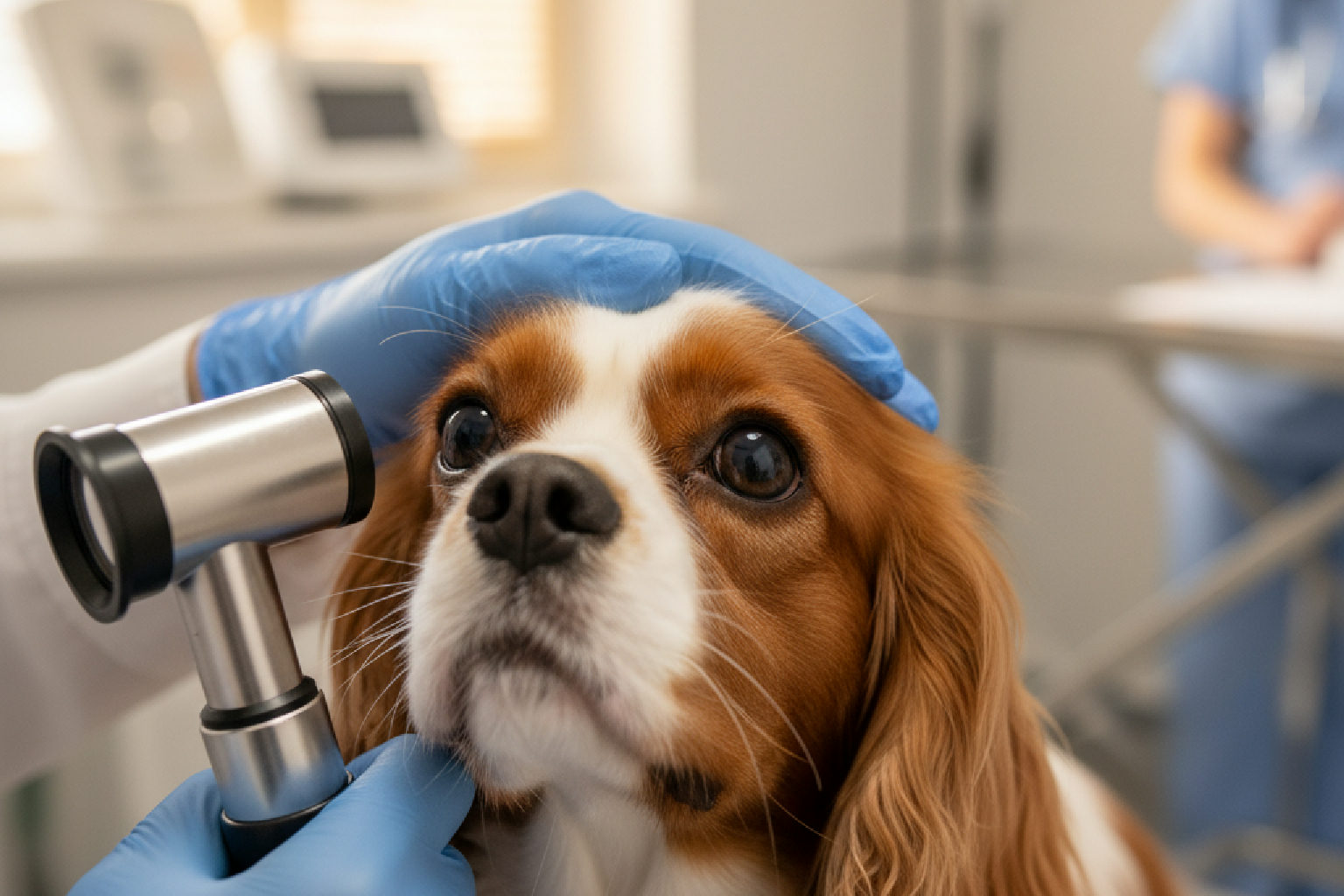
If your dog's eye suddenly looks red, cloudy, or larger than normal, and they seem painful or reluctant to open it, you may be dealing with glaucoma. This is a genuine emergency. Glaucoma causes pressure to build inside the eye, and without treatment within hours, permanent blindness can result. If you're reading this because your dog's eye looks wrong right now, get them seen today.
Glaucoma isn't as well-known as cataracts, but it's far more urgent. Cataracts develop slowly and aren't painful. Glaucoma can go from "something looks off" to irreversible vision loss in 24 to 48 hours. What makes it tricky is that the early signs are subtle, and by the time owners realize something is seriously wrong, the damage may already be done.
What is glaucoma and why does it happen in dogs?
Glaucoma occurs when fluid inside the eye (called aqueous humor) can't drain properly. This fluid is constantly produced and normally flows out through a drainage angle at the front of the eye. When that drainage gets blocked or overwhelmed, pressure inside the eye rises. High intraocular pressure (IOP) damages the optic nerve and retina, leading to pain and vision loss.
In dogs, glaucoma is classified as either primary or secondary:
- Primary glaucoma is inherited. The drainage angle is structurally abnormal from birth, even if signs don't appear until adulthood. Certain breeds are predisposed: Cocker Spaniels, Basset Hounds, Beagles, Siberian Huskies, Chow Chows, Samoyeds, and many others. If your dog develops primary glaucoma in one eye, the other eye has a very high chance (40 to 50 percent or higher) of developing it too.
- Secondary glaucoma happens when something else blocks the drainage, such as inflammation inside the eye (uveitis), lens luxation (a dislocated lens), trauma, bleeding inside the eye, or a tumor. Secondary glaucoma is more common overall and can happen in any breed.
Understanding the cause matters because it affects the prognosis and treatment plan. A dog with primary glaucoma will likely need lifelong management and preventive treatment in the other eye. A dog with secondary glaucoma may improve if we can address the underlying problem.
What are the signs of glaucoma in dogs?
Early glaucoma can be easy to miss. Dogs don't tell us their eye hurts, and some of the changes are subtle. Here's what to watch for:
Early warning signs
- Redness in the white of the eye
- A hazy, cloudy, or bluish tint to the cornea (the clear front surface)
- Squinting, excessive blinking, or holding the eye shut
- Rubbing at the eye or face
- Tearing or discharge
- Dilated pupil that doesn't respond normally to light
- Subtle behavioral changes: reluctance to play, sleeping more, avoiding bright light
Advanced or acute signs
- One eye visibly larger or bulging compared to the other (buphthalmos)
- Severe cloudiness or a "steamy" appearance to the cornea
- A fixed, dilated pupil
- Obvious vision loss (bumping into things, hesitating at stairs)
- Depression, loss of appetite, or hiding (pain signals)
The enlarged eye is a sign the pressure has been high for some time. By that stage, vision in that eye is usually gone. That's why catching glaucoma early, before the eye enlarges, gives us the best chance of saving sight.
How is glaucoma diagnosed?
I diagnose glaucoma by measuring the intraocular pressure using a device called a tonometer. Normal IOP in dogs is roughly 10 to 25 mmHg. In glaucoma, pressure often rises to 30, 40, 50, or even higher. The measurement takes seconds and doesn't require sedation.
Beyond pressure, I examine the eye closely with an ophthalmoscope and look for other clues: the appearance of the drainage angle (using a technique called gonioscopy, often done by veterinary ophthalmologists), signs of inflammation, lens position, and retinal health. If I suspect primary glaucoma in one eye, I'll usually recommend examining and potentially treating the other eye before it develops problems.
Some cases warrant referral to a veterinary ophthalmologist, especially if we need advanced imaging, surgical intervention, or if the diagnosis is unclear. Here in Northwest Houston, we have access to excellent specialists when needed.
Can glaucoma in dogs be treated?
Treatment depends on whether the eye still has vision, the underlying cause, and how quickly we catch it.
If the eye is still visual (an emergency)
This is a race against time. The goal is to drop the pressure fast. I typically start with a combination of medications:
- Topical eye drops that reduce fluid production (like dorzolamide or timolol) or improve drainage (like latanoprost)
- Systemic medications (like mannitol given intravenously) can rapidly lower pressure in acute crises
- Sometimes referral for same-day laser treatment or surgery to restore drainage
If we get the pressure down quickly, vision may be preserved. But if pressure has been high for more than 24 to 48 hours, permanent damage is likely. This is why I stress: if you notice sudden eye changes, don't wait until tomorrow.
If the eye is already blind
Once vision is lost, it won't come back. At that point, treatment focuses on comfort. A blind glaucomatous eye is painful, even if your dog doesn't show it obviously. Options include:
- Ongoing medical management with eye drops to keep pressure controlled (requires lifelong daily drops)
- Enucleation (surgical removal of the eye): this sounds dramatic, but dogs do remarkably well with one eye. The pain is gone, medications stop, and quality of life usually improves significantly.
- Intrascleral prosthesis: a cosmetic option where the internal contents of the eye are removed but a silicone ball is placed inside, preserving a natural appearance. This is sometimes an option for dogs who are good candidates.
- Ciliary body ablation (laser or injection to destroy the fluid-producing tissue): reduces pressure without removing the eye, though results vary.
If this were my dog and the eye was permanently blind and painful, I would likely choose enucleation. It's definitive, the pain is gone, and dogs adapt quickly. Many owners are surprised how much brighter and happier their dog seems afterward.
Preventing glaucoma in the other eye
In primary glaucoma, the second eye is at high risk. I typically prescribe preventive eye drops (like latanoprost) for the unaffected eye to delay or prevent a pressure spike. Some studies suggest this can buy months to years of additional vision. It's not foolproof, but it's worth doing.
How much does glaucoma treatment cost?
Costs vary depending on whether you're managing medically or surgically:
- Initial diagnosis and emergency stabilization: $200 to $500, depending on testing and medications
- Ongoing eye drops: $50 to $150 per month (some dogs need multiple medications)
- Enucleation surgery: $400 to $800 at a general practice; may be higher at specialty hospitals
- Veterinary ophthalmologist consultation or surgery: $300 to $1,500 or more, depending on the procedure
Long-term medical management can add up quickly, and the eye may still eventually fail. For some families, surgery ends up being both more humane and more affordable over time. We can discuss what makes sense for your dog and your situation.
Which breeds are most at risk?
Primary glaucoma has a strong genetic component. Breeds with higher risk include:
- Cocker Spaniels (American and English)
- Basset Hounds
- Beagles
- Siberian Huskies and Samoyeds
- Chow Chows
- Shar-Peis
- Boston Terriers
- Shih Tzus
- Great Danes
If you have a breed predisposed to glaucoma, ask about baseline eye exams. The American College of Veterinary Ophthalmologists maintains a registry of board-certified specialists who can perform gonioscopy (examining the drainage angle) to assess risk before problems develop.
When to get your dog seen
Here's how I'd triage eye problems:
- Emergency (same day, or emergency clinic if after hours): Sudden onset of a red, cloudy, or enlarged eye. Obvious pain (squinting, reluctance to open the eye). Sudden vision loss. These could be glaucoma or other urgent eye conditions like corneal ulcers.
- Soon (within 1 to 2 days): Mild redness or discharge that started recently. Slight squinting that comes and goes. A pupil that looks a little larger than usual.
- Routine appointment: Chronic mild tearing with no pain. Breed predisposed to glaucoma and you want a baseline eye pressure check.
When in doubt, err on the side of getting it checked. Eyes are one area where waiting "to see if it gets better" can cost your dog their vision. The earlier we catch high pressure, the better our chances of preserving sight.
The bottom line on canine glaucoma
Glaucoma is painful, progressive, and can steal your dog's vision within hours. The good news is that with early detection and appropriate treatment, we can often save the eye or at least keep your dog comfortable. If your dog is a breed at risk, consider a baseline eye exam. If you ever notice sudden eye changes, don't wait.
If your dog's eye looks red, cloudy, swollen, or painful, or if you're concerned about glaucoma risk, schedule a visit at Hearthstone Animal Clinic. We can measure the eye pressure, assess what's happening, and get treatment started if needed. You can reach us at (281) 859-9244 in Cypress, TX. With eye emergencies, fast action makes all the difference.
Have a question about your pet?
Dr. Pelton and the Hearthstone team are here to help, the same day when it counts.
Get Your Pet Seen