
Protein-Losing Enteropathy in Dogs: When Diarrhea Means Something Serious
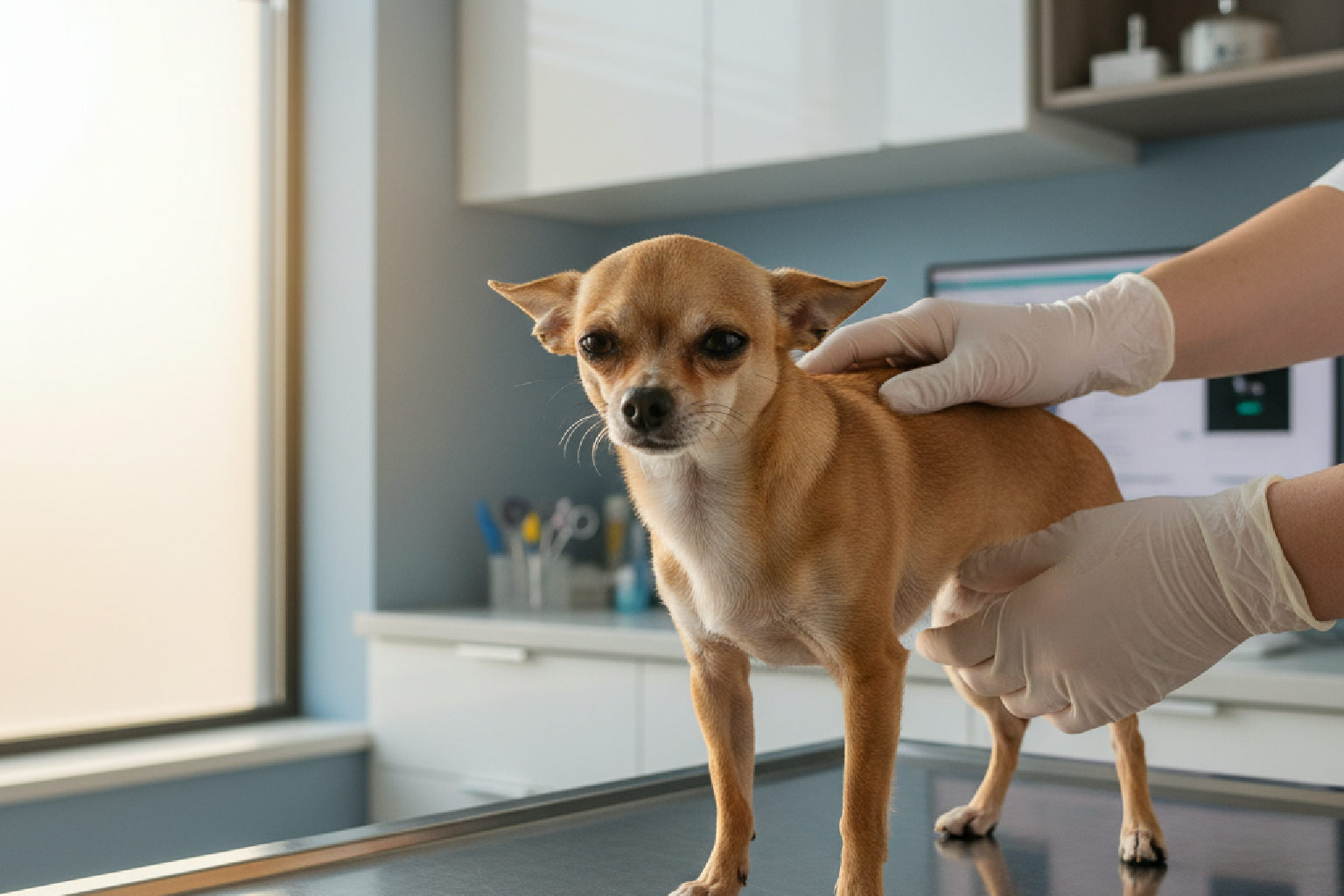
If your dog has had diarrhea for weeks, is losing weight despite eating, and maybe has a swollen belly or puffy legs, you're right to be concerned. These signs can point to protein-losing enteropathy (PLE), a condition where the intestinal lining leaks protein faster than the body can replace it. PLE isn't a disease itself; it's the result of something else damaging the gut. And it's serious.
The good news: if we catch it early and identify the underlying cause, many dogs respond well to treatment. The bad news: left untreated, PLE leads to severe muscle wasting, fluid accumulation, blood clots, and eventually death. This is not a "wait and see" situation.
What is protein-losing enteropathy?
Your dog's intestinal lining is supposed to absorb nutrients and keep proteins inside the bloodstream. In PLE, that barrier breaks down. Albumin and other proteins leak out of the blood into the gut and are lost in the stool. The body tries to compensate by making more protein, but eventually it can't keep up.
When blood protein (specifically albumin) drops too low, fluid leaks out of blood vessels and pools where it shouldn't: the belly (ascites), the chest (pleural effusion), or under the skin of the legs. This is why some dogs with PLE develop a pot-bellied appearance even as they're wasting away everywhere else.
PLE can be caused by several different diseases:
- Inflammatory bowel disease (IBD): The most common cause. Chronic inflammation damages the intestinal wall.
- Intestinal lymphangiectasia: The lymphatic vessels in the gut become dilated and leaky. Some breeds (Yorkshire Terriers, Soft Coated Wheaten Terriers, Norwegian Lundehunds) are predisposed.
- Intestinal lymphoma: Cancer infiltrating the gut wall.
- Severe intestinal infections: Histoplasmosis, severe hookworm infestation, or other infectious causes.
- Chronic intussusception: Part of the intestine telescoping into itself.
Figuring out which one is causing the protein loss matters because treatment differs significantly.
What are the warning signs of PLE in dogs?
The classic combination is chronic diarrhea plus weight loss. But not every dog with PLE has obvious diarrhea. Some have soft stools that owners attribute to diet. Others have surprisingly normal-looking stool but are still losing protein.
Signs to watch for:
- Chronic diarrhea: Lasting more than 2-3 weeks, often watery or with mucus
- Weight loss: Especially muscle loss along the spine and hips, even with a good appetite
- Swollen belly: Fluid accumulation (ascites) creating a pot-bellied look
- Puffy legs: Edema in the limbs, usually starting in the hind legs
- Lethargy: Low energy, reluctance to exercise
- Poor coat quality: Dull, thin fur
- Vomiting: Less common than diarrhea but possible
- Decreased appetite: Though some dogs remain hungry
The swelling is often what finally brings owners in. They notice the belly getting bigger while the rest of the dog gets thinner. That's a red flag that shouldn't wait.
How do veterinarians diagnose PLE?
Diagnosing PLE involves two steps: confirming that protein is being lost through the gut (not the kidneys or somewhere else), then figuring out what's causing it.
Blood work and urinalysis
The first clue is low albumin on a blood chemistry panel. But low albumin can also come from liver failure or protein-losing nephropathy (losing protein through the kidneys). We check a urinalysis to rule out the kidneys and evaluate liver values to rule out liver disease. If albumin is low, the kidneys are fine, and the liver looks okay, PLE moves to the top of the list.
Other blood work findings that support PLE: low globulins (another protein), low cholesterol, and sometimes low calcium or low lymphocyte counts.
Fecal testing
We check for intestinal parasites (hookworms can cause significant protein loss in heavy infestations) and sometimes test for Giardia or other infections.
Imaging
Abdominal ultrasound is extremely helpful. We can see thickened intestinal walls, enlarged lymph nodes, fluid in the belly, or masses. Ultrasound can't give us a definitive diagnosis, but it helps us know where to look and whether cancer is likely.
Intestinal biopsies
This is usually the definitive step. We need actual tissue samples from the intestinal lining to tell the difference between IBD, lymphangiectasia, and lymphoma. Biopsies can be obtained through endoscopy (a scope passed through the mouth or rectum) or through surgery. Each approach has pros and cons. Endoscopy is less invasive but only reaches certain parts of the intestine. Surgical biopsies (often laparoscopic) can sample the entire length of the gut and get full-thickness samples.
If you're uncomfortable with the idea of surgery, understand that without a diagnosis, we're guessing at treatment. Some dogs with PLE have IBD that responds beautifully to diet and immunosuppression. Others have lymphoma that needs chemotherapy. Treating the wrong disease wastes time the dog may not have.
How is protein-losing enteropathy treated?
Treatment depends entirely on the underlying cause. There's no single "PLE medication."
Dietary management
Almost all dogs with PLE benefit from a highly digestible, ultra-low-fat diet. Fat is particularly hard on leaky intestines, and low-fat feeding is critical for dogs with lymphangiectasia. For some cases, a hydrolyzed protein diet or novel protein diet helps reduce intestinal inflammation. This isn't optional; diet is a cornerstone of treatment.
Immunosuppressive therapy
If the underlying cause is IBD, we typically use medications that calm the immune system: prednisone, budesonide, or stronger immunosuppressants like azathioprine or chlorambucil. The goal is to reduce inflammation so the gut can heal and stop leaking protein.
Treating lymphangiectasia
For primary lymphangiectasia, the ultra-low-fat diet is the main treatment. We may add medium-chain triglyceride (MCT) oil as a fat source because it's absorbed differently and doesn't worsen lymphatic leakage. Some dogs need immunosuppressants if there's concurrent inflammation.
Chemotherapy for lymphoma
If biopsies reveal intestinal lymphoma, chemotherapy is the standard treatment. Some forms of intestinal lymphoma (low-grade or small-cell) respond reasonably well and can be managed for months to years. High-grade lymphoma has a poorer prognosis.
Supportive care
Dogs with severe protein loss may need plasma transfusions or synthetic colloids to temporarily boost blood protein levels. If fluid has accumulated in the belly, we sometimes drain it to improve comfort and breathing. Vitamin B12 (cobalamin) supplementation is common because B12 absorption is often impaired.
One underappreciated risk: dogs with very low albumin are prone to blood clots. Some veterinarians recommend anti-clotting medication (like clopidogrel) during the critical period. This is something to discuss with your vet.
What's the prognosis for dogs with PLE?
It varies enormously based on the cause and how early we catch it.
- IBD-related PLE: Many dogs respond well to diet and immunosuppression. Some go into long-term remission. Others need lifelong medication but do well for years.
- Lymphangiectasia: Primary lymphangiectasia can be managed with strict dietary control. Prognosis is guarded but reasonable if owners can stick to the diet. The Yorkshire Terrier and Wheaten Terrier forms can be particularly challenging.
- Intestinal lymphoma: Depends on the type. Low-grade lymphoma may respond for 1-2 years or more. High-grade lymphoma is more aggressive, with survival times often measured in months.
The dogs I worry most about are the ones who come in with severe protein loss (albumin below 1.5 g/dL), significant fluid accumulation, and muscle wasting. By that point, we're playing catch-up. Early diagnosis, before the dog reaches that stage, gives us the best chance.
When should you bring your dog in?
Don't wait for the swelling to start. If your dog has:
- Diarrhea lasting more than 2-3 weeks that doesn't respond to simple dietary changes
- Weight loss you can't explain, especially muscle loss
- A good appetite but still losing weight
- Any abdominal swelling or leg puffiness
These warrant bloodwork and a thorough workup. I'd rather check a blood panel and find normal albumin than have an owner wait until the dog is in crisis.
If your dog already has fluid accumulation, labored breathing, or is extremely weak, that's urgent. Get your pet seen the same day if possible.
For more context on chronic digestive issues, you might find our article on why diet matters more than antibiotics for chronic diarrhea helpful. The World Small Animal Veterinary Association's GI guidelines provide additional evidence-based information on diagnosing and treating chronic enteropathies.
The bottom line on PLE
Protein-losing enteropathy is not something that resolves on its own. The earlier we diagnose it, the better the odds of getting your dog stabilized and finding a treatment that works. If you've been managing chronic diarrhea with over-the-counter remedies or assuming it's "just sensitive stomach," and your dog is now losing weight, it's time to dig deeper.
If your dog has persistent diarrhea, unexplained weight loss, or any swelling, let's get blood work done and see where we stand. Schedule a visit at Hearthstone Animal Clinic or give us a call at (281) 859-9244. We're in Cypress, TX, and diagnosing these complex GI cases is exactly the kind of problem-solving I find most rewarding, because getting the answer right can genuinely change the outcome.
Have a question about your pet?
Dr. Pelton and the Hearthstone team are here to help, the same day when it counts.
Get Your Pet Seen