
Subcutaneous Fluids for Cats with Kidney Disease: A Home Guide
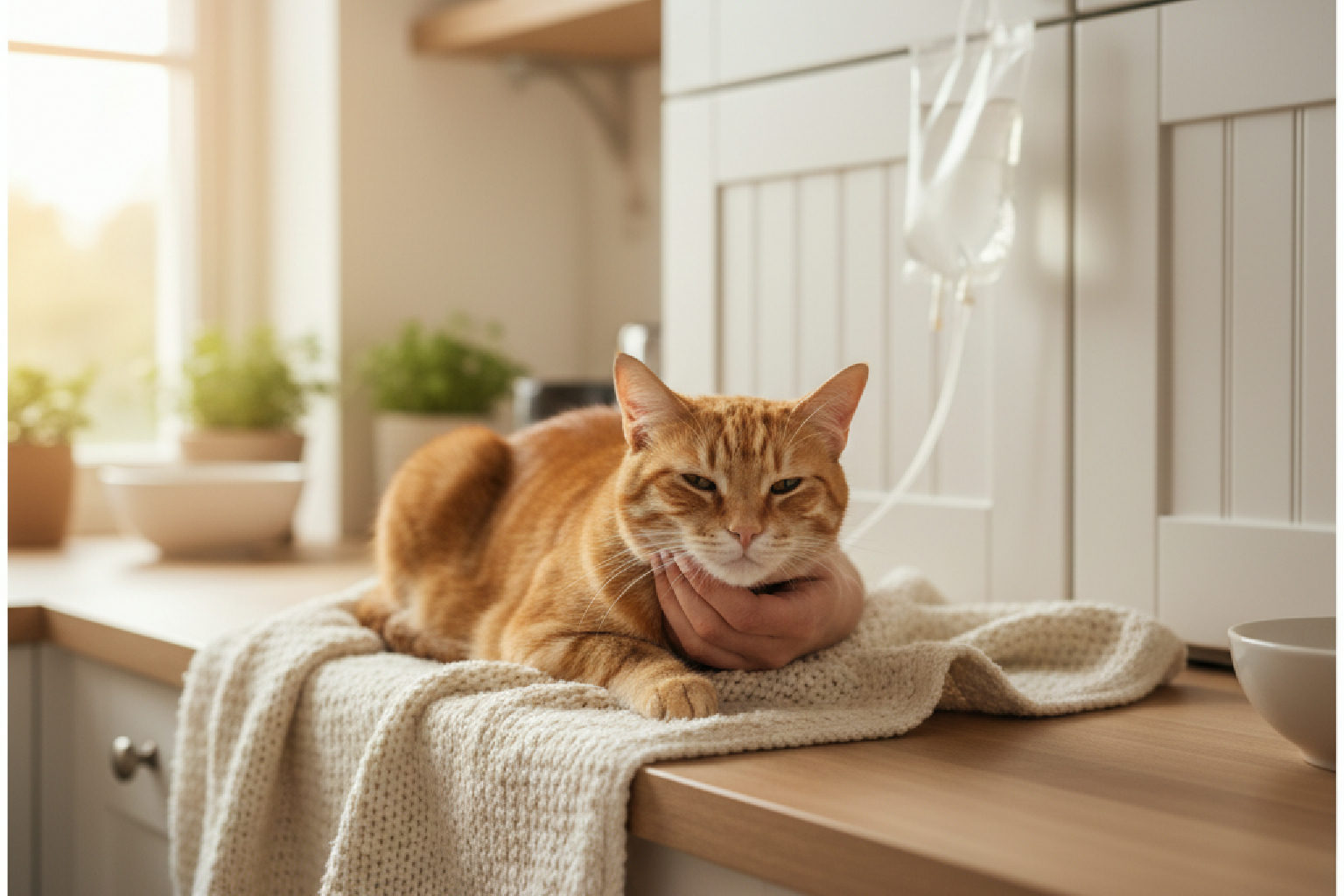
If your veterinarian has recommended subcutaneous (sub-Q) fluids at home for your cat's chronic kidney disease, you're probably feeling a mix of relief and dread. Relief because there's something concrete you can do to help. Dread because the idea of sticking a needle into your cat sounds impossible. I get it. But here's the good news: most owners master this within a week, and most cats tolerate it far better than you'd expect.
Chronic kidney disease (CKD) is one of the most common conditions I see in cats over 10 years old. The kidneys lose their ability to concentrate urine, so affected cats pee out more water than they can drink back in. That's the core problem sub-Q fluids solve: they replace the water your cat's failing kidneys can't hold onto.
Why do cats with kidney disease get dehydrated?
Healthy kidneys act like a recycling system. They filter waste from the blood, then reabsorb most of the water before sending concentrated urine to the bladder. When kidney tissue is damaged (which happens gradually and irreversibly in CKD), the kidneys lose that concentrating ability. Your cat produces large volumes of dilute urine, essentially flushing out more fluid than their body can spare.
Cats are also notoriously bad drinkers. In the wild, they evolved to get most of their moisture from prey. A cat with CKD needs to drink two to three times more than a healthy cat, and most simply won't. The result is chronic, low-grade dehydration that makes them feel awful and accelerates kidney damage.
Signs of dehydration in cats:
- Skin that "tents" when you pinch it (it should snap back immediately)
- Dry, tacky gums instead of slick and moist
- Sunken eyes or a dull coat
- Lethargy, decreased appetite, constipation
- Increased thirst (paradoxically, they're trying to catch up)
If your cat shows these signs, fluids can make a noticeable difference in how they feel, often within 24 to 48 hours.
What are subcutaneous fluids, and how do they work?
Subcutaneous means "under the skin." You're not injecting into a vein or muscle. You're depositing fluid into the loose tissue between the skin and the underlying muscle, usually in the scruff area between the shoulder blades. The body absorbs this fluid slowly over several hours, essentially giving your cat a steady internal drink.
The setup is simple:
- A bag of sterile fluids (usually lactated Ringer's solution or 0.9% saline)
- An IV line (the tubing that connects the bag to the needle)
- A needle (typically 18 or 20 gauge)
- A way to hang the bag above your cat (a coat hook, IV pole, or even a cupboard knob)
Gravity does the work. The fluid drains from the bag, through the line, and into the pocket you've created under the skin. Most cats receive 100 to 150 mL per session, which takes 5 to 15 minutes depending on needle size and how cooperative your cat decides to be.
How do I actually give my cat sub-Q fluids at home?
This is the part that intimidates people, but the technique is straightforward once you've done it a few times. I always demonstrate in the clinic before sending you home, but here's the basic process:
Step 1: Set up your station
Hang the fluid bag at least 3 feet above where your cat will sit. Higher equals faster flow. Warm the bag slightly (wrap it in a towel that's been in the dryer, or let it sit in warm water for a few minutes). Cold fluids are uncomfortable and make cats squirm.
Step 2: Prime the line
Open the roller clamp on the IV line and let fluid run through until there are no air bubbles. Close the clamp. Attach a fresh needle to the end of the line.
Step 3: Position your cat
Most cats do best on a table or counter at your waist height. Some prefer your lap. Treats, a lick mat with something tasty, or a second person to pet and distract can help. The goal is calm, not restrained.
Step 4: Tent the skin and insert the needle
Grab a generous fold of skin at the scruff (between the shoulder blades). With your other hand, insert the needle parallel to your cat's spine, bevel up, into the center of that tent. You'll feel a slight pop as the needle passes through the skin. If you see fluid dripping onto the fur instead of going in, the needle isn't positioned correctly; pull back and try again.
Step 5: Open the clamp and let it flow
Once the needle is seated, open the roller clamp. You'll see the drip chamber start working. Keep a hand on your cat to monitor, but don't hover anxiously. Many cats relax and even purr. You'll notice a fluid lump forming under the skin. This is normal.
Step 6: Close, remove, and reward
When you've given the prescribed amount (your vet will tell you how much), close the clamp, withdraw the needle smoothly, and apply gentle pressure to the site for a few seconds. Give your cat a treat and let them go. The fluid lump will migrate down toward their legs or belly over the next few hours; that's gravity at work, not a problem.
How often do cats need sub-Q fluids?
It depends on the stage of kidney disease and how dehydrated your cat tends to get. Early CKD cats might do well with fluids every 2 to 3 days. Advanced CKD cats often need them daily. I usually start with every other day and adjust based on how your cat responds.
The goal is to keep your cat consistently hydrated, not to play catch-up after they're already feeling terrible. If you're giving fluids and your cat still seems dehydrated, let me know. We may need to increase the volume, change the frequency, or investigate whether something else is going on (like vomiting or diarrhea that's causing extra fluid loss).
What can go wrong with home sub-Q fluids?
Most sessions are uneventful, but here are the issues I see:
The fluid goes everywhere except under the skin. This usually means the needle wasn't inserted deeply enough or poked through both sides of the tented skin. Practice helps. If it happens, just stop and try a fresh needle in a slightly different spot.
Your cat becomes a moving target. Some cats take a few sessions to accept the routine. Start with smaller volumes (50 mL) and work up. If your cat is truly impossible, we can discuss sedation options or whether in-clinic fluid therapy makes more sense.
You notice swelling that doesn't go away. The fluid lump should absorb within 6 to 8 hours. If it's still there 12 or more hours later, your cat may not be absorbing fluids well (a sign of worsening disease or heart issues). Contact me.
The injection site looks infected. Redness, heat, discharge, or pain at the site is rare but possible. Use a fresh needle each time (never reuse needles) and handle the supplies with clean hands. If you see signs of infection, stop the fluids and bring your cat in.
Your cat seems worse after fluids, not better. Cats with undiagnosed heart disease can develop fluid overload. Signs include labored breathing, open-mouth breathing, or lethargy that's worse than baseline. This is an emergency. Stop fluids and get your cat seen the same day.
Does this actually help? What should I expect?
When sub-Q fluids are appropriate, most owners notice a real difference. Cats perk up, eat better, and seem more like themselves. The improvement can be dramatic in a cat who was moderately dehydrated.
What fluids don't do is fix the kidneys. CKD is progressive. Fluids manage dehydration, which makes your cat feel better and may slow the decline, but they're not a cure. The goal is quality of life for as long as possible.
I also recommend combining fluids with other CKD management strategies:
- Prescription kidney diets that are lower in phosphorus and protein. These are proven to extend survival times. I know getting cats to eat renal food can be a battle, but it's worth the effort.
- Phosphorus binders if blood phosphorus is high.
- Anti-nausea medications if your cat is vomiting or refusing food.
- Blood pressure monitoring, since hypertension is common with CKD and can damage the eyes, heart, and remaining kidney tissue.
- Regular bloodwork to track kidney values (BUN, creatinine, SDMA) and adjust the plan. Senior pet bloodwork every 6 months is reasonable for most CKD cats; some need it more often.
The American Association of Feline Practitioners has detailed guidelines on CKD staging and treatment if you want to read more about the evidence behind these recommendations.
When should I be concerned?
Sub-Q fluids at home are maintenance therapy for a stable CKD cat. Some situations need prompt veterinary attention:
- Your cat stops eating entirely. Cats who don't eat for more than 48 hours risk hepatic lipidosis (fatty liver disease), a secondary crisis on top of kidney disease.
- Vomiting or diarrhea that won't quit. This causes rapid dehydration that home fluids can't keep up with.
- Difficulty breathing or extreme lethargy after fluids. This could indicate fluid overload or heart disease.
- Sudden blindness or disorientation. High blood pressure from CKD can cause retinal detachment.
- Collapse, seizures, or severe weakness. These can indicate a "uremic crisis" where toxins have built up dangerously.
If any of these happen, don't wait. These are situations where your cat needs in-clinic care, possibly including IV fluids, hospitalization, or additional diagnostics.
The bottom line on home fluids for CKD cats
Giving your cat sub-Q fluids sounds daunting until you've done it a few times. Then it becomes routine, just another part of caring for your senior cat. Most cats accept it well, especially when you pair it with treats and a calm environment. The payoff is real: a cat who feels better, eats better, and has more good days.
If your cat has been diagnosed with kidney disease, or if you're seeing signs like increased thirst, weight loss, or a dull coat, let's talk about where your cat is in the disease process and what will help most. Schedule a visit at Hearthstone Animal Clinic or call us at (281) 859-9244. We're in Cypress, TX, and I'm happy to walk you through the fluid technique until you feel confident doing it on your own.
Have a question about your pet?
Dr. Pelton and the Hearthstone team are here to help, the same day when it counts.
Get Your Pet Seen